

Introduction
Can French Bulldogs be aggressive? Yes — but rarely for the reason you think. Most “aggressive” Frenchies are actually in pain, poorly socialized, or misreading signals other dogs send easily. This guide breaks down the real causes, the warning signs vets want you to catch early, and exactly when a growl means “call the vet” instead of “call a trainer.”
Quick Answer: Are French Bulldogs an Aggressive Breed?
No. French Bulldogs don’t rank as a high-aggression breed in behavioral studies. Canine temperament assessments consistently place Frenchies below breeds like Dachshunds or Chihuahuas on reactivity and aggression scores. [canine behavioral assessment research]
That doesn’t mean individual Frenchies can’t bite, growl, or lunge. They can. The breed isn’t the problem — the conditions around the dog usually are.
Understanding French Bulldog Temperament: Genetics vs. Environment
Why Frenchies “Miscommunicate” With Other Dogs
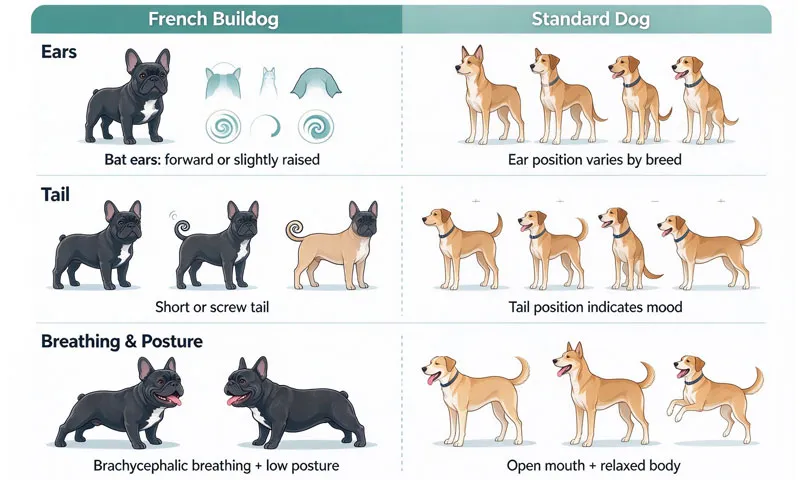
Frenchies have flat faces, stub tails, and heavy breathing even at rest. That’s a communication problem, not a personality flaw.
Other dogs read tail position, ear movement, and facial tension to gauge intent. A Frenchie’s anatomy limits all three. Heavy panting can look like teeth-baring. A tail nub can’t signal submission the way a full tail does.
The result: other dogs sometimes misread a calm Frenchie as tense, and react first. Your dog learns to react back — and preemptively.
9 Warning Signs of Aggression in French Bulldogs
Not every sign means the same thing. Group them by root cause and you’ll respond faster and more accurately.
Fear-based signals
- Stiff body, lowered head
- Whale eye (whites of eyes showing)
- Lip licking, yawning out of context
Pain-based signals
- Sudden snapping with no warning growl
- Guarding a specific body part from touch
- Resource guarding that appeared suddenly
Frustration-based signals
- Leash reactivity toward other dogs
- Redirected biting during high arousal
- Excessive barking at triggers
| Signal | Likely Cause | Action | Urgent? |
|---|---|---|---|
| Sudden snapping, no warning | Pain or injury | Vet exam within 24-48 hrs | Yes |
| Growling only on leash | Frustration/fear | Trainer, desensitization | No |
| Guarding food/toys | Resource guarding | Behaviorist consult | No |
| Snapping + limping or reluctance to move | Spinal/joint pain (possible IVDD) | Vet immediately | Yes |
| Barking at strangers only | Poor socialization | Gradual exposure training | No |
Why Is My French Bulldog Suddenly Aggressive? 7 Root Causes
1. Undiagnosed Pain
IVDD (intervertebral disc disease) and hip dysplasia are common in the breed. A dog in pain protects itself — sometimes with teeth. If aggression appeared suddenly, pain is the first thing to rule out, not the last.
2. BOAS and Chronic Breathing Discomfort
Brachycephalic Obstructive Airway Syndrome makes normal breathing a daily struggle for many Frenchies. Chronic discomfort lowers a dog’s threshold for tolerating stress.
3. Missed Socialization Window
The critical socialization period runs from roughly 3 to 14 weeks. Puppies who miss it — common with poorly sourced breeders or early shelter transfers — often grow into fearful, reactive adults.
4. Hormonal Factors
Intact males show higher rates of dominance-related and territorial aggression than neutered males. Females in heat show temporary behavior shifts too.
5. Punishment-Based Training Backfiring
Correction-heavy training can suppress warning signals like growling. The dog stops warning and starts biting instead — trainers call this “removing the ladder.”
6. Resource Guarding
Left unmanaged, guarding food or toys escalates from stiffening to snapping over months, not days.
7. Breeder Practices and Genetic Line
This one gets skipped constantly. Poor breeding — no health screening, tight inbreeding, no temperament testing — produces dogs with both physical pain and inherited anxiety stacked against them.
Before buying, ask breeders for hip and spine screening results, and ask to meet the puppy’s parents. [how to choose a responsible French Bulldog breeder]
Rage Syndrome in French Bulldogs: Fact vs. Panic
“Rage syndrome” gets thrown around a lot online, and it’s mostly misapplied. True rage syndrome — a rare neurological condition causing sudden, unprovoked, explosive aggression — is uncommon and difficult to diagnose.
Most dogs labeled this way actually have undiagnosed pain, anxiety, or a seizure disorder. A board-certified veterinary behaviorist (DACVB) is the right professional to rule this in or out — not a quick online diagnosis. [veterinary behaviorist directory]
Ask yourself three questions before assuming the worst: Did it happen with zero warning signs? Is there any loss of awareness during the episode? Has this happened more than once with no clear trigger? Two or more “yes” answers means it’s time for a neurological workup, not a training plan.
When Frenchie Aggression Is a Medical Emergency
Call your vet immediately if you see:
- A bite with no warning signs at all
- Aggression paired with seizures, disorientation, or stumbling
- A bite that breaks skin, especially involving a child
- Sudden aggression in a previously calm senior dog
Never leave young children unsupervised with any dog, regardless of temperament history. Supervision prevents most bite incidents — not luck.
Are French Bulldogs Aggressive Toward Other Dogs, Cats, or Strangers?
Other dogs: Leash reactivity is common and usually frustration-based, not true aggression. Off-leash dog park behavior often looks completely different.
Cats: Slow introductions on leash, with supervised sessions over multiple weeks, work well. Most Frenchies can cohabit peacefully with cats.
Strangers and kids: Frenchies rank well for family friendliness in most temperament comparisons, but any dog needs supervised, positive early exposure to strangers to stay that way.
French Bulldogs vs. Other Brachycephalic Breeds
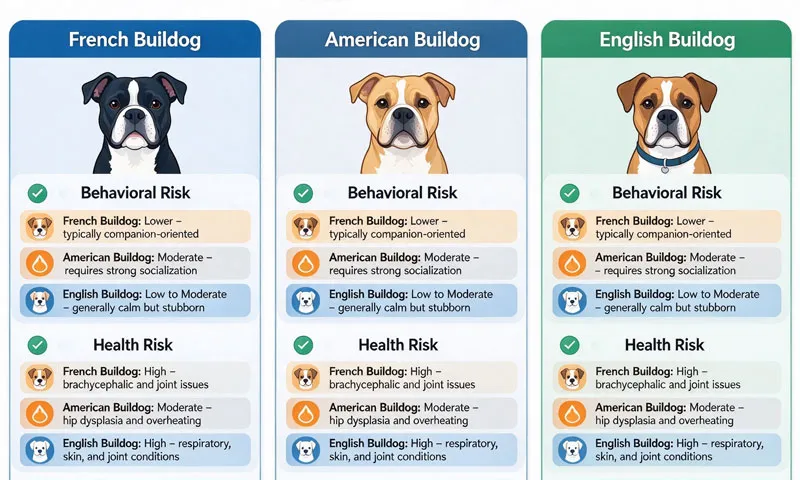
| Breed | Reactivity Tendency | Health-Linked Behavior Risk | Trainability |
|---|---|---|---|
| French Bulldog | Low-Moderate | High (BOAS, spine issues) | Moderate |
| Pug | Low | Moderate | Moderate |
| Boston Terrier | Low | Lower than Frenchie | High |
| English Bulldog | Moderate | High | Low-Moderate |
How to Prevent and Manage Aggression in French Bulldogs
Positive reinforcement works better than dominance-based methods for this breed — Frenchies respond to what motivates them personally, not generic praise. Find their specific reward, whether that’s a particular treat or a specific toy, and training moves faster.
Socialize on a schedule: broad exposure from 8 weeks to 6 months, then reinforcement through the first year. Add enrichment — puzzle feeders, scent games, short structured walks — to reduce frustration-driven behavior at home.
If problems persist, hire a certified professional. Look for CPDT-KA certification for trainers, or DACVB for behaviorists handling more serious cases. [certified dog trainer vs behaviorist guide]
The Cost of Ignoring Aggression
Untreated aggression gets expensive. Emergency vet visits, liability if a bite occurs, and potential homeowner’s insurance complications all stack up. Health screening and early behavior tracking cost far less than managing a crisis later.
Frequently Asked Questions
Can French Bulldogs be aggressive toward their owners?
Rarely, and usually only when in pain or guarding resources. Sudden aggression toward a familiar owner almost always points to a medical cause.
Is French Bulldog aggression more common in males or females?
ntact males show higher rates of territorial and dominance-related aggression. Neutering typically reduces this.
Do French Bulldogs grow out of aggressive behavior?
Not without intervention. Fear and pain-based aggression tends to worsen without training or medical treatment, not improve on its own.
Are rescue French Bulldogs more likely to be aggressive?
Not inherently — but many carry unaddressed trauma or missed socialization windows, which raises risk until properly managed.
Disclaimer: This article is for informational purposes only and does not replace professional veterinary or behavioral advice. Always consult a licensed veterinarian or certified animal behaviorist for concerns about your dog’s health or behavior