

Dog bathing and drying tips for shedding season only work if you get the timing and technique right — most owners get both wrong. Wash at the wrong moment and you’ll trap loose undercoat against the skin. Dry the wrong way and you’ll seal in fur that should’ve come out in the tub. This guide fixes both, step by step, with the red flags your vet actually wants you to know.
Why Bathing & Drying Technique Matters More During Shedding Season
Shedding isn’t random. It’s a hormonal response to daylight length, and double-coated breeds go through it twice a year in dramatic fashion.
The Biology of the “Blow Coat” — What’s Actually Happening
During a blow coat, the undercoat releases in clumps because thousands of hair follicles enter the shedding phase at once. This is different from the slow, steady shedding single-coated breeds experience year-round. Bathing at the right moment loosens that dead undercoat before it mats against the skin.
Why Wrong Bathing Timing Can Worsen Matting and Shedding
Bathe a heavily matted dog without brushing first, and water tightens those mats instead of loosening them. Wet fur clumps together, dries into a denser knot, and you’ve made the problem worse than if you’d skipped the bath entirely. Brush first. Always.
How Often Should You Bathe Your Dog During Shedding Season
Bathing frequency isn’t one-size-fits-all. Coat type dictates the schedule.
Bathing Frequency by Coat Type
| Coat Type | Normal Frequency | Shedding Season Frequency | Risk If Overdone |
|---|---|---|---|
| Double coat (Husky, Golden Retriever) | Every 6-8 weeks | Every 3-4 weeks | Strips protective oils |
| Single coat, short (Beagle, Boxer) | Every 4-6 weeks | Every 3-4 weeks | Dry, flaky skin |
| Curly/wool coat (Poodle, Bichon) | Every 3-4 weeks | Every 3-4 weeks | Minimal change needed |
| Wire/hairless | As needed | As needed | Skin irritation from harsh products |
Over-Bathing Risks — Why More Isn’t Always Better
Every wash removes some of the skin’s natural oil barrier. Wash too often and that barrier can’t rebuild, leaving skin dry and, ironically, triggering more shedding as a stress response. Frequency matters less than technique — a well-executed bath every four weeks beats a rushed one every ten days.
The Complete Bathing Protocol for Shedding Season
Step 1 — Pre-Bath Brushing
Skip this and you’re just wetting down hair that was already coming loose, then working against wet, tangled fur later. Ten minutes of brushing before the tub saves you twenty minutes of detangling after.
Step 2 — Choosing the Right Shampoo for Shedding
Not every “deshedding shampoo” earns the label. Look at the formula, not the marketing claim.
| Formula Type | Best For | What It Does |
|---|---|---|
| Omega-3 enriched | Dry, flaking skin | Restores lipid barrier |
| Oatmeal-based | Sensitive, itchy skin | Calms inflammation |
| Enzymatic exfoliating | Heavy undercoat buildup | Loosens dead hair at the follicle |
best deshedding shampoos by breed type
Step 3 — Water Temperature & Technique
Use lukewarm water, never hot. Hot water opens pores and can dry out skin fast. Work shampoo in against the direction of hair growth first to lift the undercoat, then rinse with the growth pattern to smooth it back down.
Step 4 — Rinsing Thoroughly
Shampoo residue left in the coat is the single biggest cause of post-bath itching. Rinse until the water runs completely clear, then rinse for another thirty seconds past that point. Residue binds to skin and causes irritation days later — owners rarely connect the two.
How to Dry a Shedding Dog Properly
Towel Drying vs. Blow Drying
A towel alone won’t pull loose undercoat free — it just absorbs surface water. A dryer on the cool or low-warm setting, brushed through in sections, does the real work of releasing dead hair.
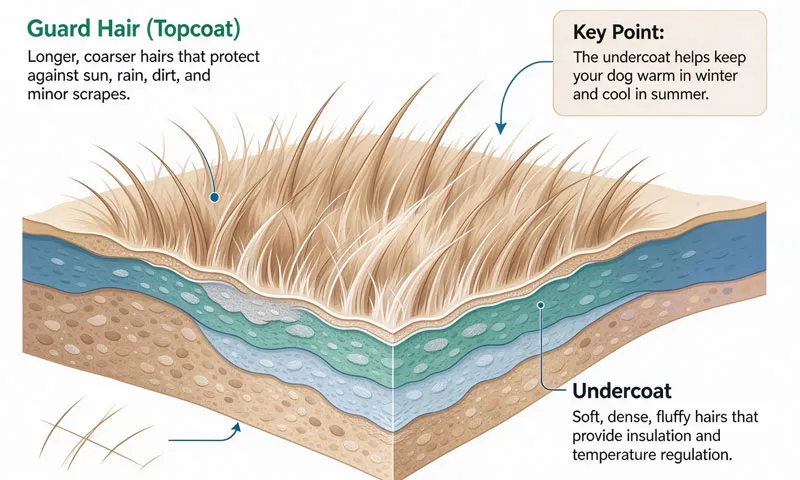
How to Safely Dry Double-Coated Breeds
Section the coat and dry from the skin outward, brushing as you go. Professional groomers use high-velocity “force dryers” because the air pressure physically blasts loose undercoat out of the topcoat — a standard hair dryer can’t replicate that, but a slower, section-by-section approach with a pin brush gets you most of the way there.
Double-coated breed grooming standards
The “Never Shave a Double Coat” Rule
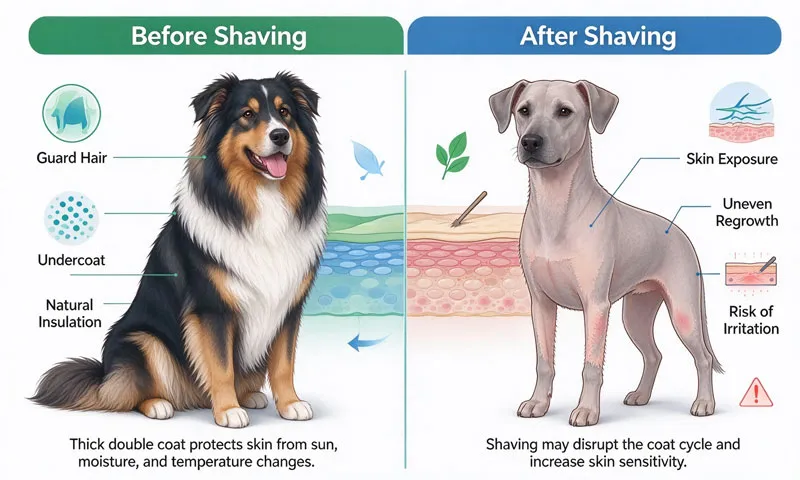
Shaving a double-coated dog doesn’t reduce shedding — it removes the insulation that regulates body temperature in both summer and winter. Double coats reflect heat away from the skin in summer and trap warmth in winter. Once shaved, the coat can grow back unevenly or patchy, sometimes permanently altering texture. Groomers see this often enough that it’s a standard warning, not a niche opinion.
Deshedding Tools Worth Buying
Tools Comparison Table
| Tool | Best For | Price Range | Common Mistake |
|---|---|---|---|
| Undercoat rake | Double coats | $15-30 | Pressing too hard, scratching skin |
| Slicker brush | Curly/tangled coats | $10-25 | Overuse causes brush burn |
| Grooming glove | Short, smooth coats | $8-15 | Limited on dense undercoat |
| Force dryer | All heavy shedders | $80-200 | Skipped by most home owners |
Budget vs. Professional-Grade Tools
A $12 rake and a $60 rake often use the same steel tine design — the difference is handle ergonomics and durability over years of use. Save the splurge for a force dryer if you own a heavy double-coated breed; that’s where professional-grade equipment genuinely outperforms budget options.
Dog shedding by breed comparison chart
When Shedding + Bathing Signals a Health Problem
Normal vs. Abnormal Post-Bath Shedding
Some extra hair in the drain is normal — bathing loosens what was already ready to fall. Patchy bald spots, brittle hair that snaps rather than pulls free, or skin that looks red underneath are not normal.
Red Flags That Require a Vet Visit
- Bald patches instead of even thinning
- Hair that breaks off rather than sheds whole
- Skin odor, redness, or scabbing under the coat
- Excessive scratching that continues after bathing
- Shedding that appears suddenly outside typical seasonal windows
Recognizing abnormal hair loss in dogs
If any of these show up, a vet visit rules out thyroid issues, parasites, or allergies before you spend more money on grooming tools that won’t fix an underlying medical cause.
FAQ: Dog Bathing & Drying During Shedding Season
Is it normal for my dog to shed more right after a bath?
Yes. Bathing loosens dead undercoat that was already detaching, so a heavier-than-usual shed right after is expected, not a sign of a problem.
Can bathing my dog too often during shedding season damage their coat?
Yes. Washing more than every three to four weeks can strip natural oils, leading to dry skin and, counterintuitively, more shedding over time.
What water temperature is safest for bathing a shedding dog?
Lukewarm, close to human comfort level. Hot water dries out skin faster and can worsen irritation in dogs already prone to sensitive skin.
Do I need a pet-specific dryer, or will a human hair dryer work?
A human dryer works on the cool setting, but pet-specific or force dryers move more air at lower heat, which pulls loose undercoat out faster and more safely.
Do deshedding shampoos actually reduce shedding, or is it marketing?
Formulas with omega-3s or enzymatic exfoliants genuinely loosen dead hair and support skin health — but no shampoo stops shedding entirely, since it’s a natural biological cycle.
Disclaimer: This article is for general informational purposes only and does not replace professional veterinary advic