

Introduction
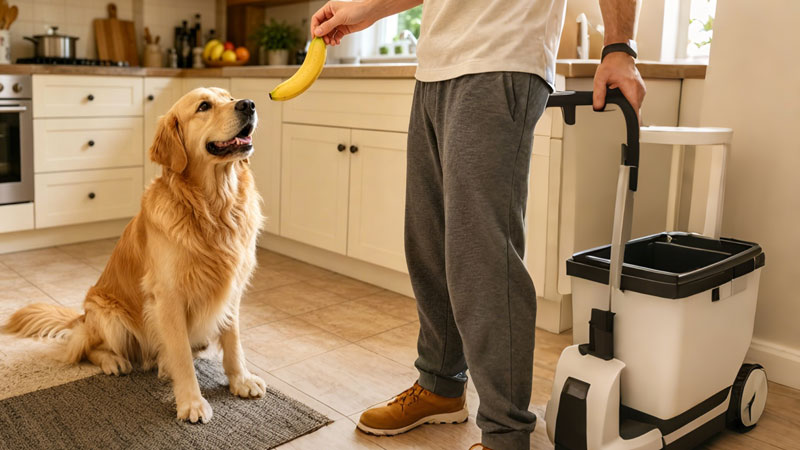
Can dogs eat bananas? Yes — but the full answer is more nuanced than a simple yes or no. Every week, thousands of dog owners ask this question while standing in their kitchen, banana in hand, dog staring them down. This guide covers everything you actually need to know: the real nutritional value, serving sizes by body weight, hidden risks most articles skip, and when to call your vet instead of Googling.
Can Dogs Eat Bananas? Here’s the Direct Answer
Yes, dogs can eat bananas. They’re non-toxic and generally safe for most healthy adult dogs.
That said, “safe” doesn’t mean “eat as much as you want.” Bananas are high in natural sugar. They belong in the treat category, not the meal category — and portion size matters more than most owners realize.
The 10% rule applies here: treats of any kind, including fruit, should never exceed 10% of your dog’s daily calorie intake.
Are Bananas Good for Dogs? The Real Nutritional Picture
What Bananas Actually Contain
A medium banana (about 118g) provides:
- Potassium — supports healthy heart function and muscle contractions
- Vitamin B6 — essential for red blood cell production and nervous system health
- Vitamin C — an antioxidant that helps reduce inflammation
- Magnesium — aids bone development and helps the body absorb other nutrients
- Dietary Fiber — promotes healthy gut motility
On paper, that list looks impressive. In practice, the picture is more complicated.
Do Dogs Actually Benefit from These Nutrients?
Here’s what most banana articles won’t tell you: the serving sizes are too small to make a meaningful nutritional difference.
A dog eating two or three slices of banana is consuming trace amounts of these nutrients. Your dog’s complete and balanced commercial food — if it meets AAFCO nutritional standards — already covers all of these in proper quantities.
What bananas do offer is a low-sodium, low-cholesterol treat that most dogs find highly motivating. That makes them genuinely useful for training — just not as a nutritional supplement.
When Are Bananas Bad for Dogs?
High Sugar: The Risk Most Owners Underestimate
One medium banana contains approximately 14 grams of sugar and 105 calories. For a small dog, even half a banana can represent a significant sugar spike.
Over time, excess sugar contributes to weight gain, which then cascades into joint problems, elevated blood pressure, and increased diabetes risk. Some breeds are particularly vulnerable:
- High obesity risk: Labrador Retrievers, Cocker Spaniels, Beagles, Dachshunds
- Diabetes-prone breeds: Keeshonds, Samoyeds, Australian Terriers, Miniature Poodles
If your dog falls into either category, talk to your vet before making bananas a regular treat.
Digestive Upset: How Much Fiber Is Too Much?
Fiber is beneficial in controlled amounts. Too much at once — especially for a dog not used to fruit — can cause:
- Loose stools or diarrhea
- Bloating and gas
- Vomiting
If your dog shows any of these signs after eating banana, stop feeding it and monitor for 24–48 hours. Symptoms that persist or worsen beyond that window warrant a vet call.
Banana Allergies in Dogs
True banana allergies are uncommon in dogs, but they do occur. First-time introduction should always start small — one slice — and you should watch for:
- Itching or hives
- Facial swelling
- Vomiting or diarrhea within 30–60 minutes
If any of these appear, stop feeding banana immediately and contact your veterinarian.
Can Dogs Eat Banana Peels? What Vets Actually Say
Banana peels are not toxic to dogs. But that doesn’t mean they’re safe to eat.
The peel is dense with insoluble fiber that dogs struggle to break down. For small breeds especially, ingesting a peel creates a real risk of intestinal blockage (obstruction) — a serious condition that can require emergency surgery.
Go to an emergency vet immediately if your dog ate a banana peel and shows:
⚠️ Repeated vomiting • Rigid or distended abdomen • No bowel movement for 12+ hours • Sudden lethargy or collapse • Loss of appetite lasting more than 24 hours
Don’t wait to “see how it goes” with these symptoms. Intestinal blockages can become life-threatening within hours.
How Much Banana Can a Dog Eat? Serving Size by Weight
Forget “large, medium, small dog.” Here’s a more precise breakdown by body weight, with approximate calorie impact based on USDA FoodData Central data:
| Dog’s Weight | Recommended Serving | Approx. Calories |
|---|---|---|
| Under 10 lbs | 1 thin slice (¼ inch) | ~2–3 kcal |
| 10–25 lbs | 2–3 small slices | ~5–8 kcal |
| 25–50 lbs | 3–5 slices / up to ¼ banana | ~10–15 kcal |
| 50+ lbs | Up to ½ banana | ~15–25 kcal |
Practical example: A 20-pound dog needs roughly 400 calories per day. Their treat budget is 40 calories max. Three banana slices use about 8 of those calories — leaving room for other treats or training rewards.
banana nutrition data by weight
Always introduce banana slowly. Start at the smallest serving, wait 48 hours, and watch for digestive changes before increasing.
Bananas vs. Other Dog-Safe Fruits: A Quick Comparison
Bananas aren’t the only fruit worth offering — and they’re not always the best choice.
| Fruit | Safe? | Sugar Level | Best For | Caution |
|---|---|---|---|---|
| Banana | ✅ Yes | Medium-High | Training treats, potassium | High sugar, avoid peel |
| Blueberry | ✅ Yes | Low | Antioxidant boost, everyday snacking | Choking risk (small dogs) |
| Watermelon | ✅ Yes (no seeds/rind) | Low | Hydration in summer | Remove seeds and rind |
| Apple | ✅ Yes (no seeds/core) | Medium | Fiber, fresh breath | Seeds contain cyanide compounds |
| Grapes | ❌ No | — | — | Kidney failure risk |
| Cherries | ❌ No | — | — | Cyanide in pits and stems |
Bottom line: Bananas are one of the safer fruits, but they rank higher in sugar than blueberries or watermelon. Use them as an occasional high-value reward, not a daily snack.
How to Safely Serve Banana to Your Dog
Fresh Slices
Peel, slice, serve. The simplest option and perfectly effective. Most dogs eat banana straight from your hand without hesitation.
Frozen Banana Pieces
Slice the banana, freeze pieces on a parchment-lined tray for 2–3 hours. These make excellent summer treats and can help soothe teething discomfort in puppies.
Mashed into a Kong or Lick Mat
Mash banana and spread it inside a Kong toy or onto a lick mat. This extends the treat experience and provides mental enrichment — a genuine behavioral benefit beyond just the food.
Mixed with Dog-Safe Ingredients
Banana pairs well with:
- Plain, unsweetened Greek yogurt
- Xylitol-free peanut butter (always check the label)
- Plain canned pumpkin (not pumpkin pie filling)
What to Absolutely Avoid
- Banana bread — contains sugar, butter, sometimes raisins (toxic to dogs) or xylitol
- Commercial banana chips — typically fried or dehydrated with added salt, oil, and sugar; not equivalent to fresh banana
- Flavored banana yogurts — contain added sugars and artificial ingredients
- Any product containing xylitol — this artificial sweetener is highly toxic to dogs and can cause rapid blood sugar drops and liver failure. According to the ASPCA Animal Poison Control Center, xylitol poisoning requires immediate emergency treatment.
Easy Banana Dog Treat Recipes
Frozen Banana & Peanut Butter Bites
Best for: Hot days, post-training rewards
Ingredients:
- 1 ripe banana
- 2 tbsp xylitol-free peanut butter
- 2–3 tbsp plain Greek yogurt
Method: Mash banana. Mix in peanut butter and yogurt. Spoon into silicone molds or ice cube tray. Freeze 2–3 hours. Store frozen up to 2 weeks.
Banana Oat Training Cookies
Best for: Everyday training, small portable treats
Ingredients:
- 1 ripe banana
- 1 cup rolled oats
- ¼ cup unsweetened applesauce (optional)
Method: Preheat oven to 350°F. Mash banana, mix in oats and applesauce. Shape into small rounds. Bake 12–15 minutes until firm. Cool completely before serving. Refrigerate up to 5 days.
Banana Pumpkin Soft Treats
Best for: Dogs with sensitive stomachs
Ingredients:
- 1 ripe banana
- ½ cup plain canned pumpkin
- 1 cup oat flour (or whole wheat flour)
Method: Preheat oven to 350°F. Mash banana with pumpkin. Add flour gradually until dough forms. Roll out and cut into small shapes. Bake 18–20 minutes. Store refrigerated up to 1 week.
Why it works: Pumpkin is widely used by veterinarians to support digestive regulation. Combined with banana, it creates a gentle, fiber-rich treat.
Universal Safety Rules Before You Bake
- Never use chocolate, raisins, macadamia nuts, or xylitol-containing peanut butter
- Keep all treats to the 10% daily calorie rule
- Label and date homemade treats — most have a short shelf life
- Break larger cookies into small pieces for smaller dogs
When to Ask Your Vet First
Some dogs shouldn’t eat bananas without veterinary clearance:
- Diabetic dogs — the sugar content can interfere with blood glucose management
- Dogs with kidney disease — bananas are relatively high in potassium, which may need to be restricted in dogs with compromised kidney function
- Overweight dogs — even “natural” sugar adds up
- Puppies under 12 weeks — their digestive systems are still developing and need a very stable, formula-driven diet
- Senior dogs with dental disease — while banana is soft, the sugar content is still worth discussing with your vet
If your dog has any diagnosed health condition, introduce new foods only after a conversation with your veterinarian. A few slices of banana is a low-stakes snack for a healthy adult dog — it can be a genuine problem for one with underlying issues.
FAQ: Can Dogs Eat Bananas?
Yes, in very small amounts. Wait until your puppy is at least 8–12 weeks old and eating solid food consistently. Start with a single thin slice and monitor digestion for 24–48 hours before offering more.
Fresh banana and commercial banana chips are very different products. Chips are often fried or baked with added oil, salt, and sugar. Even “natural” dried banana has significantly higher sugar concentration per gram than fresh fruit. Stick to fresh or frozen.
For most medium-to-large dogs, a whole banana isn’t an emergency — but expect possible digestive upset (soft stool, gas). Monitor for 24 hours. If your dog is small or has a health condition, call your vet. If the peel was also eaten, watch for signs of obstruction listed above.
Sometimes. Banana’s fiber and potassium content can help firm up loose stools in mild cases. However, if diarrhea is severe or lasts more than 24 hours, food changes aren’t the right solution — your vet is.
Yes. Frozen banana is simply fresh banana in a different form. The texture change can actually make it more appealing to some dogs, and the cold temperature makes it a useful summer treat or teething soother for puppies.
Grapes and raisins (kidney failure risk), cherries (cyanide in pits/stems), and avocado (persin toxicity) are the most serious ones to avoid entirely. When in doubt, check before you share.
The Bottom Line
Bananas are one of the safer fruits you can share with your dog — genuinely useful as a training treat, easy to prepare, and well-tolerated by most healthy adult dogs. Keep portions matched to your dog’s weight, skip the peel, and avoid any banana products made for human consumption.
If your dog has an existing health condition, a quick conversation with your vet before introducing new foods is always the right call.
⚕️ Disclaimer: This article is for general informational purposes only and does not constitute veterinary medical advice. Every dog is different, and individual health conditions vary. Always consult a licensed veterinarian before making changes to your dog’s diet, especially if your dog has a pre-existing health condition, is pregnant, or is on medication. In a medical emergency, contact your nearest emergency veterinary clinic immediately.