

Learning how to train a puppy not to bite starts with one hard truth: those needle-sharp teeth aren’t a behavior problem yet — they’re a developmental stage. But left unmanaged, mouthing can turn into a habit that follows your dog into adulthood. This guide breaks down exactly what’s normal, what’s not, and what actually works at every age.
Why Do Puppies Bite? The Real Causes Behind the Behavior
Most owners assume biting means “bad puppy.” It rarely does.
Teething and Oral Exploration
Puppies explore the world mouth-first. Between 3 and 6 months, teething makes this worse — sore gums drive them to chew anything within reach, including your hands.
Overstimulation and Overtiredness
A tired puppy bites harder and more often. Think of it like a toddler skipping nap time. Energy has to go somewhere, and teeth are the outlet.
Pain or Medical Triggers Owners Miss
Persistent, unusually hard biting paired with bad breath, drooling, or reluctance to eat can signal retained baby teeth or gum inflammation — not defiance. If you notice these signs, a veterinary check rules out a physical cause before you invest weeks in behavior training.
veterinary oral health guidelines for puppies
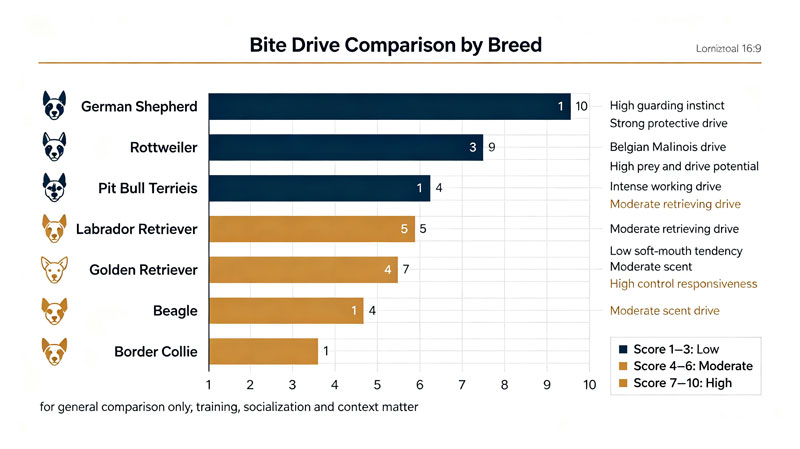
Breed-Driven Bite Intensity
Herding breeds (Border Collies, Australian Shepherds) tend to nip at heels and ankles — it’s instinct, not aggression. Terriers and sporting breeds often bite harder during play due to higher drive levels. Training needs to account for this, not fight against it.
The Puppy Biting Age Timeline: What’s Normal at Each Stage
| Age Range | Typical Behavior | What to Do | When to Worry |
|---|---|---|---|
| 8–12 weeks | Constant mouthing, low bite pressure | Redirect to toys, begin bite inhibition | Rarely a concern |
| 3–6 months | Teething surge, harder bites | Structured play, consistent yelp/time-out method | Bites that break skin repeatedly |
| 6+ months | Biting should be tapering off | Reinforce calm behavior | No improvement, or bites paired with growling/stiff body |
If your dog is past 8 months and still biting hard during normal interaction, that’s no longer “just a phase” — it’s worth a professional evaluation.
Bite Inhibition Training: The Foundation That Actually Works
This is the single most important skill your puppy will learn, and it’s different from simply stopping the biting.
What Bite Inhibition Really Means
Bite inhibition teaches your puppy to control the force of his mouth — not just to avoid biting altogether. A dog who never learns this can still bite hard later in life if startled or in pain, even after “biting” stops entirely during normal play.
The Yelp-and-Pause Method
Let your puppy mouth your hand during play. The moment he bites too hard, yelp sharply and go limp. Pause the game for 10-20 seconds. Resume only when he’s calm. Repeat, gradually lowering your threshold for what counts as “too hard.”
When Yelping Doesn’t Work
Some puppies get more excited by the yelp, not less. Switch to a silent time-out instead: stop moving, remove your hand, and walk away for 30-60 seconds. Consistency matters more than the specific method.
Mistakes That Undo Progress
- Yelping one day, ignoring bites the next
- Playing rough with hands, then punishing mouthing
- Letting kids rile up the puppy without supervision
Inconsistency is the number one reason bite inhibition training stalls.
step-by-step puppy socialization checklist
7 Practical Techniques to Stop Puppy Nipping Right Now
Redirect to Appropriate Chew Toys
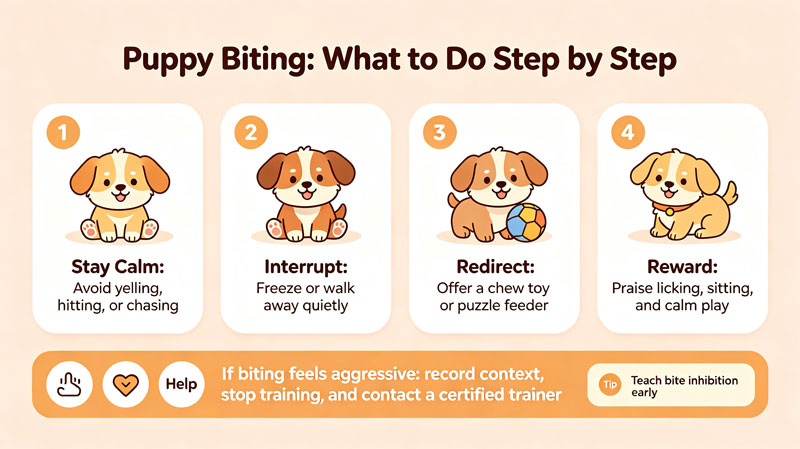
Keep a toy in your pocket at all times. The second teeth touch skin, swap in the toy — don’t just pull your hand away.
best chew toys for teething puppies compared
Use Structured Play Instead of Hand-Wrestling
Tug-of-war and fetch teach your puppy that play doesn’t involve your skin. Hand-wrestling teaches the opposite.
Manage Overtiredness
An overtired puppy is a biting puppy. Build in scheduled nap and crate time, especially after visitors or busy outings.
Burn Excess Energy Daily
Physical exercise plus mental enrichment (puzzle feeders, short training sessions) reduces the frustration-driven biting that shows up when puppies have nowhere to put their energy.
Reinforce Calm Behavior
Reward stillness and gentle mouthing with a calm “good” and a treat. Puppies repeat what gets rewarded — including calm.
Use a Taste Deterrent Carefully
Bitter sprays can work on clothing and hands, but they’re a backup tool, not a primary method. Combine with redirection, not instead of it.
Stay Calm — Punishment Backfires
Physical correction (scruffing, nose taps) increases fear and, counterintuitively, increases biting in many puppies. Calm, consistent responses train faster than force.
Puppy Nipping vs. Aggression: How to Tell the Difference
Body Language of Playful Mouthing
Loose body, wagging tail, relaxed face. Bites are light and stop when you pause play.
Warning Signs of a Real Tantrum
Stiff body, lips pulled back, growling, bites that don’t ease up when you go still. This is frustration or fear, not play.
How to Respond Safely
Don’t yelp — it can escalate a fearful puppy. Stay still and quiet, hold your puppy gently but firmly if needed, and let the moment pass without a big reaction.
Protecting Kids in the Home
Never leave young children unsupervised with a mouthy puppy. Teach kids to freeze and go limp rather than pull away or scream, which triggers more biting, not less.
Legal and Liability Considerations Most Owners Overlook
Dog bite laws vary significantly by state — some follow strict liability rules, meaning owners are responsible even for a first bite. Homeowners and renters insurance policies sometimes exclude certain breeds or require disclosure of past incidents. Some jurisdictions legally require bite reports, even for minor puppy nips that break skin.
state-by-state dog bite liability laws
This isn’t meant to alarm you — most puppy mouthing never escalates to a reportable incident. But knowing your local rules now avoids a costly surprise later.
When to Seek Professional Help
| Credential | Focus | Best For |
|---|---|---|
| CPDT (Certified Professional Dog Trainer) | General obedience, puppy classes | Everyday mouthing and manners |
| CAAB (Certified Applied Animal Behaviorist) | Behavior assessment | Persistent or escalating biting |
| Dip ACVB (Veterinary Behaviorist) | Medical + behavioral | Suspected fear, aggression, or pain-driven biting |
Puppy classes remain one of the best investments a new owner can make — supervised play with other puppies teaches bite inhibition faster than any single technique you can do at home.
Frequently Asked Questions
How long does the puppy biting phase last?
Most puppies significantly reduce biting by 6 months, with full improvement by 8-10 months if trained consistently.
Is it normal for my puppy to draw blood when biting?
Occasionally, yes, especially during peak teething. Frequent, hard bites that break skin regularly warrant a trainer consultation.
Does breed affect how hard or how long a puppy bites?
Yes. Herding and terrier breeds often bite longer and harder due to higher instinctive drive, though training methods stay the same.
Can puppy biting be a sign of a health problem?
Sometimes. Retained baby teeth, gum pain, or ear infections can all increase mouthy behavior. A vet check is worth it if biting seems unusually intense or sudden.
What age should puppy biting completely stop?
By 10-12 months, hard biting should be rare. Occasional gentle mouthing during play can persist longer and isn’t cause for concern on its own.
Disclaimer: This article is for informational purposes only and does not replace professional veterinary or behavioral advice. If your puppy shows signs of aggression, fear-based biting, or a suspected medical issue, consult a licensed veterinarian or certified animal behaviorist.