

Learning how to measure a dog for clothes takes five minutes and saves you a return shipping label. Most fit problems come from skipping one step: measuring chest girth first. This guide gives you the exact order, the numbers that matter, and what to do when your dog doesn’t fit any chart.
Why Guessing on Dog Clothes Sizing Backfires
A sweater that’s too tight restricts breathing and rubs raw patches behind the front legs. A coat that’s too loose drags on the ground, catches on furniture, or slides sideways mid-walk. Neither outcome is cosmetic. Both change how your dog moves and behaves.
Weight Doesn’t Predict Fit
Two 25-pound dogs can wear completely different sizes. A stocky Corgi and a lean Whippet at the same weight have chest girths that differ by three inches or more. Veterinary body condition scoring (BCS) exists precisely because weight alone hides muscle mass, bone structure, and fat distribution — the same variables that determine how a garment sits on a dog’s frame.
Veterinary body condition score reference
What Owners Notice First
Dogs that dislike clothing usually aren’t reacting to the fabric. They’re reacting to restriction. A properly measured garment that allows full leg extension and normal spine movement gets accepted faster, even by dogs who’ve previously refused to wear anything.
What You Need Before You Start
- A soft fabric tape measure (a string plus a ruler works as backup)
- A notebook or your phone’s notes app
- Treats
- A helper, if your dog won’t hold still alone
Safety note: Keep retractable tapes away from your dog’s face and mouth. Small dogs and puppies can startle at the snap-back sound. Coil the tape fully between measurements.
How to Position Your Dog Correctly
Stand your dog squarely on all four paws on a flat surface. Not sitting. Not leaning against your leg. A curved spine compresses the ribcage and shortens the back — every number you take afterward will be off.
Handling Wriggly, Anxious, or Senior Dogs
Break the process into three short sessions instead of one long one. Measure chest, pause, treat, then move to neck. For arthritic or recently spayed/neutered dogs, work at ground level and avoid lifting the front legs. Gentle handling matters more than speed here.
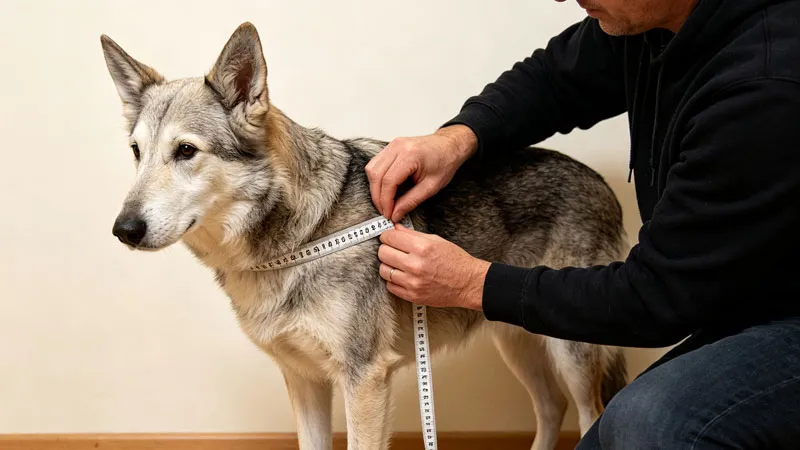
The 3 Core Measurements for Dog Clothes Sizing
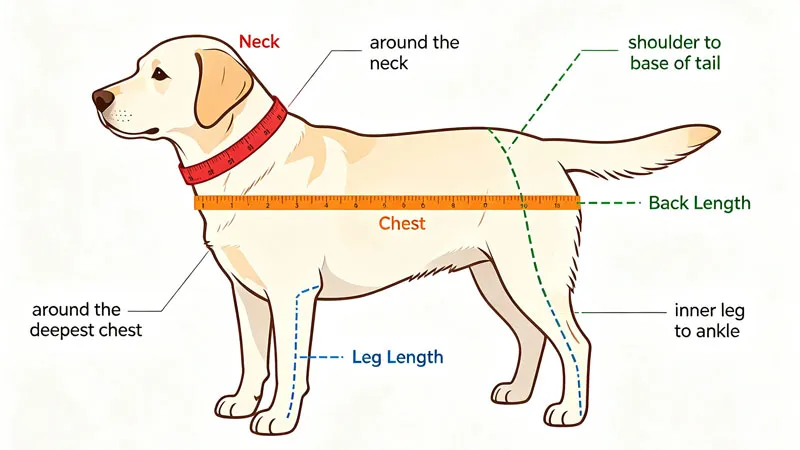
1. Chest Girth (Measure This First)
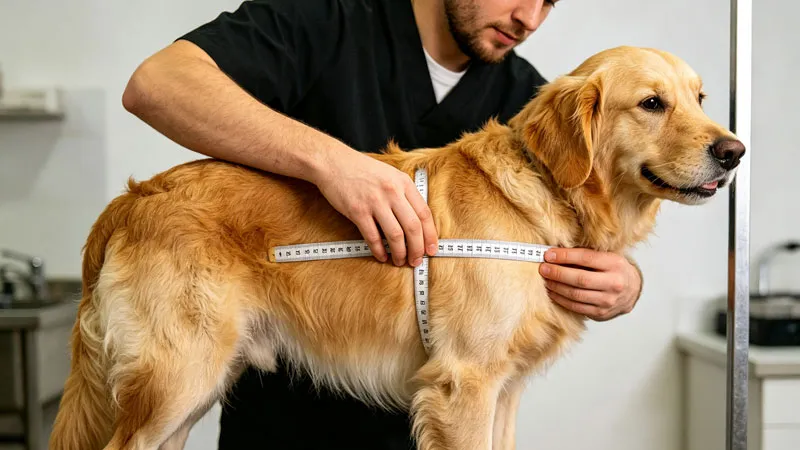
Wrap the tape around the widest part of the ribcage, just behind the front legs. Keep it level — not angled up toward the shoulders or down toward the belly. Slide two fingers under the tape. If they fit comfortably, the reading is accurate. If they don’t, loosen the tape and try again.
Chest girth decides whether a garment fits at all. It’s the number that overrides every other measurement when a chart forces a choice.
2. Neck Circumference
Measure at the base of the neck, where a collar naturally rests. This matters most for pullover styles and fitted collars. For open-front coats, it’s a secondary check.
3. Back Length
Run the tape from the base of the neck to the base of the tail, following the spine. Skip the tail itself. This number carries more weight for coats, pajamas, and any garment covering the full torso.
Bonus: Leg Length for Jumpsuits and Raincoats
Measure from where the front leg meets the chest down to the paw. Most standard sweaters skip this, but full-coverage rain gear and jumpsuits need it to avoid bunching at the joints.
Reading the Size Chart Without Guessing
Every brand’s “medium” means something different. Never size by the label name — size by your actual numbers against that specific chart.
| Your Measurement Result | Best Sizing Decision | Why |
|---|---|---|
| Chest is the tightest number | Size by chest first | Chest determines whether the garment fits |
| Falls between two sizes | Size up, unless fabric is stretch-knit | Reduces chafing risk |
| Neck fits, chest is snug | Follow chest size, recheck neckline style | Neck is usually the secondary factor |
| Back length short for a coat | Choose the longer option | Full-coverage styles need more margin |
Sizing by Body Type, Not Just Breed
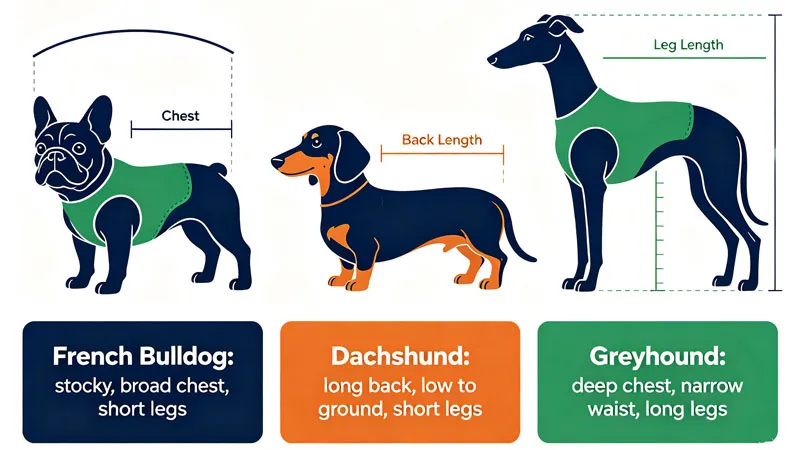
Breed names are a shortcut. Body type is the real driver.
Deep-Chested, Broad Dogs
French Bulldogs, Pugs, and English Bulldogs often need the size up from what their back length suggests. Chest depth overrides everything else for this group.
Long-Backed, Short-Legged Dogs
Dachshunds and Corgis need extra attention to belly coverage. A garment sized correctly at the chest can still ride up and expose the stomach if back length runs short.
Narrow, Deep-Chested Sighthounds
Greyhounds and Whippets frequently fall outside standard charts entirely. Their chest-to-waist taper is sharper than most sizing systems account for.
Puppies and Growing Dogs
Re-measure every 2-3 months during the first year. A chart-perfect fit in January can be too small by April.
Senior Dogs
Weight loss and muscle loss shift measurements even without a change on the scale. Re-measure annually, or sooner after any noticeable weight change.
Seasonal Measuring Considerations
Thick winter coats can add half an inch or more to chest girth compared to a freshly groomed summer coat. Measure over the coat your dog will actually be wearing the garment with — not bare skin if they’ll have a full undercoat in November.
Avoid measuring wet or freshly bathed dogs. Damp fur compresses differently than dry fur and skews the reading.
Medical note: For dogs recovering from surgery, wearing bandages, or with skin sensitivities, check with your veterinarian before fitting any garment that applies pressure near the site.
Post-surgical pet care guidelines
Already Bought It? Fixing a Sizing Mistake
Red marks after removal, visible skin pinching, or a dog that refuses to walk normally all signal a fit that’s too tight. Constant shifting, dragging fabric, or a coat sliding sideways signals too loose.
Adjustable straps and extension pieces solve minor mismatches without a full return. If the gap is more than half a size, request an exchange rather than forcing a fix — a poor fit that “mostly works” still causes daily friction for your dog.
Adjustable dog harness options
Common Mistakes That Lead to Returns
- Measuring over a bulky harness or leash
- Measuring while the dog sits or leans
- Using a twisted or stretched-out tape
- Sizing by weight instead of actual measurements
- Skipping re-measurement on a growing puppy
- Ignoring whether the fabric is stretch or rigid
FAQ: How to Measure a Dog for Clothes
What is the most important measurement for dog clothes?
Chest girth. It determines whether the garment fits at all, before neck or back length matter.
Do I measure chest or back length first?
Chest first, always. It’s the anchor measurement most charts build around.
Can I use my dog’s weight instead of a tape measure?
No. Dogs at the same weight can have very different chest depth and body shape. Weight is a rough starting point, not a substitute.
How tight should dog clothes fit?
Snug enough to stay in place, loose enough to fit two fingers underneath comfortably.
Do harnesses and clothes use the same measurements?
Mostly yes — chest girth and neck circumference are shared. Harnesses also factor in girth placement lower on the ribcage, so check the specific product’s measuring instructions.
How often should I re-measure my dog?
Every 2-3 months for puppies, annually for adult dogs, and immediately after any noticeable weight change.
Final Checklist Before You Order
Confirm chest, neck, and back length one more time. Match all three against the specific chart for the item you’re buying. If you’re between sizes, size up. Then check the return policy before checkout, just in case.
Disclaimer: This article is for general informational purposes only and does not replace professional veterinary advice. Consult your veterinarian for guidance specific to your dog’s health, mobility, or recovery needs.