

Being a new dog owner feels exciting — until 11 p.m. on night one, when your puppy won’t stop crying and you’re Googling “is this normal.” This guide exists for that moment. Whether you just brought home a puppy or adopted an adult dog, here’s everything you actually need: real costs, a training plan that works, a vet care roadmap, and the honest emotional stuff no one warns you about.
Are You Actually Ready? Ask These Questions First
Before the dog comes home — or even before you choose a breed — get honest with yourself about a few things.
The Lifestyle Checklist Most People Skip
How many hours per day is your home empty? Dogs left alone more than 6–8 hours consistently develop anxiety, destructive habits, or both. That’s not a judgment — it’s biology.
Ask yourself:
- Do I have outdoor space, or am I in an apartment?
- Am I active (daily runs, hikes) or do I prefer slower weekends?
- Do I travel frequently? Who covers care when I do?
- Do I have young children or other pets?
Your answers narrow the breed pool dramatically — and they should.
What Does a Dog Actually Cost in Year One?
This is the question competitors dodge. Don’t let sticker shock hit you six months in.
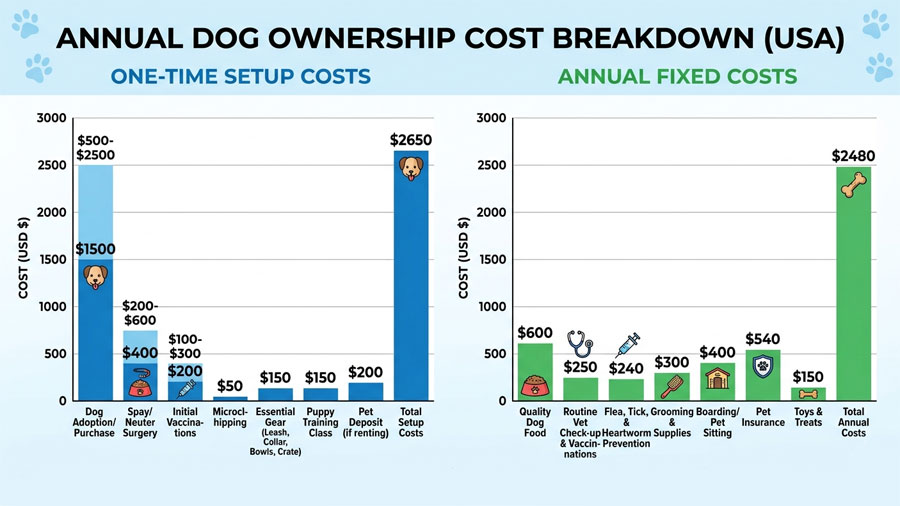
Estimated Year-One Costs (U.S.)
| Category | Low End | High End |
|---|---|---|
| Adoption / Purchase fee | $50 | $3,000+ |
| Initial vet visit + vaccines | $200 | $400 |
| Spay / Neuter | $200 | $500 |
| Food (annual) | $400 | $900 |
| Supplies (bed, crate, leash, bowls) | $150 | $400 |
| Training classes | $100 | $300 |
| Parasite prevention (annual) | $100 | $250 |
| Pet insurance (annual) | $200 | $600 |
| Total estimate | ~$1,400 | ~$6,350+ |
According to the ASPCA, the average annual cost of owning a medium-sized dog runs between $1,500 and $2,000 — not counting emergencies. ASPCA annual pet care cost estimates
Pet insurance deserves a decision before your first vet visit, not after. An unexpected illness or injury can cost $2,000–$8,000. Premiums are lower when you enroll a healthy young dog.
Rescue Dog or Breeder — What No One Tells You
Neither is wrong. Both have tradeoffs.
Rescue dogs (including mixed breeds) often come already vaccinated, spayed/neutered, and temperament-assessed. Many are calmer than puppies and skip the destructive chewing phase entirely. The adjustment period — commonly called the 3-3-3 Rule — typically runs three days to decompress, three weeks to learn the routine, three months to feel at home.
If you go with a breeder, verify they’re willing to show you health clearances for both parents and let you visit the litter before purchase. Any breeder who ships puppies without meeting you first, or won’t show the parents, is a red flag. how to identify a responsible dog breeder vs. puppy mill
Choosing the Right Breed (A Framework, Not a List)
Most breed guides give you a list. This is more useful: a framework.
The 5-Dimension Breed Match
Before you fall in love with a breed based on looks, run it through these five filters:
| Dimension | Low Maintenance | High Maintenance |
|---|---|---|
| Exercise need | Basset Hound, Shih Tzu | Border Collie, Vizsla |
| Shedding | Poodle, Maltese | Husky, German Shepherd |
| Trainability | Golden Retriever, Lab | Afghan Hound, Chow Chow |
| Alone-time tolerance | Basset Hound, Greyhound | Velcro breeds (Vizsla, Weimaraner) |
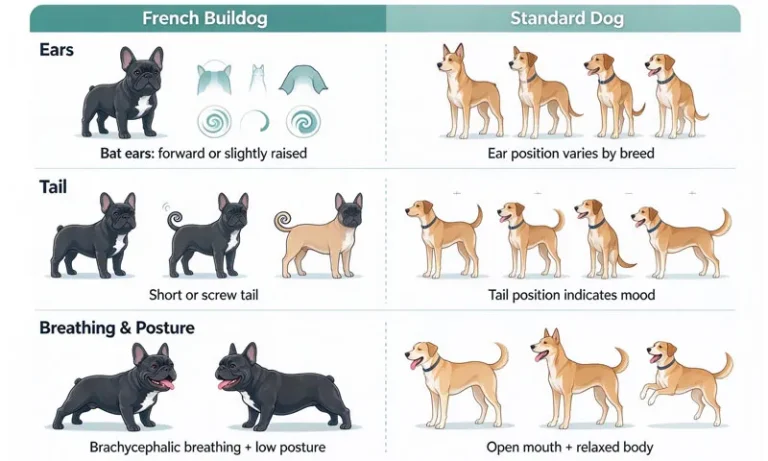
| Apartment friendliness | French Bulldog, Cavalier | Most working/herding breeds |
First-time owners do best with dogs that score “low maintenance” on at least three of five dimensions. That’s not about being lazy — it’s about giving yourself a learning curve.
First-Time Dog Owner Checklist: What to Buy (and What to Skip)
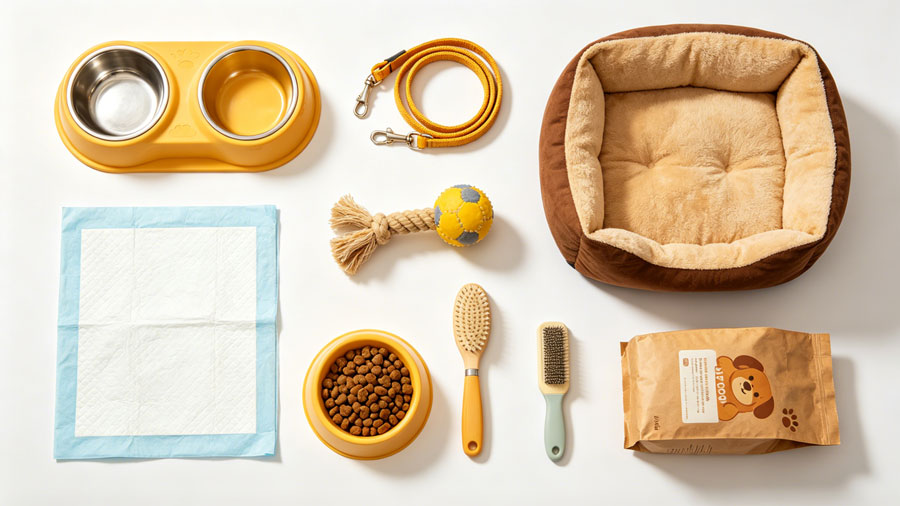
The Non-Negotiables
- Stainless steel food and water bowls — easier to sanitize than plastic
- Properly sized crate — dog should be able to stand, turn, lie down; no bigger
- 4–6 ft leash + harness — front-clip harness reduces pulling without choking
- Collar with ID tag — include your phone number, not just the dog’s name
- Enzymatic cleaner — essential for accident cleanup; regular cleaners leave scent trails dogs follow back
- High-value treats — small, soft, smelly; used for training only
One Legal Item Everyone Skips
Microchipping. Many U.S. states and Canadian provinces legally require dog registration; microchipping is the universal standard for identifying lost pets. It’s a one-time procedure done at most vet clinics for under $50 and dramatically increases the chances of reuniting with a lost dog. Check your municipality’s specific rules — requirements vary by city and state.
What You Don’t Need Yet
Skip the automatic feeder, GPS collar, and designer coat until you know your dog. These are useful tools for some owners, but buying them in week one adds cost and complexity before you’ve learned what your dog actually needs.
Your Dog’s First Night Home: Hour-by-Hour
This section alone is worth bookmarking.
What to Expect When You Walk in the Door
First 30 minutes: Let your dog sniff the space at their own pace. Don’t invite friends over. Don’t overwhelm them with attention. Put them in the area you’ve designated as their space, and let them explore.
Hours 1–3: Offer water. Take them outside for a bathroom break every 60–90 minutes — even if they don’t “need” to go. You’re establishing the outdoor bathroom association from the start.
Bedtime: Put the crate near your bed the first few nights. Your scent and breathing are calming. Place an item of worn clothing inside. Keep the room quiet and dark.
The crying: It will happen. Resist the urge to immediately pick them up every time. Wait for a two-second pause in crying before offering any calm reassurance. Rewarding mid-cry teaches them that crying summons you — which makes it worse, not better.
The 3-3-3 Adjustment Timeline
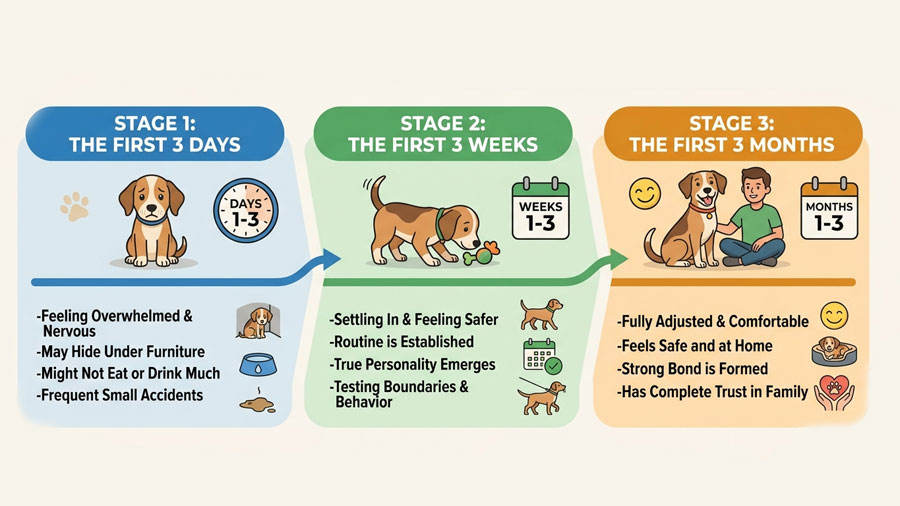
This framework — widely used by rescue organizations and behaviorists — gives realistic expectations:
- Day 1–3: Overwhelmed, possibly shut down or hyper. Not their real personality.
- Week 1–3: Starting to test limits, show quirks, settle into routine.
- Month 1–3: Comfortable, trusting, showing their actual temperament.
If you adopted an adult dog and they seem “too good” in week one, don’t worry. The real dog — with all the energy and opinions — is still adjusting.
Training Basics That Actually Work
Start With These 5 Commands
The American Veterinary Society of Animal Behavior (AVSAB) recommends reward-based training as the first-line approach for all dogs. Punishment-based methods — yelling, leash corrections, alpha rolls — increase anxiety and aggression risk without improving long-term compliance.
The five commands every dog needs, in order of priority:
- Sit — Foundation for all other commands
- Stay — The most important safety command
- Come (Recall) — Could save your dog’s life
- Leave it — Prevents ingestion of dangerous items
- Down — Useful for calm settling behavior
For each command: lure with a treat, mark the exact moment of correct behavior (with a “yes!” or a clicker), reward immediately. Keep sessions to 5 minutes. End on success.
House Training: Expect 4–6 Months
Most puppies achieve reliable house training between 4 and 6 months, depending on breed and consistency. Adult dogs from shelter environments may take 2–4 weeks to learn your schedule.
Rules that actually speed up the process:
- Take them outside immediately after waking, after eating, and after play
- Reward outdoor elimination within 3 seconds of completion
- Supervise indoors constantly or use the crate — there’s no middle ground
- Never punish accidents after the fact. The dog cannot connect a scolding to something that happened 2 minutes ago.
Veterinary Care: Your First-Year Roadmap
Core Vaccine Schedule
The following is based on the 2022 AAHA Canine Vaccination Guidelines:
| Vaccine | Type | Puppy Series | Adult Booster |
|---|---|---|---|
| Distemper / Parvovirus (DA2PP) | Core | 6–16 weeks, every 3–4 wks | 1 year, then every 3 yrs |
| Rabies | Core (legally required) | 12–16 weeks | Per state law |
| Bordetella | Non-core | 8+ weeks if dog-park exposure | Annual |
| Leptospirosis | Non-core | 12+ weeks (high-risk areas) | Annual |
2022 AAHA canine vaccination guidelines
Rabies vaccination is legally required in all 50 U.S. states and most Canadian provinces. Proof is needed for boarding, travel, and dog licensing.
Spay and Neuter: The Timeline Has Changed
The standard advice used to be: spay or neuter at 6 months. Newer research from UC Davis and other institutions suggests that for large and giant breeds, waiting until 12–18 months may reduce risks of certain joint disorders and cancers. Discuss your dog’s specific breed and size with your vet before scheduling.
The Part No One Writes About: Your Emotions
“Puppy Blues” Are Real
Researchers have documented what many new owners feel but rarely say out loud: a crash of anxiety, doubt, and regret in the first weeks of dog ownership. It’s sometimes called “puppy blues,” and it’s more common than most owners admit.
Signs include: feeling overwhelmed or trapped, questioning whether you made a mistake, resentment toward the dog, sleep-deprivation-driven irritability.
This is normal. It doesn’t mean you made the wrong choice. It typically peaks around weeks 2–4 and lifts significantly once the dog settles and you find your rhythm.
If you’re in this phase right now: you’re not alone, and it does get better.
FAQ: New Dog Owner Questions Answered
How long does it take for a new dog to adjust to a new home?
Most dogs show their real temperament around the 3-month mark. The first three days are decompression, the first three weeks are routine-learning, and the first three months are genuine settling-in. Rescue dogs with unknown histories may take longer.
What should I do the first week with a new dog?
Prioritize routine over enrichment. Establish consistent feeding times, bathroom schedules, and sleep locations. Limit visitors. The goal in week one is for the dog to feel safe and predictable — novelty and adventure come later.
How much does it cost to own a dog in the first year?
Budget $1,400–$3,500 for a typical first year, depending on breed size, whether you adopt or purchase, and your location. Emergency vet costs are the biggest wildcard — pet insurance, enrolled during puppyhood, typically runs $30–$60/month and can prevent four-figure bills.
What vaccinations does a new dog need immediately?
At minimum: DA2PP (distemper/parvovirus) and rabies (legally required in all U.S. states). Your vet will recommend additional non-core vaccines based on your lifestyle and region. Schedule a vet visit within 72 hours of bringing your dog home.
Is it better to get a puppy or an adult dog for first-time owners?
Adult dogs are genuinely underrated for first-timers. They’re past the destructive chewing phase, often house-trained, and their personality is already known. Puppies require more time, supervision, and patience — rewarding, but demanding. If you work long hours or live alone, an adult dog is often the better fit.
Disclaimer: The information in this article is for general educational purposes only and does not constitute veterinary or professional training advice. Always consult a licensed veterinarian for health-related decisions specific to your dog. Training guidance should be adapted to your dog’s individual temperament and needs.