

Every raining dog walk comes with hidden risks most owners never think about — until something goes wrong. Rain itself won’t hurt your dog. But contaminated puddles, plummeting temperatures, and a disease called leptospirosis absolutely can. This guide covers what actually matters: real health risks ranked by severity, breed-specific safety thresholds, and a post-walk routine that takes under five minutes. By the end, you’ll know exactly when it’s safe to go out, when to stay in, and what to do either way.
How Dogs Experience Rain Differently Than We Do
Your dog doesn’t just see the rain — they feel it coming.
Dogs detect barometric pressure drops hours before a storm hits. Research by animal behaviorist Stanley Coren shows that dogs consistently change behavior as pressure falls, long before rain starts. This explains why your dog starts pacing, panting, or hiding well before the first drop.
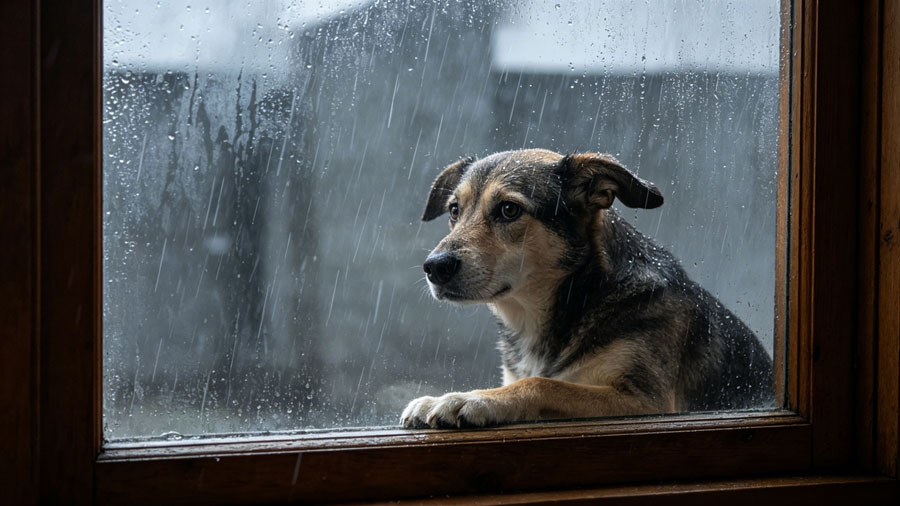
That said, not every dog responds the same way. Breed history matters a lot here.
Dogs That Were Built for Wet Weather
Some breeds are genuinely designed for rain and water:
- Labrador Retrievers — double-layered coats with natural water resistance
- Portuguese Water Dogs — webbed paws, bred for ocean fishing
- Irish Water Spaniels — tight, water-repellent curls
These dogs often love rainy walks. Their coats handle moisture, their bodies regulate temperature well in cool, damp conditions, and they’ll happily splash through puddles you’re trying to avoid.
Dogs That Struggle in Wet Weather
On the other side, these breeds need extra attention on rainy days:
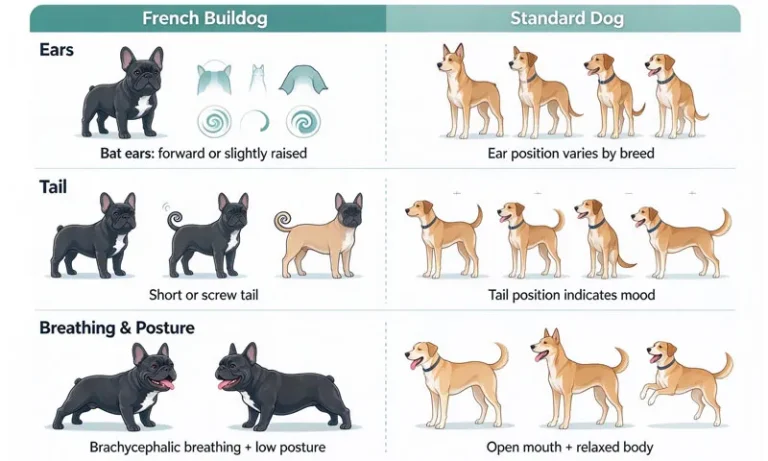
- Brachycephalic breeds (Bulldogs, Pugs, French Bulldogs) — already have compromised breathing; cold, wet air stresses their airways further
- Toy breeds (Chihuahuas, Yorkies, Maltese) — small body mass means faster heat loss; standing close to wet pavement makes it worse
- Senior dogs — wet cold directly aggravates joint inflammation; many arthritic dogs become visibly stiff after a damp walk
Can Dogs Get Sick from Rain? The Real Health Risks
This is the question most owners search for. The honest answer: rain alone won’t make your dog sick. What can make them sick is everything rain brings with it.
Leptospirosis — The Rainy Season Threat Most Owners Have Never Heard Of
This one deserves your full attention.
Leptospirosis is a bacterial infection spread through water contaminated by infected animal urine — most often from rodents, deer, and raccoons. After rain, bacteria from soil and animal waste wash into puddles, streams, and standing water. Your dog walks through it. Licks their paws. Done.
leptospirosis transmission and prevention in dogs
Symptoms appear within 2–12 days and include:
- Sudden fever and lethargy
- Vomiting and loss of appetite
- Muscle pain and reluctance to move
- Yellowing of the eyes or skin (jaundice)
- Decreased urination (kidney involvement)
Left untreated, it causes kidney failure and liver damage. It can be fatal.
The good news: there’s a vaccine. Talk to your vet about annual leptospirosis vaccination, especially if you live near wooded areas, rivers, or anywhere with wildlife activity.
⚠️ If your dog shows fever, vomiting, or extreme lethargy within two weeks of a rainy walk, call your vet the same day. Don’t wait.
Toxic Puddles — What’s Actually in That Water
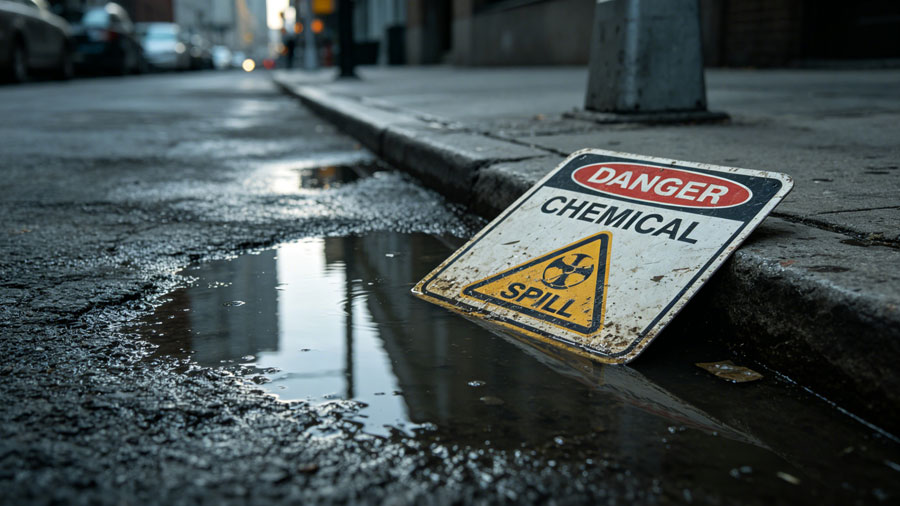
Rain doesn’t just collect water. It collects everything on the surface it travels over:
| Hazard | Source | Risk to Dogs |
|---|---|---|
| Pesticides & herbicides | Lawn treatments | Gastrointestinal distress, neurological symptoms |
| Antifreeze (ethylene glycol) | Driveways, parking lots | Highly toxic — sweet taste attracts dogs; causes rapid kidney failure |
| Petroleum runoff | Roads | Skin irritation, toxic if ingested |
| Toxic mushrooms | Appear after rain | Liver failure; some species fatal within 24 hours |
| Cane toads (southern US/FL) | Active in wet weather | Toxin causes seizures; requires immediate vet care |
antifreeze poisoning symptoms and emergency steps
Keep your dog away from roadside puddles entirely. If they drink from one before you can stop them, note the location and call your vet.
Respiratory Risks in Cold, Wet Conditions
Prolonged exposure to cold, wet air causes airway inflammation. That inflammation won’t cause pneumonia on its own — but it lowers your dog’s defenses against Bordetella (kennel cough) and other respiratory pathogens already present in the environment.
This risk is highest for puppies, senior dogs, and dogs with pre-existing heart or lung conditions.
Walking Dog in the Rain: Breed-Specific Safety Thresholds
Here’s the practical framework that neither of the top-ranking articles bothers to give you.
Temperature and Time Limits by Dog Type
| Dog Type | Examples | Min. Safe Temp | Max Rain Exposure |
|---|---|---|---|
| Small, short-coated | Chihuahua, Min. Pinscher | 50°F / 10°C | 10 min max |
| Medium, short-coated | Beagle, Boxer | 45°F / 7°C | 15–20 min |
| Large, double-coated | Husky, Golden Retriever | 32°F / 0°C | 30+ min |
| Brachycephalic breeds | Bulldog, Pug | 55°F / 13°C | 10 min max |
| Senior dogs (any breed) | — | 50°F / 10°C | Potty break only |
| Puppies under 6 months | — | 55°F / 13°C | 10 min max |
These are starting points — always watch your individual dog. Shivering, whining, or lifting paws are signals to head home immediately.
dog breed cold weather tolerance guide
The “How Long Is Too Long?” Rule
If your dog is shivering within 10 minutes, you’ve already stayed out too long. For small and short-coated breeds, treat any temperature below 50°F and raining as a “potty trip only” situation — out and back, no extended walking.
Rainy Day Walk Gear That Actually Matters
What to Look for in a Dog Raincoat
Not all raincoats are worth the money. A good one needs:
- Waterproof outer shell (look for taped seams, not just “water-resistant” fabric)
- Reflective strips — visibility drops significantly in rain; drivers need to see your dog
- Belly coverage — a cape-style coat that doesn’t cover the underside is mostly decorative
- Secure fit without restricting gait — test it at home first; if your dog walks strangely, it doesn’t fit
Dog Boots — Practical, Not Just Cute
Boots block direct paw contact with contaminated puddles and road salt. The bigger benefit people miss: they also prevent dogs from licking chemical residue off their paws when you get home.
Getting a dog used to boots takes about a week of short sessions. Start indoors, reward heavily, and keep sessions under three minutes.
The Post-Rain Routine: 5 Steps, Under 5 Minutes
This is where most owners skip out — and where infections start.
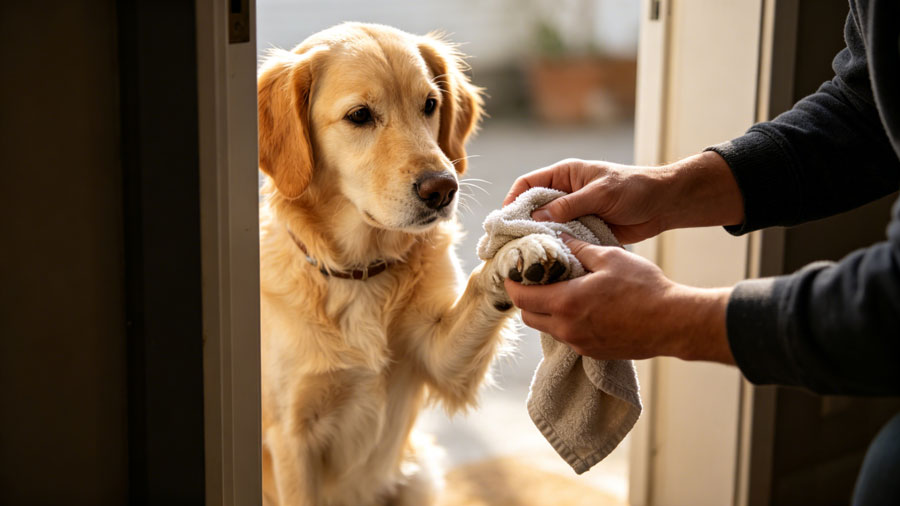
- Wipe paws at the door — focus on the spaces between the toes, not just the pads. That’s where moisture and bacteria sit.
- Check for debris — grass seeds, thorns, and small stones lodge in paw pads during wet walks and cause infections within 24–48 hours.
- Inspect the ears — dogs with floppy ears (Cocker Spaniels, Basset Hounds) trap moisture in the ear canal. A quick visual check and gentle wipe prevents yeast infections.
- Dry skin folds — Bulldogs, Shar-Peis, and other wrinkly breeds develop fungal infections fast in damp skin folds. Dry each fold individually.
- Final towel dry or low-heat blow dry — don’t put a damp dog in a crate or on furniture. Let them fully dry first.
When to Stay Inside: Rainy Days That Are Actually Dangerous
Light rain with mild temperatures? Walk is fine with proper gear. But call it off when:
- Active thunder or lightning within 10 miles — the 30-30 rule: if thunder follows lightning in under 30 seconds, take cover. Wait 30 minutes after the last thunder before going out.
- Flood warnings in your area — floodwater carries sewage, chemicals, and submerged hazards. Keep all dogs inside.
- Downed power lines nearby — electricity spreads through wet ground. A downed wire that looks “far away” can still electrocute at a significant radius.
- Your dog is sick, pregnant, or immunocompromised — rain day becomes a rest day, no exceptions.
Rainy Day Indoor Activities That Actually Tire Your Dog Out
A bored dog in a small space is a destructive dog. These actually work:
- Nose work games — hide small treats around the house. Fifteen minutes of scent tracking exhausts a dog more than a 30-minute walk.
- Training sessions — rain days are underrated for building skills. Ten minutes on recall, stay, or impulse control burns mental energy fast.
- Puzzle feeders — use their regular meal, not extra treats, to avoid overfeeding on low-activity days.
- Indoor fetch in a hallway — not glamorous, but it works.
FAQ: Raining Dog Questions, Answered Directly
Q: Can my dog catch a cold from walking in the rain?
Dogs don’t catch human colds. However, wet, cold conditions weaken immune defenses and can make dogs more susceptible to Bordetella (kennel cough) and other respiratory infections. Keep walks short in cold rain.
Q: How do I know if my dog has leptospirosis after a rainy walk?
Watch for fever, sudden lethargy, vomiting, or reluctance to eat within 2–12 days of exposure to puddles or standing water. Jaundice (yellowing eyes or gums) means you need emergency vet care immediately.
Q: My dog refuses to go outside in the rain. How do I get them to potty?
Don’t force it — that creates negative associations with going outside entirely. Try: a covered porch or garage area, a dog raincoat to reduce the physical discomfort of getting wet, and going out with them rather than just opening the door.
Q: Is it safe to let my dog drink from puddles?
No. Puddles collect chemical runoff, bacteria, and parasite eggs. Carry fresh water on walks and train your dog to drink from a portable bottle or bowl instead.
Q: How long after it stops raining is it safe to walk my dog?
Most surface runoff disperses within 1–2 hours. Standing puddles, however, remain contaminated as long as they sit. Avoid any stagnant water regardless of when it last rained.
Disclaimer: This article is for general informational purposes only and does not constitute veterinary medical advice. Always consult a licensed veterinarian for guidance specific to your dog’s health, breed, and medical history. In any emergency, contact your vet or an emergency animal hospital immediately.