

Introduction
Dog boundary training turns your yard into a place your dog wants to stay, not a space you have to police. If your dog treats the property line as a suggestion, you’re not alone. This guide skips the shock collar and gives you the exact protocol trainers use, backed by current research and 2026 legal updates you need to know.
What Is Dog Boundary Training? (And Why It’s Not the Same as an Invisible Fence)
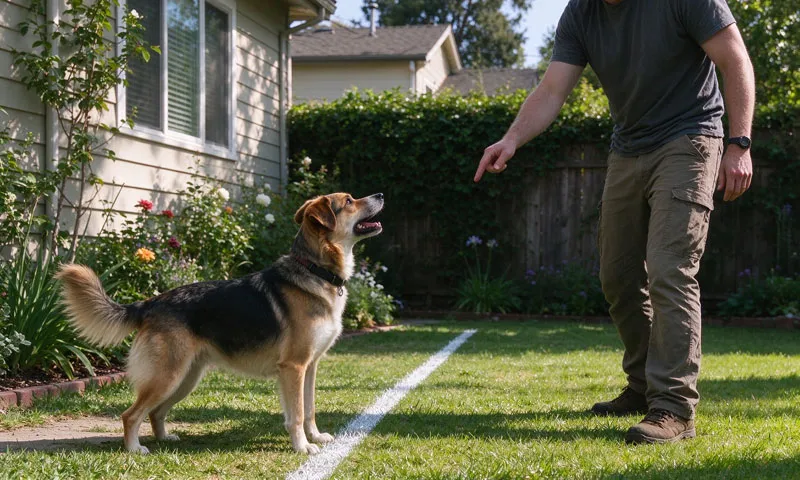
Boundary training teaches a dog where “home” ends using visual cues, repetition, and rewards. An invisible fence does something different: it uses a collar to punish the dog for crossing a line. The dog learns to fear a zone. Boundary training teaches the dog to prefer a zone.
That distinction matters more than most articles admit.
The Science Behind Territorial Instinct in Dogs
Dogs are naturally territorial. Left alone, most dogs default to staying near familiar scent markers, resting spots, and their people. Boundary training works with this instinct instead of overriding it with pain. You’re not fighting biology — you’re giving it structure.
Who This Method Works Best For (and Who Should Skip It)
This method suits calm-to-moderate energy dogs in yards away from busy roads. It’s not a fit for:
- Dogs with a bite history or resource aggression
- Properties bordering high-traffic streets
- Dogs under 4 months old (attention spans too short for reliable conditioning)
If any of these apply, a physical fence isn’t optional — it’s the only safe choice.
Why Dogs Leave the Yard: The Real Triggers
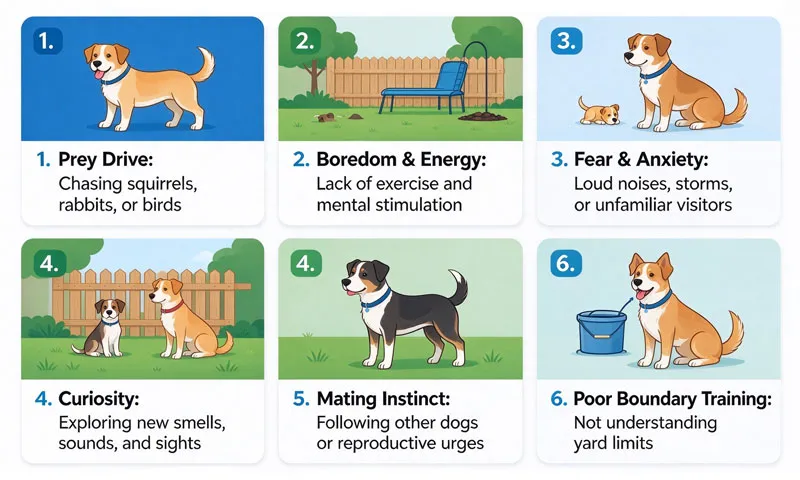
Most dogs don’t bolt for no reason. They bolt because something outweighs the pull of staying.
Prey Drive and Wildlife
Squirrels, rabbits, and deer trigger a chase response that overrides most training — especially in scent hounds and terriers.
Social Pull From Other Dogs or People
A neighbor’s dog, a jogger, or the mail carrier can be a stronger motivator than anything in your yard.
Unmet Exercise Needs
A dog with pent-up energy treats escape as entertainment. Fix the energy problem first, or training will fight an uphill battle.
Intact Hormonal Drive
Unspayed or unneutered dogs roam further and more often, driven by mating instinct rather than boredom.
Shock Collars and Invisible Fences: What the Industry Won’t Tell You
How These Systems Actually Work
A collar delivers a static correction when the dog crosses a buried or GPS-defined line. Simple in theory. Messier in practice.
The Behavioral Risk Nobody Mentions
Dogs don’t always associate the shock with the boundary. If a dog is shocked while staring at a child or another dog, that shock can attach itself to the wrong trigger. This is called redirected or trigger-stacked aggression, and it’s a documented risk with aversive tools.
The American Veterinary Society of Animal Behavior’s position statement on humane training]
2026 Legal Landscape: Where Shock Collars Are Restricted
Regulation is shifting fast, and most yard-training articles are years out of date on this.
| Region | Legal Status | Notes |
|---|---|---|
| England & Wales | Banned | Enforced since 2024 under the Animal Welfare Act |
| Some EU countries (Germany, Austria) | Banned or heavily restricted | Vet exemptions only in some cases |
| Rhode Island, MA (US) | Restriction proposals active | Check current state legislature status |
| Most US states | Legal | No federal restriction as of 2026 |
Laws move. Check your state or country’s current animal welfare code before buying a containment collar.
When a Containment System Might Still Make Sense
For dogs already reliable on recall, in large rural properties, some owners use GPS containment as a backup — not a primary training method. It’s not a moral failing to use one responsibly. It is a mistake to use one instead of training.
The Step-by-Step Boundary Training Protocol
What You’ll Need
- High-value treats (real meat, not kibble)
- A 15–30 ft long line
- 6–10 flags or marked stakes
- A treat pouch
The 8-Week Timeline
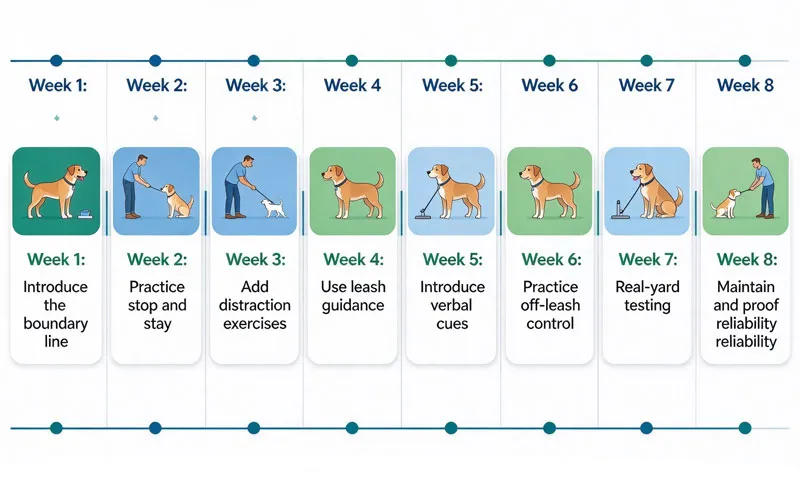
Weeks 1–2: Indoor Flag Targeting
Teach your dog to touch a flag with its nose, then return to you for a treat. Repeat until it’s automatic — no distractions yet.
Weeks 3–4: On-Leash Boundary Walks
Place flags 8–10 feet apart around your yard’s perimeter. Walk the line daily. Your dog runs to each flag, touches it, comes back, gets rewarded.
Weeks 5–6: Adding Distractions
Have a neighbor walk past at a distance. Say “leave it” the moment your dog notices. Reward the return, not the ignoring.
Weeks 7–8+: Supervised Off-Leash Practice
Only remove the leash once your dog is reliable at full distraction levels. Never rush this step.
Recall Is Your Safety Net
Every dog will eventually face a distraction stronger than its training. A rock-solid recall is what brings them home when boundary training alone isn’t enough.
Step-by-step recall training guide
Troubleshooting: When Training Stalls
My Dog Ignores the Boundary Off-Leash
Go back to the long line. This isn’t failure — it’s a normal part of the process. Rushing off-leash too early is the single most common mistake owners make.
My Dog Only Listens With Treats Visible
Wean off visible treats gradually. Reward randomly instead of every time, and keep treats in a pouch, out of sight, once the behavior is established.
Regression After Weeks of Progress
Regression usually means a new distraction entered the picture, or training sessions got inconsistent. Drop back one step and rebuild.
Does Breed or Age Change the Approach?
High-prey-drive breeds (huskies, terriers, hounds) need longer distraction phases and higher-value rewards.
Puppies need shorter sessions — five minutes, several times a day — and realistic expectations. Full reliability rarely happens before 8–10 months.
Senior dogs often train faster since they’re naturally less driven to roam, but factor in vision or hearing decline when using flags or verbal cues.
Physical Fence vs. Invisible Fence vs. Boundary Training
| Factor | Physical Fence | Invisible/GPS Fence | Boundary Training |
|---|---|---|---|
| Cost | $2,000–$8,000+ | $200–$1,000 | Under $100 |
| Setup Time | Days to weeks | Hours to a day | 6–8 weeks |
| Safety Near Roads | Highest | Moderate | Lowest |
| Legal Risk (2026) | None | Varies by region | None |
| Works for High-Prey Dogs | Yes | Inconsistent | Requires more time |
If your yard borders a road, this decision isn’t about preference — get a physical fence.
Comparing GPS fences vs. wireless dog fences
Safety Guidelines You Should Never Skip
- Never leave a dog unattended outside, even one that’s fully boundary-trained.
- Boundary training does nothing to stop outside threats — other animals, strangers, or theft.
- Supervision is not optional at any stage of this process.
ASPCA guidelines on outdoor pet safety
FAQ: What Dog Owners Actually Ask
How long does dog boundary training take?
Most dogs need 6–8 weeks of daily practice for reliable results. High-prey-drive breeds may need longer.
Can I train an older dog to respect boundaries?
Yes. Senior dogs often train faster due to lower prey drive, though sensory decline may require adjusted cues.
Is boundary training as effective as an electric fence?
For calm dogs in low-traffic areas, yes — and it avoids the behavioral risks tied to shock-based systems.
Are shock collars illegal where I live?
It depends on your country and state. England and Wales have banned them; most US states still allow them. Check current local law before buying one.
Conclusion
Boundary training isn’t just about keeping your dog inside a line. It’s about building a relationship where your dog chooses to stay because home is where the good stuff happens.
Disclaimer: This article is for informational purposes only and does not replace professional veterinary or dog training advice. Laws regarding containment devices vary by location and change frequently — verify current regulations with your local authorities before purchasing any training equipment.