

Your dog just ate. Now you’re wondering how long does it take a dog to digest food before the next meal, walk, or bathroom break. The honest answer: it depends on your dog’s size, breed, and diet. Full digestion runs anywhere from 8 to 24 hours. Below, you’ll find the exact stage-by-stage timeline, a breed size chart, and the warning signs that mean something’s actually wrong.
How Dog Digestion Actually Works, Stage by Stage
Digestion isn’t one event. It’s four distinct stages, each with its own timeline.
Mouth and Saliva: The First Few Seconds
Dogs don’t chew much. Saliva coats the food fast, softening kibble and prepping it for the stomach. This stage lasts seconds, not minutes, for most breeds.
Stomach: Where the Real Breakdown Starts
Food hits the stomach and mixes with strong gastric acid. Proteins and fats start breaking down here. This phase takes 2 to 4 hours, depending on food density. Fatty or high-protein meals sit longer than lean, low-fat ones.
Small Intestine: Nutrient Absorption Peaks
Once food turns into a liquid mixture called chyme, it moves into the small intestine. Bile and pancreatic enzymes finish the breakdown. Nutrients get absorbed here over another 2 to 4 hours.
Large Intestine: Water Absorption and Elimination
The last stretch. Remaining material sits in the large intestine for 12 to 20 hours while water gets reabsorbed and waste forms into stool. This final stage explains why total digestion time swings so widely between dogs.
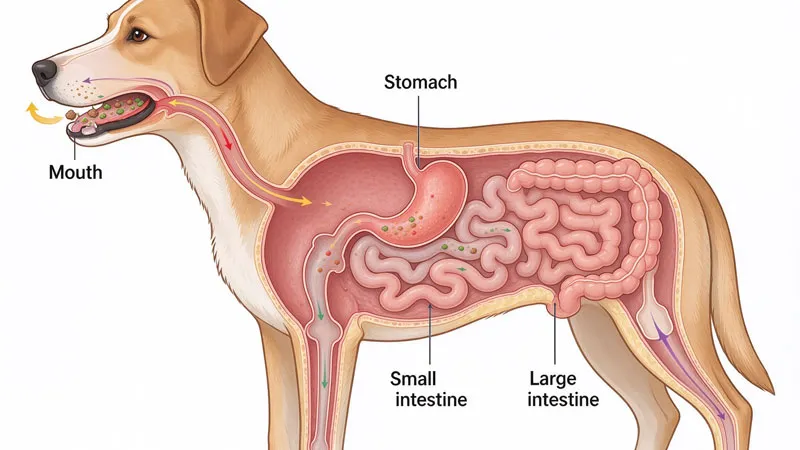
How Long Does It Take a Dog to Digest Food, Start to Finish?
Add it up: 8 to 24 hours total, with most healthy adult dogs landing around 10 to 12 hours.
How Long After Eating Does a Dog Poop?
Most dogs poop within 6 to 8 hours after eating. Puppies go faster, sometimes within 30 minutes, because their digestive tract is shorter and their gastrocolic reflex is stronger. If your dog hasn’t gone in 24 hours, that’s worth watching, not panicking.
Dog Digestion Time by Breed and Size: The Comparison Chart
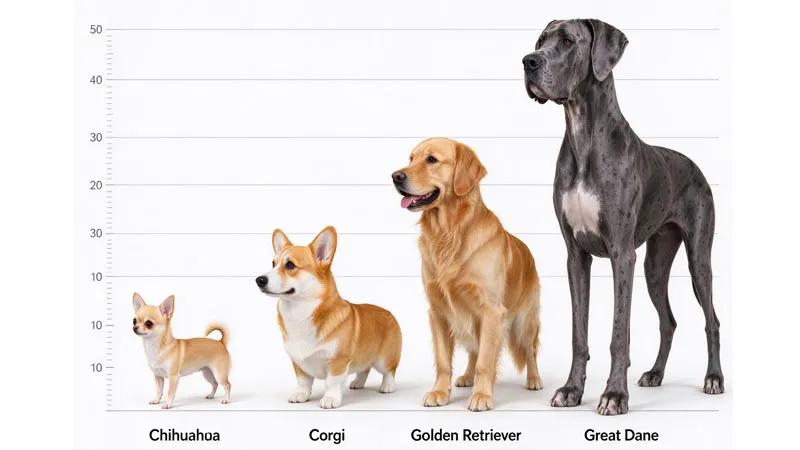
Size changes everything. Smaller dogs process food faster because their digestive tract is shorter relative to body size.
| Breed Size | Example Breeds | Avg. Digestion Time | Common Sensitivity |
|---|---|---|---|
| Toy/Small | Chihuahua, Pomeranian | 8-10 hours | Fast metabolism, small stomach capacity |
| Medium | Border Collie, Bulldog | 10-14 hours | Bloat risk in deep-chested breeds |
| Large | Golden Retriever, Labrador | 12-18 hours | Slower gastric emptying |
| Giant | Great Dane, Mastiff | 14-24 hours | Highest bloat/GDV risk |
Age matters too. Puppies digest faster due to higher metabolic demand. Senior dogs slow down as gut motility declines with age.
What Affects Your Dog’s Digestion Speed?
Five variables drive the timeline more than anything else.
- Diet type. Raw and wet food typically digest in 4 to 6 hours. Standard kibble takes longer, often 8 to 10 hours, due to its dry, dense composition.
- Fiber content. Higher fiber slows transit time but supports stool consistency and gut bacteria balance.
- Exercise. Active dogs move food through the gut faster. Sedentary dogs digest slower and are more prone to bloating.
- Hydration. Low water intake thickens stool and slows the large intestine’s job.
- Stress. Anxiety triggers cortisol, which can speed up or completely stall gut motility. Vets see this often in dogs after boarding, travel, or vet visits.
Canine gastrointestinal physiology research
When Slow or Fast Digestion Signals a Real Problem
Not every digestive quirk needs a vet. Some do, urgently.
Why Is My Dog Throwing Up Undigested Food Hours After Eating?
Occasional regurgitation right after a meal is usually just eating too fast. But vomiting undigested food 6+ hours later points to delayed gastric emptying, a blockage, or a motility disorder. That’s a same-week vet visit, not a wait-and-see situation.
Bloat (GDV): Know This Emergency
Bloat is fatal within hours if untreated. Watch for a swollen, hard abdomen, unproductive retching, restlessness, and drooling. Large and giant breeds with deep chests carry the highest risk. If you see these signs, get to an emergency vet immediately. Don’t wait for symptoms to “pass.”
Diarrhea, Constipation, and Undigested Food in Stool
One-off soft stool after a food change is normal. Diarrhea lasting more than 48 hours, visible blood, or repeated undigested kibble in stool signals a digestive disorder that needs diagnosis, not a home remedy.
This article is informational and doesn’t replace a veterinary diagnosis. Always consult your vet for symptoms lasting more than 24-48 hours.
How to Support Healthy Digestion in Your Dog
Small, consistent changes beat drastic ones.
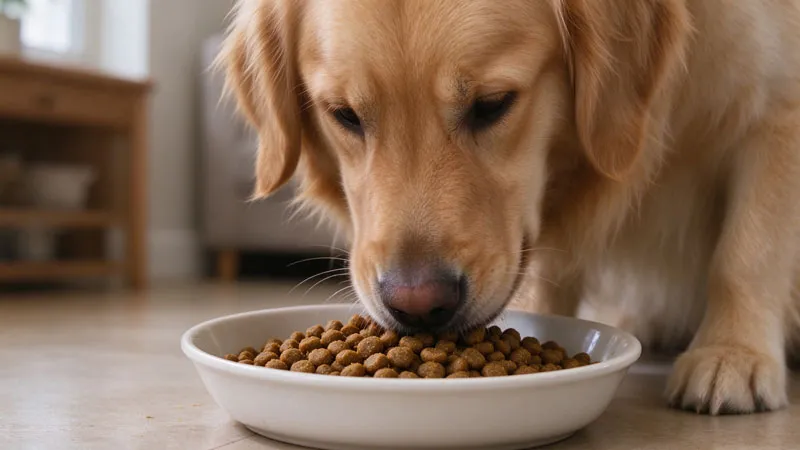
- Pick easy-to-digest food. Look for named protein sources first on the label and minimal fillers. Dogs with sensitive stomachs often do better on limited-ingredient formulas.
- Add probiotics. A quality probiotic supports gut flora balance and can reduce gas, loose stool, and irregular digestion over time.
- Feed on a schedule. Two measured meals a day beat free-feeding for predictable digestion and easier monitoring of appetite changes.
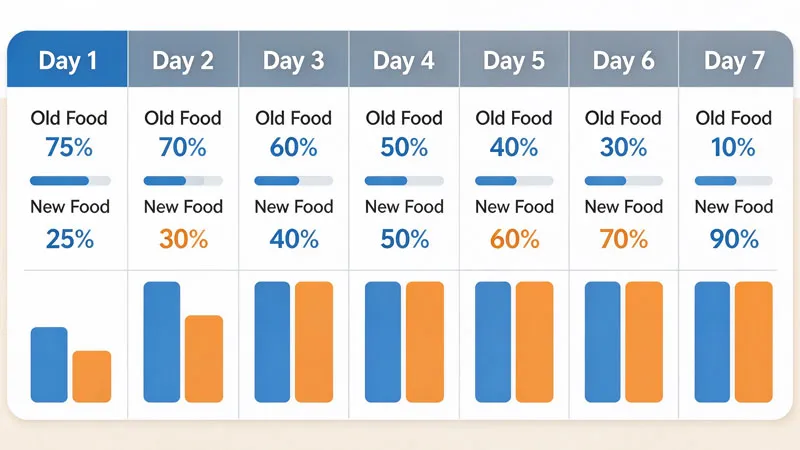
- Transition food gradually. Sudden switches shock the gut. Use a 7-day ramp: 25% new food for days 1-2, 50% for days 3-4, 75% for days 5-6, 100% by day 7.
FAQ: What Dog Owners Actually Ask
Does wet food digest faster than dry kibble?
Yes. Wet food’s higher moisture content breaks down faster in the stomach, often within 4 to 6 hours versus 8 to 10 for kibble.
Can stress slow down a dog’s digestion?
Yes. Cortisol from anxiety or travel can stall gut motility, causing constipation or, in some dogs, sudden diarrhea.
How long after vomiting should I wait to feed my dog again?
Wait 12 to 24 hours after a single vomiting episode, offering small amounts of bland food first. Repeated vomiting warrants a vet call, not another meal.
Is it normal for a dog to poop 3 times a day?
Yes, for most healthy adult dogs. Puppies may go more often. A sudden jump in frequency or volume is worth mentioning to your vet.
Disclaimer: This article is for informational purposes only and does not substitute professional veterinary advice, diagnosis, or treatment. Always consult a licensed veterinarian regarding your dog’s specific health and digestive concerns.