

Learning how to make your dog drink more water starts with knowing why they stopped. A dry nose, a half-full bowl, a dog that just isn’t interested — it’s easy to brush off. But mild dehydration builds quietly and hits the kidneys first. This guide gives you a real hydration calculator, a symptom checklist, and seven fixes that actually work.
Why Your Dog’s Water Intake Matters More Than You Think
Water isn’t just “extra.” It regulates body temperature, cushions joints, and flushes waste through the kidneys. A dog running a mild fluid deficit for weeks doesn’t collapse — they just function a little worse. Digestion slows. Skin gets flaky. Energy dips.
Veterinary internal medicine texts put total body water at roughly 60% of a dog’s body weight, with daily turnover far higher than most owners assume. That’s the quiet reason vets ask about water intake at every checkup, even when nothing seems wrong.
Veterinary fluid balance guidelines
How Much Water Does Your Dog Actually Need?
The Basic Formula
Most healthy dogs need 0.5 to 1 ounce of water per pound of body weight, daily. A 40-pound dog lands somewhere between 20 and 40 ounces. That’s a wide range on purpose — activity level, diet, and climate all shift the number.
| Body Weight | Daily Water (approx.) |
|---|---|
| 10 lbs | 5–10 oz |
| 25 lbs | 12.5–25 oz |
| 50 lbs | 25–50 oz |
| 80 lbs | 40–80 oz |
| 100+ lbs | 50–100+ oz |
What Pushes That Number Higher
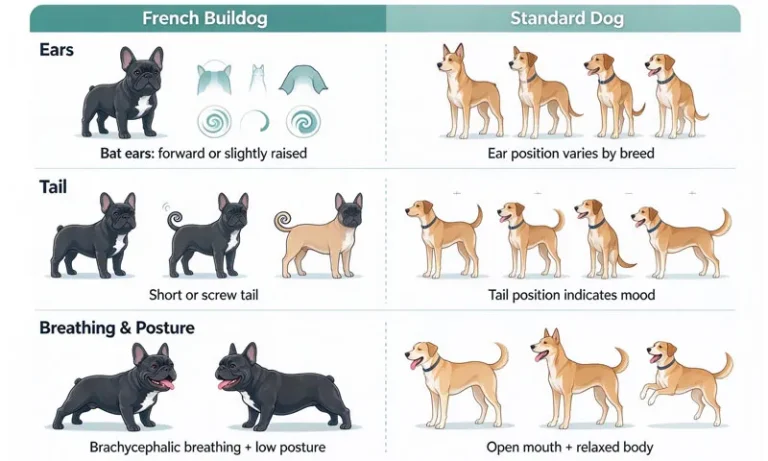
Hot weather, heavy exercise, kibble-only diets, pregnancy, nursing, and recovery from surgery all raise water needs. Flat-faced breeds — bulldogs, pugs, Boston terriers — often drink less because bowl access is physically awkward for their skull shape. Don’t mistake that for disinterest.
Life Stage Changes Everything
Puppies dehydrate faster because of their size-to-surface ratio. Senior dogs often drink less as kidney function declines, which sounds backwards but makes sense — aging kidneys concentrate urine less efficiently, so the body loses more water passively.
Senior dog kidney health signs to watch for
Why Won’t My Dog Drink Water? 9 Root Causes
Behavioral and Environmental Triggers
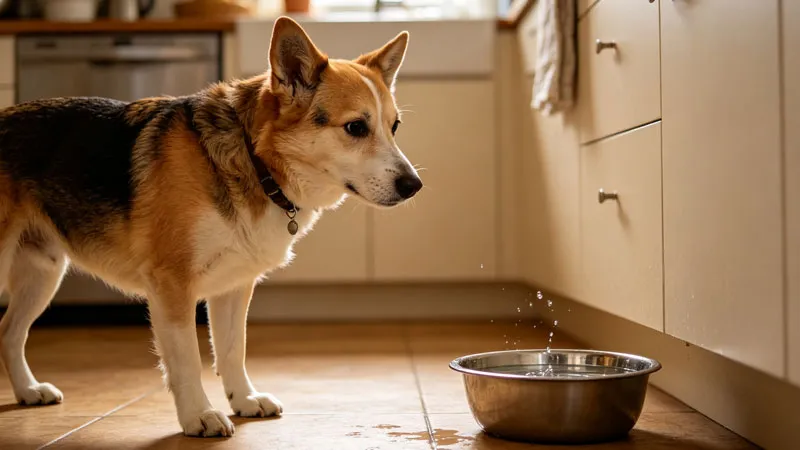
A bowl that’s too deep bothers a dog’s whiskers — it’s called whisker fatigue, and it’s real. Stale water, a noisy corner, or a recent move can all shut down drinking. In multi-dog households, one dog sometimes avoids the water station because a more assertive dog guards it. Owners rarely catch this without watching closely.
Medical Causes Worth Ruling Out
Dental pain, kidney disease, urinary tract infections, and diabetes can all change drinking habits — sometimes less water, sometimes dramatically more. A sudden shift in either direction, not just refusal, is the real red flag.
Medication and Post-Surgical Effects
This gets skipped constantly: dogs recovering from anesthesia often drink very little for 12–24 hours. That’s typically normal, not a crisis. Certain diuretics and steroids swing water intake the other way. If your dog just had surgery, ask your vet what’s expected before assuming the worst.
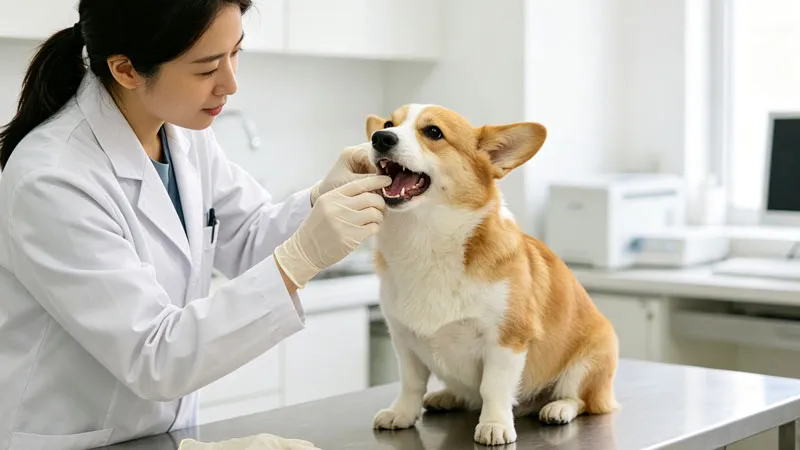
Signs of Dehydration: When Should You Actually Worry?
A Tiered Way to Think About It
Mild: Gums slightly tacky, energy normal. Watch and encourage drinking.
Moderate: Skin snaps back slowly when pinched, slight lethargy. Call your vet within 24 hours.
Severe: Sunken eyes, disorientation, skin that stays tented. This is an emergency — go now.
The Skin Elasticity Test
Gently pinch the loose skin between your dog’s shoulder blades, lift it, and let go. Hydrated skin snaps back in under a second. If it sags or takes several seconds, treat it as moderate to severe dehydration and act accordingly.
Don’t force large amounts of water into a severely dehydrated dog at once — it can cause vomiting and make things worse. Offer small amounts, then get to a vet.
7 Ways to Get Your Dog to Drink More Water
1. Switch the bowl material. Stainless steel and ceramic don’t hold odors the way plastic does. Go wider and shallower to reduce whisker contact.
2. Try a pet fountain. Moving water taps into an old instinct — still water can signal contamination in the wild. Many dogs that ignore a bowl drink readily from a fountain.
3. Add low-sodium broth, carefully. Skip anything with onion or garlic powder — check the label every time, since many store-bought broths hide both. A quick homemade version: simmer plain chicken with no seasoning, strain, cool, freeze in ice cube trays.
4. Mix in wet food or soak the kibble. Warm water poured over dry kibble adds moisture without changing the routine.
5. Offer hydrating treats. Cucumber, watermelon (seedless), and broth-based ice cubes work well. Skip grapes and raisins entirely — they’re toxic to dogs regardless of hydration benefits.
6. Place multiple water stations. Especially in multi-dog homes, spread bowls across rooms so no single dog controls access.
7. Use electrolyte supplements when appropriate. These help after vomiting, diarrhea, or intense exercise — not as a daily default. Never substitute human sports drinks; many contain xylitol, which is toxic to dogs.
Safe and unsafe fruits for dogs list
Which Hydration Method Actually Works Best?
| Method | Cost | Speed of Results | Best For |
|---|---|---|---|
| Pet fountain | $$ | Fast | Dogs drawn to movement |
| Multiple bowls | $ | Moderate | Multi-dog households |
| Wet food/soaked kibble | $$ | Fast | Picky or senior dogs |
| Broth additions | $ | Fast | Short-term appetite issues |
If budget is tight, start with the bowl itself. It’s the cheapest change and often the fastest to show results.
When to See a Veterinarian Immediately
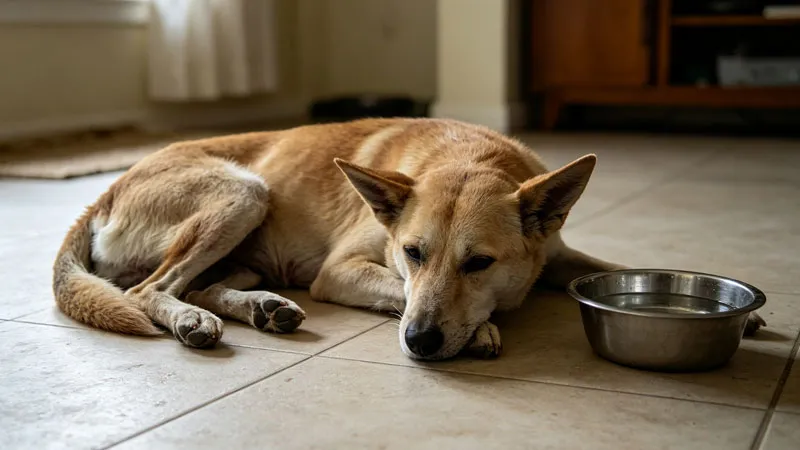
Call a vet if your dog refuses all water for over 24 hours, especially alongside vomiting, diarrhea, or noticeable lethargy. Delayed rehydration is a known contributor to acute kidney injury in dogs — this isn’t a wait-and-see situation once those symptoms stack up.
Signs of acute kidney injury in dogs
Key Takeaways
- Most dogs need 0.5–1 oz of water per pound of body weight daily
- Whisker fatigue and bowl placement cause more refusal than owners realize
- Post-surgery dogs often drink less for 12–24 hours — that’s usually normal
- Skin that stays tented after a pinch test means act now, not tomorrow
- Never use human electrolyte drinks — xylitol is toxic to dogs
Frequently Asked Questions
My dog won’t drink water but acts normal — should I worry?
Not immediately, but track it. If refusal passes 24 hours or normal behavior slips, call your vet.
Can I give my dog Pedialyte or Gatorade?
Unflavored Pedialyte in small amounts is generally fine short-term. Skip Gatorade — check for xylitol first, and ask your vet before using either regularly.
How long can a dog go without water safely?
Around 24 hours is the general threshold before real risk builds. Puppies and seniors hit that risk faster.
Does wet food really count as hydration?
Yes. Wet food runs 70–80% moisture, compared to roughly 10% in dry kibble — it adds meaningful water intake.
Why does my senior dog drink less than before?
Aging kidneys often concentrate urine less efficiently, which changes thirst signals. Bring it up at their next checkup.
Disclaimer: This article is for general informational purposes only and does not replace professional veterinary advice. Always consult a licensed veterinarian for any concerns about your dog’s health or hydration.