

Your dog just licked the cinnamon off your toast. Now you’re wondering: can dogs have cinnamon — and should you be worried? The short answer is that small amounts aren’t toxic, but the risk depends on the form, the quantity, and your dog’s size and health. This guide gives you a vet-reviewed dose reference chart, a clear symptom checklist, and a step-by-step action plan if your dog already ate some. No fluff — just the facts you need.
What Is Cinnamon, and Why Does It Matter Which Type Your Dog Gets?
Not all cinnamon is the same. There are two main types, and the difference matters more than most pet owners realize.
Cassia cinnamon is what you’ll find in almost every U.S. grocery store. It’s bold, spicy, and inexpensive. It also contains significantly higher levels of coumarin — a compound that can cause liver and kidney damage when ingested in large amounts.
Ceylon cinnamon (sometimes called “true cinnamon”) is milder, harder to find, and contains far less coumarin. It’s the safer of the two — but that doesn’t make it a free pass for dogs.

| Cassia Cinnamon | Ceylon Cinnamon | |
|---|---|---|
| Availability | Most U.S. grocery stores | Specialty or health food stores |
| Flavor | Strong, spicy | Mild, slightly sweet |
| Coumarin Level | High | Very low |
| Risk to Dogs | Higher | Lower (but still not recommended) |
| Common In | Baked goods, spice racks | Specialty recipes |
Is Cinnamon Safe for Dogs? The Straight Answer
Cinnamon is not classified as toxic to dogs by the ASPCA — but that doesn’t mean it’s safe to feed intentionally. There’s a meaningful difference between “won’t kill your dog in a single lick” and “fine to add to their food.”
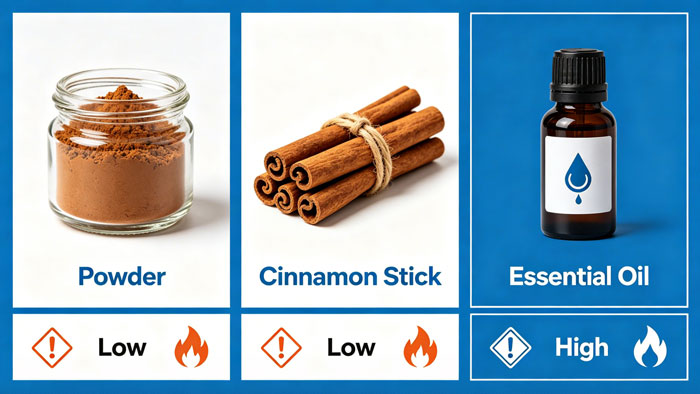
Ground Cinnamon vs. Cinnamon Sticks vs. Essential Oil
The form of cinnamon changes the risk level considerably:
- Ground cinnamon powder — The most common exposure. Beyond GI irritation, inhaled cinnamon powder can cause coughing, choking, and in severe cases, aspiration into the lungs.
- Cinnamon sticks — Chewing on them causes direct irritation and blistering in the mouth and throat.
- Cinnamon essential oil — Highly concentrated. Even a few drops can cause low blood sugar, liver toxicity, and respiratory distress. This is the most dangerous form by far.
How Much Cinnamon Is Safe for Dogs? Weight-Based Reference Chart
There is no official “safe dose” established by veterinary regulatory bodies. The chart below is based on clinical guidance and widely referenced thresholds used by veterinarians — it is a reference, not a prescription.
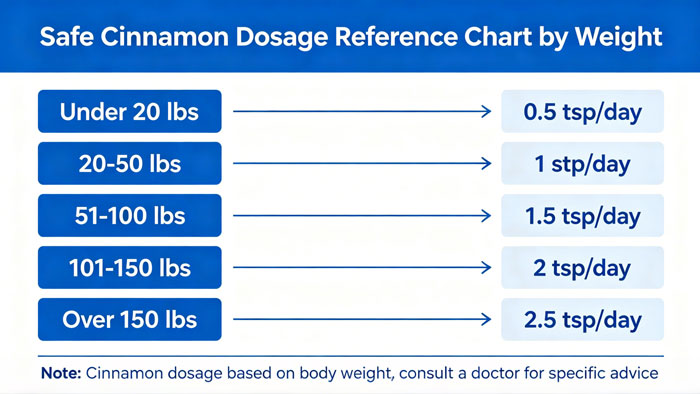
| Dog’s Weight | Ground Cinnamon (Upper Reference Limit) | Essential Oil | Recommendation |
|---|---|---|---|
| Under 10 lbs (toy breeds) | Less than ⅛ tsp | Never | Avoid entirely |
| 10–30 lbs (small breeds) | Less than ¼ tsp | Never | Extreme caution |
| 30–60 lbs (medium breeds) | Less than ½ tsp | Never | Occasional trace only |
| Over 60 lbs (large breeds) | Less than 1 tsp | Never | Occasional trace only |
Critical note: These are upper limits for accidental exposure — not targets. Puppies, senior dogs, and dogs with liver or kidney conditions should have zero intentional cinnamon exposure regardless of weight.
Signs Your Dog Has Had Too Much Cinnamon
Watch for these symptoms after any cinnamon exposure.
Mild Symptoms (Monitor at Home)
- Drooling more than usual
- Pawing at the mouth
- Mild vomiting or loose stools
- Sneezing or coughing after inhaling powder
These typically resolve within a few hours with no food, fresh water, and rest. If they persist beyond 12 hours, call your vet.
Severe Symptoms (Go to the Vet Now)
- Difficulty breathing or wheezing
- Rapid or irregular heartbeat
- Visible blistering in or around the mouth
- Lethargy or sudden collapse
- Hives or skin inflammation
These signs point to toxicity — either from a large ingestion, cinnamon oil exposure, or inhalation. Don’t wait.
ASPCA Animal Poison Control Center hotline and toxic substance database
ASPCA Animal Poison Control Center: (888) 426-4435 (available 24/7; a consultation fee may apply)
My Dog Ate Cinnamon — Do This Right Now
If your dog just got into the cinnamon, here’s what to do — in order.
Step 1: Stay calm and assess. How much did they eat? What form — powder, stick, oil, or food containing cinnamon?
Step 2: Check the mouth. Look for redness, blistering, or excessive drooling. Rinse gently with water if you see irritation.
Step 3: Read the full ingredient list. If cinnamon was inside a baked good, check immediately for xylitol, raisins, grapes, or nutmeg — these are far more dangerous than cinnamon and require emergency care.
Step 4: Call your vet or poison control. Give them the dog’s weight, what was eaten, and roughly how much. They’ll tell you whether to come in.
Step 5: Do not induce vomiting unless instructed. This is a common mistake. Inducing vomiting without veterinary guidance can cause additional harm.
foods that are toxic to dogs including xylitol and grapes
Cinnamon in Baked Goods and Holiday Foods: Hidden Dangers
Most cinnamon-related dog incidents don’t come from the spice jar. They come from the kitchen counter.
Can Dogs Eat Cinnamon Rolls?
No — and the cinnamon is almost the least of your concerns. A standard cinnamon roll contains:
- High fat and sugar — triggers pancreatitis, which can be fatal
- Xylitol (in some brands) — causes rapid blood sugar drop and liver failure
- Raisins (in some recipes) — linked to acute kidney failure
Even one bite of a cinnamon roll is a vet call if xylitol or raisins are on the label.
Holiday Foods That Put Dogs at Risk
This time of year, cinnamon shows up everywhere. Here’s what to keep off the floor and away from curious noses:
| Food | Contains Cinnamon | Other Toxic Ingredients | Risk Level |
|---|---|---|---|
| Cinnamon rolls | ✓ | Xylitol, raisins | 🔴 High |
| Pumpkin pie | ✓ | Nutmeg | 🔴 High |
| Apple cider (spiced) | ✓ | High sugar | 🟡 Moderate |
| Snickerdoodle cookies | ✓ | High fat, sugar | 🟡 Moderate |
| Granola bars | ✓ | Chocolate, raisins | 🔴 High |
| Cinnamon raisin bagels | ✓ | Raisins | 🔴 High |
holiday food safety guide for dogs including nutmeg and xylitol risks
Special Cases: Puppies, Senior Dogs, and At-Risk Breeds
Most cinnamon articles treat all dogs the same. They shouldn’t.
Puppies have immature liver function. Their ability to process coumarin is significantly lower than adult dogs. Even small amounts carry outsized risk.
Senior dogs often have pre-existing kidney or liver conditions that aren’t yet diagnosed. What seems like a harmless treat can accelerate organ stress.
Small breeds (Chihuahuas, Yorkshire Terriers, Toy Poodles) are at higher risk simply because their body weight is so low — the same amount of cinnamon has a more concentrated effect.
Dogs with diabetes, liver disease, or on medication should avoid cinnamon entirely. Cinnamon affects blood sugar, which can interfere with insulin regulation or interact with medications.
If your dog falls into any of these categories, the safe answer is zero cinnamon — in any form.
Does Cinnamon Actually Benefit Dogs? What the Research Shows
You’ve probably seen claims that cinnamon is a “superfood” for dogs — anti-inflammatory, blood sugar regulating, heart-healthy. Here’s the honest picture.
Those benefits are largely drawn from human clinical studies or animal models that don’t translate cleanly to canine physiology. There are very few peer-reviewed studies specifically on cinnamon supplementation in dogs. Veterinarians do not currently recommend adding cinnamon to a dog’s diet for health reasons.
If you’re interested in natural anti-inflammatory support for your dog, turmeric (with black pepper for absorption) has more canine-specific research behind it. Always consult your vet before adding any supplement.
FAQ: Can Dogs Have Cinnamon?
A small, accidental taste — like licking a plate — is unlikely to cause harm in a healthy adult dog. Deliberate feeding is not recommended.
No. Beyond cinnamon, this cereal is high in sugar and contains ingredients that can upset your dog’s stomach. Not worth it.
Check for mouth irritation and call your vet. Monitor for vomiting, excessive drooling, or difficulty swallowing. A whole stick is enough to warrant a professional opinion.
Generally yes — commercial treats are formulated with trace amounts that fall well below harmful thresholds. Look for NASC-certified products and check ingredient amounts when possible.
No. Puppies should avoid cinnamon entirely. Their livers aren’t equipped to handle coumarin, even in small doses.
Relatively, yes — Ceylon contains far less coumarin. But neither type should be intentionally added to a dog’s food.
The Bottom Line
Cinnamon isn’t going to poison your dog from a single accidental lick. But it offers no real benefit either — and the risks from repeated exposure, large amounts, or the essential oil form are real. When in doubt, keep the spice rack out of reach and stick to treats made specifically for dogs.
If your dog ate something with cinnamon and isn’t acting like themselves, don’t wait. Call your vet.
Disclaimer: This article is for general informational purposes only and does not constitute veterinary medical advice. Always consult a licensed veterinarian before making any changes to your dog’s diet or if you have concerns about your pet’s health. In case of a suspected poisoning emergency, contact the ASPCA Animal Poison Control Center at (888) 426-4435 or your nearest emergency veterinary clinic immediately.