

Can dogs have tomatoes? You’re slicing one in the kitchen, your dog is staring at you like you’re holding a steak — and suddenly you’re second-guessing yourself. The short answer: ripe tomatoes are safe for dogs in small amounts, but the green parts of the tomato plant are toxic. This guide breaks down exactly which parts are dangerous, how much is too much, what to do if your dog eats a tomato plant, and which tomato-based foods to keep out of their reach — permanently.
The Quick Answer: Safe vs. Unsafe
Not all tomatoes are created equal. Here’s the at-a-glance breakdown:
| Part of the Tomato | Safe for Dogs? |
|---|---|
| Ripe red tomato flesh | ✅ Yes — in moderation |
| Unripe (green) tomato | ❌ No |
| Tomato leaves & stems | ❌ No |
| Cherry / grape tomatoes (ripe) | ✅ Yes — cut into small pieces |
| Ketchup | ❌ No |
| Tomato sauce or paste | ❌ No |
| Sun-dried tomatoes | ⚠️ Avoid — concentrated and often salted |
| Tomato soup | ❌ No |
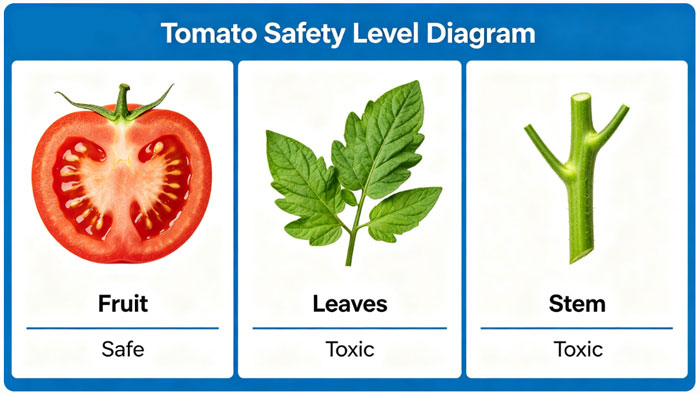
Why the Green Parts Are Dangerous
Tomatine: The Compound Behind the Risk
Tomato plants belong to the nightshade family (Solanaceae). They contain a naturally occurring compound called tomatine — concentrated in the stems, leaves, and unripe fruit. As a tomato ripens, tomatine levels drop sharply, which is why ripe tomatoes are generally considered safe.
The ASPCA lists tomato plants (the green parts specifically) as toxic to dogs.
ASPCA Animal Poison Control Center’s toxin database
Tomatine vs. Solanine — What’s the Difference?
This distinction is often missed. Both compounds occur in nightshade plants, but they work differently:
- Tomatine is found primarily in tomatoes. It can disrupt cell membranes and interfere with cholesterol absorption in large doses.
- Solanine is more commonly associated with potatoes and is generally more potent.
In tomatoes, tomatine is the compound you need to worry about — not solanine. Ripe tomatoes contain only trace amounts of tomatine, which is why they’re widely used as an ingredient in commercial dog food.
Symptoms of Tomato Poisoning in Dogs
What to Watch For — by Severity
If your dog ate green tomato parts or a large amount of unripe tomatoes, watch for these signs:
Mild symptoms:
- Drooling more than usual
- Mild stomach upset, gas, or loose stool
- Loss of appetite
Moderate symptoms:
- Vomiting or diarrhea
- Lethargy
- Muscle weakness
- Loss of coordination
Severe symptoms (go to the vet immediately):
- Tremors or seizures
- Dilated pupils
- Irregular heartbeat (arrhythmia)
- Difficulty breathing
Small breeds and puppies are at higher risk. The same amount that causes no reaction in a Labrador could be serious for a Chihuahua.
What to Do If Your Dog Eats a Tomato Plant
This is the step most dog articles skip. Here’s a clear action plan:
- Stay calm. Assess what they ate. Green tomato (stems, leaves, unripe fruit) is more serious than ripe flesh. Estimate how much.
- Check for symptoms. Most signs appear within 30 minutes to a few hours.
- Call ASPCA Poison Control: (888) 426-4435. Available 24/7. A consultation fee may apply, but it’s worth it.
- Go to the emergency vet if you see seizures, tremors, irregular breathing, or your dog is unresponsive.
- Don’t induce vomiting unless a vet specifically instructs you to.
what to do if your dog eats something toxic
Are Tomatoes Good for Dogs?
Nutritional Benefits of Ripe Tomatoes
When fed correctly, ripe tomatoes offer real nutritional value:
- Vitamin C — acts as an antioxidant, supports immune function
- Vitamin A — supports vision, skin, and coat health
- Potassium — essential electrolyte for muscle and nerve function
- Dietary fiber — supports healthy digestion
- Lycopene — a powerful antioxidant linked to reduced risk of chronic disease in both humans and animals
Lycopene is worth highlighting. Preliminary research suggests it may help lower cancer risk and support cardiovascular health in dogs — though large-scale canine studies are still limited.
When Tomatoes Are a Bad Idea
Some dogs should skip tomatoes entirely, regardless of ripeness:
- Dogs with acid reflux or chronic gastroenteritis — tomatoes are naturally acidic and can aggravate an already irritated stomach lining
- Dogs with kidney disease — the potassium content may be a concern; always check with your vet first
- Dogs on prescription diets — don’t introduce any new food without veterinary sign-off
foods dogs with kidney disease should avoid
How Much Tomato Can a Dog Eat?
The 10% Rule
Treats — including tomatoes — should never exceed 10% of your dog’s daily caloric intake. The rest should come from a nutritionally complete dog food.
Serving Size by Dog Size
Use this as a starting point. Always introduce new foods gradually and watch for any reaction.
| Dog Size | Weight | Suggested Serving | Frequency |
|---|---|---|---|
| Extra Small | Under 10 lbs | 1 piece (½ inch cube) | 1–2x per week |
| Small | 10–25 lbs | 2–3 small pieces | 2–3x per week |
| Medium | 25–60 lbs | 4–5 small pieces | Up to 3x per week |
| Large | 60+ lbs | A thin slice | Up to 3x per week |
These are general guidelines. Dogs with health conditions need personalized advice from a vet.
How to Prepare Tomatoes for Your Dog
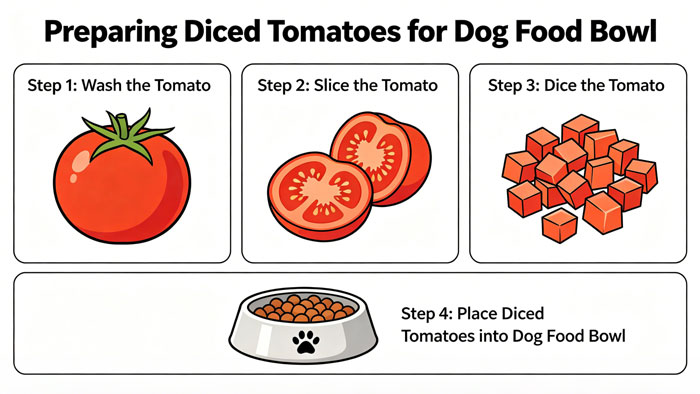
Step-by-Step Prep Guide
- Pick fully ripe, red tomatoes — the riper, the lower the tomatine content
- Wash thoroughly to remove pesticide residue
- Remove all stems, leaves, and the green core (the hull/calyx around the stem)
- Cut into small, bite-sized pieces appropriate for your dog’s size
- Serve plain — no salt, olive oil, or seasoning of any kind
Safe Ways to Serve Tomatoes
- Dice and mix into their regular kibble
- Freeze into small tomato cubes as a summer treat
- Spread a small amount on a lick mat for slow feeding enrichment
Tomato-Based Foods: The Complete Off-Limits List
Just because tomatoes are (conditionally) safe doesn’t mean tomato products are. Most are not.
| Product | Safe? | Reason to Avoid |
|---|---|---|
| Ketchup | ❌ | High sugar, salt, sometimes xylitol |
| Tomato sauce | ❌ | Garlic and onion — both toxic to dogs |
| Tomato paste | ❌ | Highly concentrated; often contains additives |
| Tomato soup | ❌ | Onion, garlic, sodium, spices |
| Tomato juice | ❌ | High sodium and additives |
| Sun-dried tomatoes | ⚠️ | Concentrated tomatine, usually salted |
| Salsa | ❌ | Onion, garlic, spices |
| Pizza/pasta sauce | ❌ | Garlic, onion, herbs — all toxic |
The rule of thumb: if it’s been processed or seasoned, assume it’s off the table.
FAQ: Can Dogs Have Tomatoes?
No. Even ripe tomatoes should be an occasional treat, not a daily addition. Too much can cause digestive upset due to acidity.
Technically yes, if ripe and prepared correctly — but puppies have sensitive digestive systems. Start with the smallest possible amount and watch closely. When in doubt, skip it until they’re older.
Don’t panic, but act fast. If they ate leaves, stems, or unripe fruit, call the ASPCA Poison Control hotline at (888) 426-4435 right away. If they ate a small piece of ripe tomato flesh, monitor for symptoms. ASPCA Animal Poison Control Center hotline information
Yes. Tomato seeds are not toxic and don’t need to be removed. The concern is always the green parts of the plant — not the seeds.
Plain, cooked ripe tomatoes without any seasoning are safe in small amounts. The cooking process doesn’t make them more or less toxic — what matters is what you add to them.
The Bottom Line
Ripe tomatoes are safe for most healthy dogs in small amounts. The danger is in the green parts — stems, leaves, and unripe fruit — which contain tomatine at levels high enough to cause real harm. Keep your dog out of the garden, prep tomatoes properly, and skip every processed tomato product on that list above.
When in doubt, call your vet. A five-minute conversation can save hours of worry.
Disclaimer: This article is for informational purposes only and does not constitute veterinary medical advice. Every dog is different. Always consult a licensed veterinarian before introducing new foods into your dog’s diet, especially if your dog has existing health conditions or is on a prescription diet.