


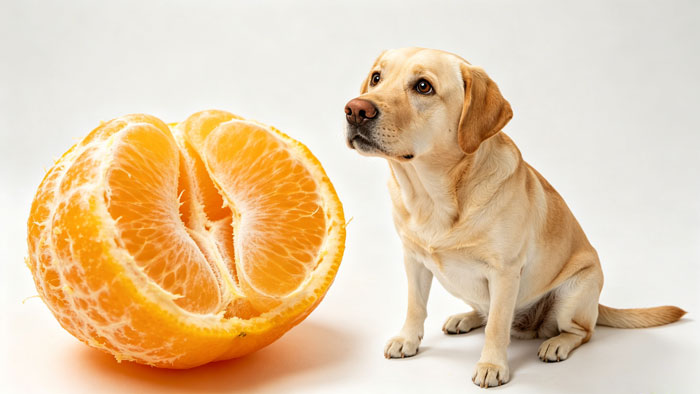
Can dogs eat oranges? Yes — but the full answer has a few important conditions attached. The flesh is safe and even mildly nutritious. The peel, seeds, and pith are a different story. And for dogs with diabetes or weight issues, oranges may not be appropriate at all. This guide breaks down exactly what’s safe, what to skip, how much to give by breed size, and what to watch for the first time you offer a slice.
📌 This article was written with reference to guidelines from the ASPCA Animal Poison Control Center and peer-reviewed veterinary nutrition research. Always consult your veterinarian before introducing new foods, especially if your dog has an existing health condition.
Key Takeaways
- ✅ Orange flesh is safe for most healthy adult dogs in small amounts
- ❌ Never feed the peel, seeds, or white pith
- ⚠️ Diabetic and overweight dogs should avoid oranges entirely
- 🐾 Stick to the 10% treat rule — oranges are a snack, not a staple
- 🔍 First time feeding? Start with a quarter segment and observe for 24 hours
Are Oranges Safe for Dogs? What the Evidence Says
The short answer: yes, orange flesh is non-toxic to dogs. The ASPCA does not list oranges as a toxic fruit for dogs — a meaningful distinction from grapes or raisins, which can cause kidney failure even in small amounts.
ASPCA’s official list of toxic and non-toxic foods for dogs
That said, “non-toxic” doesn’t mean “feed freely.” Oranges are high in natural sugar and citric acid. Both can cause digestive upset if you overshoot the portion. The risks scale with your dog’s size, weight, and underlying health conditions.
The practical rule: orange flesh = safe in moderation. Everything else on the orange — peel, pith, seeds — should stay out of the bowl.
Nutritional Benefits of Oranges for Dogs
Oranges aren’t a nutritional necessity for dogs. A well-formulated commercial diet already covers the vitamins and minerals your dog needs. But if your dog shows interest, there are legitimate upsides to the occasional slice.
Does Your Dog Actually Need Vitamin C from Oranges?
Unlike humans, dogs synthesize their own vitamin C in the liver. Under normal conditions, they don’t need dietary supplementation. However, dogs under physical stress, recovering from illness, or dealing with inflammatory conditions may benefit from additional antioxidant support — and that’s where oranges can play a small role.
📌 [Data point: Per the National Research Council’s nutrient requirements for dogs, healthy adult dogs produce sufficient endogenous vitamin C, though supplemental antioxidants may support dogs under oxidative stress.]
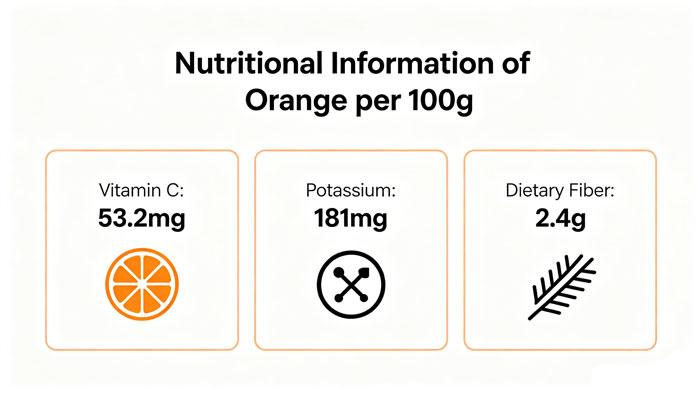
Fiber, Potassium, and Antioxidants
Beyond vitamin C, orange flesh offers:
- Dietary fiber — supports bowel regularity and feeds beneficial gut bacteria
- Potassium — an electrolyte essential for muscle contraction, nerve signaling, and kidney function
- Flavonoids and carotenoids — plant antioxidants that may help reduce cellular inflammation
These benefits are real, but modest. Think of oranges as a healthy bonus treat — not a supplement strategy.
When Oranges Are Bad for Dogs
The Real Risk in Orange Peels and Seeds
This is where most articles stop at “just remove the peel” without explaining why. Here’s what’s actually in there:
- Orange peel contains d-limonene and linalool — naturally occurring oils that are used in insecticides and are known to cause liver toxicity in cats, and GI irritation in dogs. The concentration in a single peel is unlikely to cause acute poisoning, but there’s no benefit and real risk. Skip it.
- Orange seeds contain trace amounts of cyanogenic glycosides — compounds that can release hydrogen cyanide when metabolized. A few seeds won’t poison a large dog, but they’re unnecessary and worth removing every time.
- The white pith (the spongy layer between peel and flesh) is not toxic, but it’s intensely bitter and high in tough fiber. Most dogs reject it on taste alone. It can cause digestive discomfort, so remove it along with the peel.
📌 [External reference: ASPCA Poison Control notes that citrus oils (d-limonene, linalool) can cause vomiting, drooling, and lethargy in dogs when ingested in larger quantities.]
Sugar, Acid, and Sensitive Stomachs
A medium navel orange contains roughly 12 grams of sugar. For a 10-pound Chihuahua, even a single segment adds up fast in terms of daily sugar load. The citric acid compounds this — dogs with a history of gastritis, IBS, or acid reflux can experience vomiting, gas, or loose stools from citrus even in small amounts.
Dogs Who Should Never Eat Oranges
⚠️ Skip oranges entirely if your dog:
- Has been diagnosed with diabetes — natural fruit sugars can spike insulin levels unpredictably
- Is overweight — the calorie and sugar load doesn’t justify the treat
- Has a sensitive GI tract, chronic diarrhea, or IBD
- Is currently on prescription medication — some drugs interact with citrus compounds; check with your vet
How Much Orange Can a Dog Eat? Portions by Size
Treats of any kind — including fruit — should stay within 10% of your dog’s total daily caloric intake. Here’s how that translates to orange segments:
| Dog Size | Weight | Serving Size | Frequency | Breed Examples |
|---|---|---|---|---|
| Extra-small | 2–10 lbs | ½ segment | 1–2x/week | Chihuahua, Yorkie, Pomeranian |
| Small | 11–20 lbs | 1 segment | 1–2x/week | Pug, Shih Tzu, Maltese |
| Medium | 21–50 lbs | 1–1½ segments | 1–2x/week | Beagle, Cocker Spaniel, Basenji |
| Large | 51–90 lbs | 2 segments | 1–2x/week | Lab, German Shepherd, Pit Bull |
| Extra-large | 91+ lbs | 2–3 segments | 1–2x/week | Great Dane, Saint Bernard, Newfoundland |
A note on brachycephalic breeds (Bulldogs, Pugs, Boston Terriers): their compressed airways and shorter digestive tracts make them more prone to GI upset. Start at the lower end of the portion range, and watch closely.
How to Safely Introduce Oranges to Your Dog
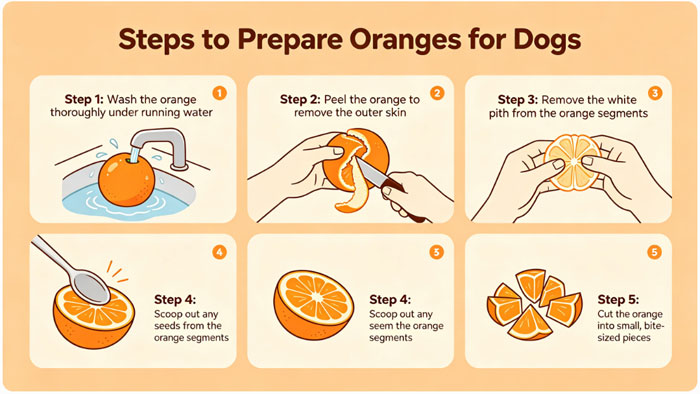
Step-by-Step Preparation
- Wash the orange thoroughly under running water
- Peel — remove all outer skin
- Remove the pith — strip the white layer as best you can
- Seed check — pick out any visible seeds
- Cut into bite-sized pieces — reduces choking risk and slows consumption
The 24-Hour First-Feed Checklist
First time offering oranges? Give a quarter segment maximum and then watch:
- Within 2 hours: check for vomiting, excessive drooling, or lip-licking (early nausea signs)
- Within 24 hours: monitor stool consistency — loose stool or diarrhea signals the acidity or sugar didn’t agree with your dog
- Call your vet or ASPCA Poison Control [(888) 426-4435] if you see: repeated vomiting, bloody stool, lethargy, trembling, or facial swelling
If there’s no reaction, you’re clear to offer the normal portion size next time.
Creative Ways to Feed Your Dog Oranges
Once you know your dog tolerates oranges, there are easy ways to make it more interesting:
- Plain segments — the simplest option, follow the portion table above
- Food topper — chop or blend orange flesh and mix into kibble
- Frozen KONG — blend with a banana, stuff into a KONG toy, freeze overnight
- Fruit smoothie — blend with dog-safe fruits like blueberries, apple, or watermelon; pour over food or freeze in an ice cube tray
- Yogurt mix — stir into plain, unsweetened, xylitol-free yogurt (xylitol is toxic to dogs — always check the label)
- Pupsicles — freeze the yogurt-fruit blend in an ice cube tray; use a small bully stick as the handle
- Dog-safe sorbet — blend frozen orange pieces with a splash of unsweetened coconut water
- Dehydrated slices — homemade only; store-bought dehydrated fruit typically contains added sugar and sulfites
safe fruits and vegetables for dogs guide
Oranges vs. Other Citrus — What’s Actually Safe
Here’s where one popular competitor article gets it wrong: it suggests that lemon and lime flesh is technically edible for dogs. Technically, yes — but the ASPCA flags citrus plants (including fruit flesh, in sufficient quantity) for causing GI distress, photosensitivity, and CNS depression in dogs. There’s no reason to test that threshold.
| Citrus Fruit | Safe for Dogs? | Notes |
|---|---|---|
| Navel Orange | ✅ Flesh only | Most accessible, moderate sugar |
| Clementine | ✅ Flesh only | Lower acid, easier on sensitive stomachs |
| Tangerine | ✅ Flesh only | Similar sugar profile to navel oranges |
| Blood Orange | ✅ Flesh only | Higher antioxidant content |
| Mandarin | ✅ Flesh only | Mild and sweet; remove seeds |
| Grapefruit | ⚠️ Avoid | High acidity; psoralen compounds in peel and pith |
| Lemon | ❌ Not recommended | ASPCA: causes vomiting, diarrhea, depression |
| Lime | ❌ Not recommended | Contains psoralen; GI irritant |
Oranges vs. Other Dog-Safe Fruits
Not sure if oranges are the best treat option for your dog? Here’s a quick comparison:
| Fruit | Sugar Level | Standout Benefit | Best For |
|---|---|---|---|
| Orange | Medium | Vitamin C, antioxidants | Healthy adult dogs |
| Apple | Low-Medium | Fiber, vitamin A | Weight-conscious dogs |
| Blueberry | Low | High antioxidants | Senior dogs |
| Banana | High | Potassium, energy | Active or working dogs |
| Watermelon | Low | Hydration | Hot weather treat |
| Strawberry | Low-Medium | Vitamin C, enzyme support | Most dogs |
complete guide to dog-safe fruits and which to avoid
Frequently Asked Questions
No. Even healthy dogs should have oranges no more than 1–2 times per week. Daily feeding adds up in sugar and calories quickly.
Yes, but with extra caution. Puppies have more sensitive digestive systems than adult dogs. Offer a small piece (less than half a segment), watch for 24 hours, and don’t make it a regular treat until they’re past the puppy stage.
One small piece is unlikely to cause serious harm in a large dog. Monitor for vomiting, drooling, or lethargy. If your dog is small or ate a significant amount, call the ASPCA Animal Poison Control Center at (888) 426-4435 or your vet.
No. The natural sugar in oranges can cause unpredictable insulin spikes in diabetic dogs. Avoid entirely and consult your vet for approved treat options.
Avoid both. Canned oranges typically contain added syrup. Dried citrus from stores usually contains added sugar, sulfites, or preservatives — all problematic for dogs. If you want to dehydrate oranges for your dog, do it at home without additives.
Watch for these symptoms within 2 hours of first feeding: itching, hives, skin redness, facial swelling, or GI distress. True food allergies in dogs are less common than intolerances, but both warrant stopping the food and calling your vet.
The Bottom Line
Oranges are a safe, occasional treat for most healthy adult dogs when you stick to the flesh, respect the portion size, and skip the peel, seeds, and pith. They’re not a nutritional necessity — your dog’s regular diet handles that — but they’re a harmless indulgence that most dogs enjoy.
When in doubt, run it by your vet first. That’s always the right call, especially if your dog is older, overweight, or managing any chronic condition.
Disclaimer: The information in this article is for general educational purposes only and does not constitute veterinary medical advice. Every dog is different — factors including age, breed, weight, and health history all affect how a dog responds to new foods. Always consult a licensed veterinarian before making changes to your dog’s diet, particularly if your dog has an underlying health condition or is on prescription food or medication.