
The best food for an Alsatian dog does more than fill a bowl. It has to protect a body built for hard work but prone to hip dysplasia, bloat, and a gut that reacts to almost anything cheap. Get the formula wrong and you’ll see it in loose stools, dull fur, and vet bills. This guide breaks down exactly what to feed, how much, and why.
Quick answer: An Alsatian needs high animal-protein food (25%+), a controlled Omega-3:Omega-6 ratio, moderate calcium during growth, and enough moisture to lower bloat risk. Details below by life stage and health issue.
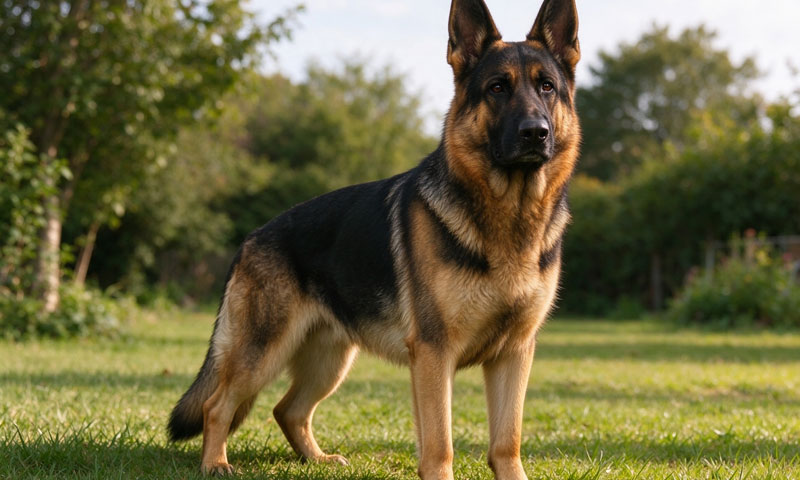
Alsatian or German Shepherd? Same Dog, Different Name
“Alsatian” is the British term for the German Shepherd Dog. The UK Kennel Club used it officially for decades after WWI to distance the breed from its German name. Today the terms are interchangeable, but if you’re shopping on a UK-based site or reading an older pedigree certificate, “Alsatian” is what you’ll see.
Why Alsatians Need More Than a Standard Large-Breed Formula
Alsatians carry a genetic load most large breeds don’t. Hip and elbow dysplasia, gastric issues, and gastric dilatation-volvulus (bloat) show up in this breed at higher rates than almost any other. A generic “large breed” bag of kibble is built for an average dog. Alsatians aren’t average.
The Four Pressure Points
- Joints – rapid growth and genetic laxity strain developing hips
- Gut – a reactive digestive tract, plus elevated rates of Exocrine Pancreatic Insufficiency (EPI)
- Chest cavity – deep-chested build raises bloat risk
- Coat – heavy seasonal shedding demands consistent fatty-acid intake
Orthopedic prevalence data across large-breed dogs
Core Nutrition Numbers Every Alsatian Owner Should Know
| Nutrient | Puppy (0–18mo) | Adult (18mo–7yr) | Senior (7yr+) |
|---|---|---|---|
| Protein | 28–30% | 25–28% | 25%+ (easily digestible) |
| Fat | 12–15% | 12–16% | 10–14% |
| Calcium:Phosphorus | 1.2:1 max | 1.2–1.4:1 | 1.2:1 |
| Omega-3 source | Fish oil | Fish oil | Fish oil + joint support |
Calcium matters more than most owners realize. Too much during the growth window accelerates bone development faster than joints can structurally support, which raises dysplasia risk. This is a point often missed in general large-breed feeding advice — growth speed, not just final size, drives joint outcomes.
Best Food for Alsatian Puppies (0–18 Months)
Puppy nutrition is where dysplasia prevention actually starts, not at age two when symptoms appear.
What to Prioritize
- A large-breed puppy formula with controlled calcium, never adult food “to save money”
- Steady growth curve — a lean puppy has better joint outcomes than a chubby one
- Feeding amount tied to current weight, reassessed every 2–4 weeks as they grow
Alsatian puppy weight and growth chart by month
Best Food for Alsatians With Sensitive Stomachs
Loose stools, gas, and inconsistent digestion get dismissed as “just how the breed is.” Often, it’s the food.
Limited-Ingredient vs. Novel Protein — Not the Same Thing
A limited-ingredient diet just means fewer ingredients overall, which reduces digestive load. A novel protein diet uses a protein the dog has never eaten (duck, rabbit, venison), which matters specifically for suspected allergies. Confusing the two leads owners to buy the wrong bag for the wrong problem.
When It Might Be EPI, Not Just Sensitivity
Exocrine Pancreatic Insufficiency is a real, diagnosable condition where the pancreas stops producing digestive enzymes. Classic signs: weight loss despite a huge appetite, pale greasy stools, chronic diarrhea. Alsatians are the breed most commonly diagnosed with it.
This is not something diet alone fixes. EPI requires a blood test (TLI test) and enzyme supplementation from a vet. If your dog is losing weight while eating well, that’s a vet visit, not a food swap.
TLI test diagnostic criteria for EPI in dogs
Bloat Prevention: What Actually Helps
Bloat (GDV) is fast and often fatal. Diet won’t eliminate the risk in a deep-chested breed, but it does move the needle.
Feeding Practices That Reduce Risk
- Two or three smaller meals instead of one large feeding
- Avoid hard exercise for an hour before and after meals
- Choose food with meaningful moisture content — dry kibble expands after eating
One myth worth killing: elevated food bowls were once recommended for large breeds. More recent veterinary research links raised bowls to higher GDV risk in some breeds, not lower. Skip the raised bowl.
Emergency signs — go to the vet immediately: unproductive retching, a visibly swollen abdomen, restlessness, or collapse.
Joint Health: What’s Actually Backed by Evidence
Not every joint supplement claim holds up. Glucosamine and chondroitin have reasonable clinical support for slowing cartilage breakdown. Many “proprietary blend” additives marketed on treat bags don’t have comparable data behind them — read labels, not marketing copy.
Weight Is the Cheapest Joint Supplement You Have
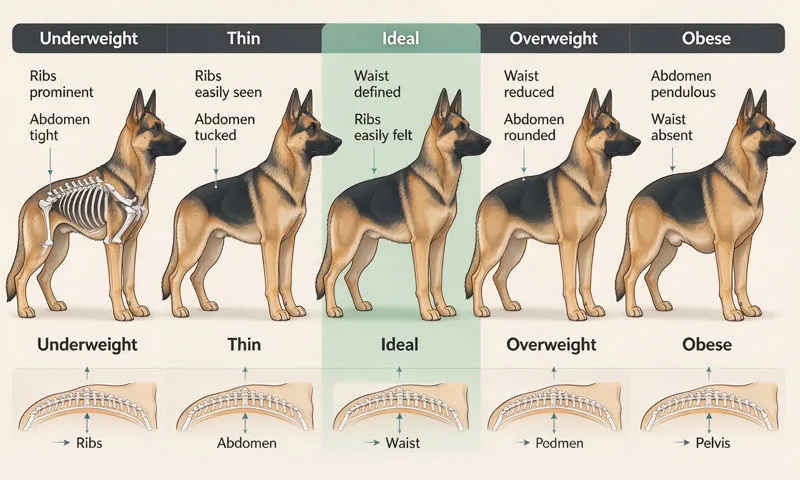
Every extra pound is extra load on hips already working against genetics. Run your hand along your dog’s ribs — you should feel them without pressing hard, with a visible waist from above. That’s roughly a healthy Body Condition Score.
Working and Service Alsatians Need Different Math
Most feeding guides ignore this entirely. K9, herding, and service-line Alsatians burn significantly more calories than a couch companion of the same weight. A working dog on duty several hours a day may need 20–30% more daily calories, with faster-digesting carbohydrates around high-exertion periods for recovery. Trainers in working-dog programs generally feed higher-fat, higher-protein formulas specifically for this reason — a detail rarely covered in general breed guides.
Dry, Wet, or Raw: Which Format Fits Your Alsatian
| Format | Best For | Watch Out For |
|---|---|---|
| Dry (kibble) | Convenience, cost, dental wear | Low moisture — pair with wet food |
| Wet/fresh | Hydration, picky eaters, bloat-risk dogs | Calorie-dense, spoils fast |
| Raw (BARF/PMR) | Owners committed to careful sourcing | Bacterial contamination risk |
Raw feeding has real advocates, but it carries documented food-safety risk. Salmonella and Listeria contamination in raw diets is well-documented, and it’s a risk to human household members too, not just the dog.
Raw pet food safety guidance and bacterial contamination risk
How Much Should You Feed Your Alsatian?
| Weight | Low Activity | Moderate Activity | High Activity |
|---|---|---|---|
| 50 lbs | 2 cups/day | 2.5 cups/day | 3 cups/day |
| 65 lbs | 2.5 cups/day | 3 cups/day | 3.5–4 cups/day |
| 80 lbs | 3 cups/day | 3.5 cups/day | 4.5 cups/day |
Split into two meals minimum. Adjust down 10–15% for spayed or neutered dogs, whose metabolism runs slower.
Raw feeding guide with sourcing and safety checklist for German Shepherds
Transitioning to New Food Without Digestive Upset
| Days | Old Food | New Food |
|---|---|---|
| 1–2 | 75% | 25% |
| 3–4 | 50% | 50% |
| 5–6 | 25% | 75% |
| 7+ | 0% | 100% |
Dogs with EPI or IBD should stretch each phase an extra day or two.
Frequently Asked Questions
Is an Alsatian the same as a German Shepherd?
Yes. Alsatian is the British name for the same breed, used to avoid the German association after WWI.
What’s the best food for an Alsatian with a sensitive stomach?
A limited-ingredient formula with one animal protein source and no corn, wheat, or soy fillers. If symptoms persist, ask your vet about EPI testing.
Can diet actually prevent bloat?
Not fully, but smaller meals, higher moisture food, and avoiding exercise around mealtimes measurably lower the risk in deep-chested breeds.
How much protein does an Alsatian need?
Around 25–30% depending on age and activity, from real animal sources rather than plant protein blends.
Is raw feeding safe for Alsatians?
It can work with careful sourcing and handling, but it carries a documented bacterial contamination risk to both the dog and the household.
Disclaimer: This article is for general informational purposes only and does not replace professional veterinary advice. Always consult a licensed veterinarian for diagnosis, treatment, or dietary changes specific to your dog’s health condition.