

Preventing ear infections in dogs starts with understanding why they happen — not just how to clean an ear. Most owners reach for a cleaner only after the head-shaking starts. By then, the infection has already taken hold. This guide breaks down the real causes, the products that work, and the costs most articles skip entirely.
Why Prevention Beats Treatment Every Time
Ear infections rarely start as an emergency. They start as a small imbalance — a little extra moisture, a slight shift in pH — that snowballs over days or weeks. Catching that shift early is cheaper, faster, and far less stressful for your dog than treating a full-blown infection.
The Hidden Cost of “Wait and See”
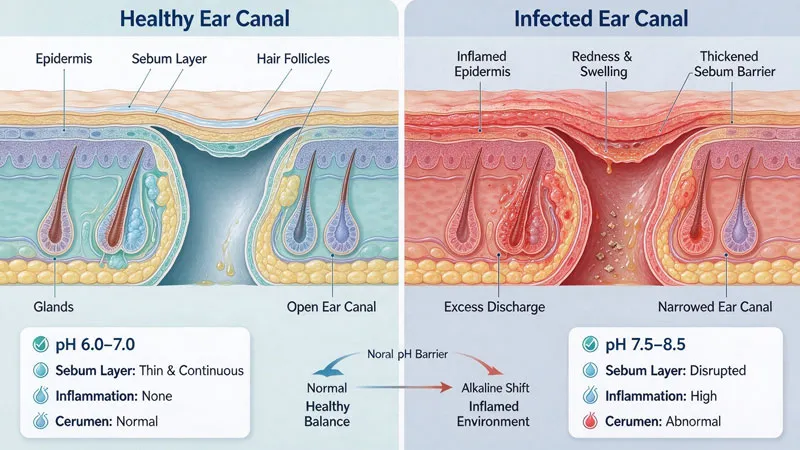
Dogs with one ear infection are significantly more likely to develop chronic, recurring cases if the underlying trigger isn’t addressed. veterinary dermatology research on recurrence rates Each flare-up also makes the ear canal thicker and narrower, which sets up the next infection. Prevention isn’t just about comfort — it’s about protecting the ear’s long-term structure.
How a Healthy Ear Protects Itself
A healthy ear canal maintains a slightly acidic pH and a thin layer of protective wax. This barrier keeps yeast and bacteria in check. Disrupt it — with excess water, allergens, or over-cleaning — and that balance tips fast.
Signs of Ear Infection in Dogs You Shouldn’t Ignore
Catching symptoms early is the single biggest lever you have.
Early-stage signs:
- Mild head tilting or occasional scratching
- Faint odor you notice only up close
- Slightly pink or warm inner ear
Advanced signs requiring same-day care:
- Yellow, brown, or bloody discharge
- Visible swelling of the ear flap
- Loss of balance or repeated circling
One sign owners consistently miss: a dog rubbing one side of its face against furniture or carpet, rather than scratching with a paw. It’s subtle, and it’s often the first symptom that shows up.
Is Your Dog’s Breed at Higher Risk?
Breed shapes risk more than most owners realize.
| Breed Type | Ear Structure | Risk Level | Cleaning Frequency |
|---|---|---|---|
| Cocker Spaniel, Basset Hound | Floppy, low airflow | High | Weekly |
| Poodle, Shih Tzu | Narrow canal, hair growth inside | High | Weekly + hair plucking |
| Labrador, Golden Retriever | Floppy, water-prone | Moderate-High | Weekly, especially after swimming |
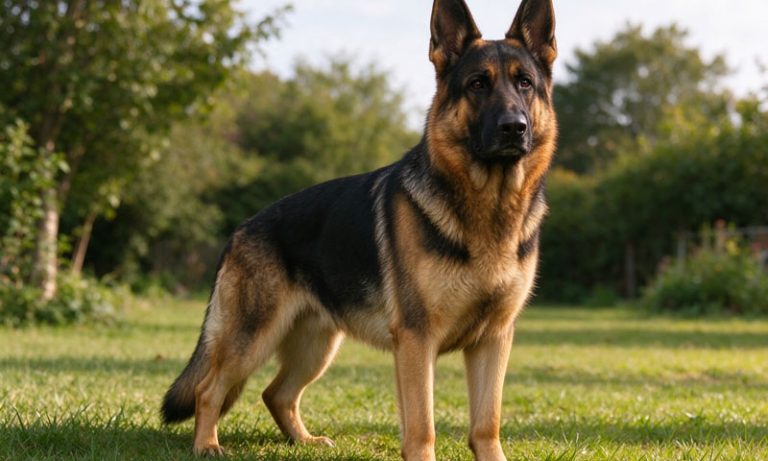
| German Shepherd, Greyhound | Upright, open airflow | Low | Monthly or as needed |
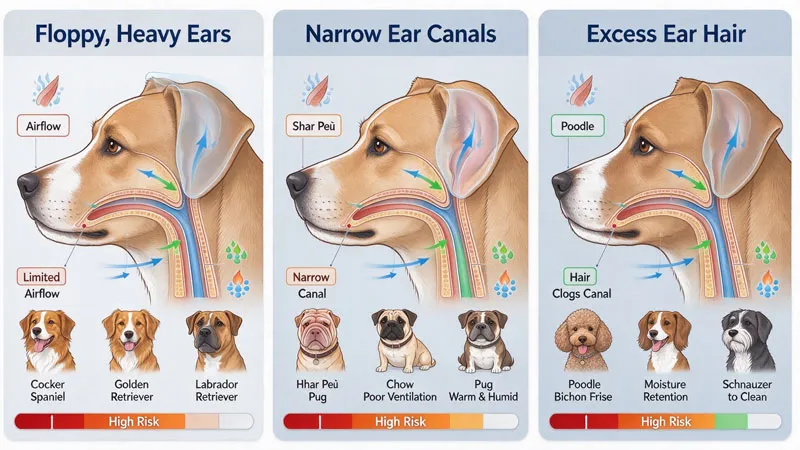
If your dog falls into a high-risk category, don’t wait for symptoms. Build cleaning into your routine now.
The Root Causes Behind Recurring Ear Infections
Treating the infection without fixing the cause is why so many dogs get stuck in a cycle.
Allergies
Environmental allergens and food sensitivities are the leading driver of chronic ear inflammation. If your dog’s infections show up seasonally, allergies are the likely culprit.
Excess Moisture
Swimming, bathing, and humid climates all trap water in the canal. Bacteria and yeast thrive in that environment within hours.
Hormonal Imbalances
Hypothyroidism and Cushing’s disease both alter skin health, making ears more vulnerable. Recurring infections in an older dog warrant bloodwork, not just another round of drops.
Over-Cleaning: When Prevention Backfires
This one surprises most owners. Cleaning too often strips the natural wax barrier and disrupts pH balance — which actually invites infection. signs your dog’s ears are being over-cleaned Twice a week is the ceiling for most dogs, even high-risk breeds. More isn’t better here.
How to Clean a Dog’s Ears at Home — Step by Step
Get this wrong and you can cause the exact problem you’re trying to prevent.
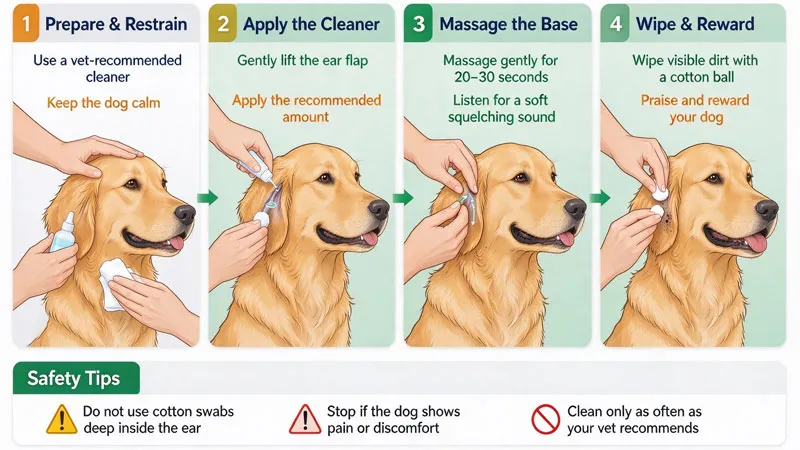
What You’ll Need
- Vet-approved ear cleaner (not water, not alcohol)
- Cotton balls or gauze
- Treats for positive reinforcement
Step-by-Step Process
- Fill the canal with cleaner — don’t be shy with the amount.
- Massage the base of the ear for 20-30 seconds. You’ll hear a squelching sound; that’s normal.
- Let your dog shake. This pulls debris up and out.
- Wipe the visible ear with cotton — never insert anything into the canal itself.
Best Ear Cleaner for Dogs: What Ingredients Actually Work
| Ingredient Type | Best For | pH Balance | Alcohol-Free |
|---|---|---|---|
| Chlorhexidine-based | Bacterial-prone ears | Neutral | Yes |
| Acetic/boric acid blend | Yeast-prone ears | Mildly acidic | Yes |
| Plant-based (aloe, tea tree derivatives) | Sensitive skin, mild maintenance | Neutral | Usually |
Avoid anything with high alcohol content — it dries the canal and can sting an already irritated ear.
What NOT to Use
Never use hydrogen peroxide, rubbing alcohol, or human ear drops. Peroxide is especially damaging — it can irritate healthy tissue and mask symptoms of a deeper problem. Cotton swabs push debris deeper rather than removing it.
Diet and Ear Health: What the Science Says
Diet won’t cure an active infection, but it changes how often infections happen.
Omega-3 fatty acids reduce baseline inflammation. Probiotics support skin barrier function. research on omega-3 fatty acids and canine skin inflammation If your dog’s infections cluster around specific seasons, that points to environmental allergies. If they’re constant year-round, food sensitivity is more likely — and a proper elimination trial, not guesswork, is the only reliable way to confirm it.
How Much Does Prevention & Treatment Really Cost?
This is the number nobody talks about, and it’s the clearest case for prevention.
Prevention costs (annual, estimated):
- Ear cleaner: $10-20
- Routine vet checks: $50-75 per visit
Treatment costs (per episode, estimated):
- Vet exam + medication: $150-300
- Diagnostics (cytology, culture): $100-200 additional
- TECA surgery for chronic cases: $1,500-4,000+
Costs vary by region and clinic — treat these as planning ranges, not quotes.
Run the math on a dog with two infections a year versus a dog on a $15/month cleaning routine. Prevention wins by a wide margin, every time.
When to See a Vet Immediately
Some signs don’t wait for a scheduled appointment.
- Head tilting that doesn’t resolve within an hour
- Facial drooping or sudden loss of balance
- Extreme pain when the ear is touched
At the clinic, expect an otoscopic exam to check the canal and eardrum, followed by a cytology swab to identify whether you’re dealing with bacteria, yeast, or both. what to expect at your dog’s first vet visit This step matters — treating a yeast infection with antibiotics does nothing.
Multi-Dog Households: Is It Contagious?
It depends on the cause. Ear mites spread easily between pets sharing bedding or close contact — isolate an affected dog until treated. Bacterial and yeast infections, by contrast, are tied to that individual dog’s ear environment and don’t typically spread to other pets in the home.
FAQ: Preventing Ear Infections in Dogs
How often should I clean my dog’s ears to prevent infection?
Once a week for high-risk breeds, once or twice a month for low-risk breeds. More frequent cleaning can backfire.
Can I use human ear drops on my dog?
No. Human formulations aren’t balanced for canine ear pH and can cause irritation or mask a worsening infection.
Do ear infections in dogs go away on their own?
Rarely, and waiting usually makes treatment harder. Mild irritation might resolve, but a true infection needs intervention.
How do I know if it’s fungal or bacterial?
You can’t tell by smell or discharge color alone. A vet cytology test is the only reliable way to confirm which one you’re dealing with.
Is it normal for my dog to get an infection every few months?
No — that pattern points to an underlying issue like allergies or hormonal imbalance, not bad luck. A full workup is worth pursuing.
Disclaimer: This article is for general informational purposes only and does not replace professional veterinary advice. Always consult a licensed veterinarian for diagnosis and treatment specific to your dog.