

Introduction
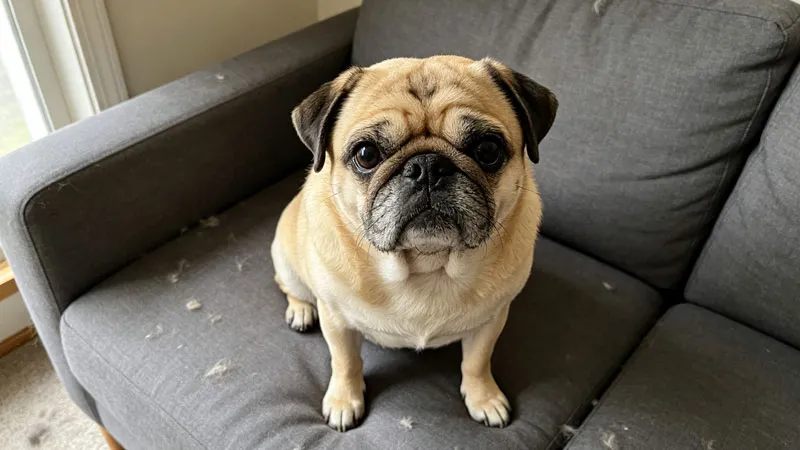
Yes, pugs shed — and they shed year-round, not just in spring. If you’re staring at a couch covered in fine hairs and wondering whether something’s wrong, you’re not alone. This guide breaks down why pugs lose so much fur, how much is actually normal, and what separates a healthy coat from a warning sign. No guesswork, just facts you can use today.
Do Pugs Shed? The Quick Answer
Pugs shed constantly. Their double coat replaces itself all year, so there’s no single “shedding season” to brace for — it’s a daily reality.
Here’s what that means in practice:
- Year-round shedding. No dramatic seasonal blowout, just steady daily loss.
- Double coat structure. A soft undercoat plus a coarser topcoat, both shedding on separate cycles.
- Not hypoallergenic. Pugs rank low on allergy-friendly lists, regardless of coat length.
- Shedding intensity varies. Diet, health, and season all shift how much fur ends up on your floor.
If you’ve also searched “do pugs molt” — that’s the same question. Molt and shed describe the same process; American sources lean toward “shed,” while some regional and older texts use “molt.”
The Science Behind Pug Shedding
What a Double Coat Actually Does
A pug’s undercoat insulates against temperature swings. The topcoat guards against dirt and sun exposure. Because both layers grow and rest on independent cycles, at least one is always shedding — which is why the hair never really stops.
The Hair Growth Cycle, Explained
Dog hair moves through three phases: growth (anagen), transition (catagen), and rest (telogen), followed by shedding. In breeds like pugs, a large share of follicles sit in the shedding phase at any given time. That’s the biological reason behind the daily fur trail, not a grooming failure on your part.
Canine coat and skin physiology overview
Seasonal Shifts vs. the Year-Round Baseline
Outdoor-heavy pugs often shed more visibly in spring as daylight hours change. Indoor pugs, kept under stable temperatures and artificial light, tend to shed at a flatter, steadier rate — less dramatic, but constant.
How Much Do Pugs Shed, Compared to Other Breeds?
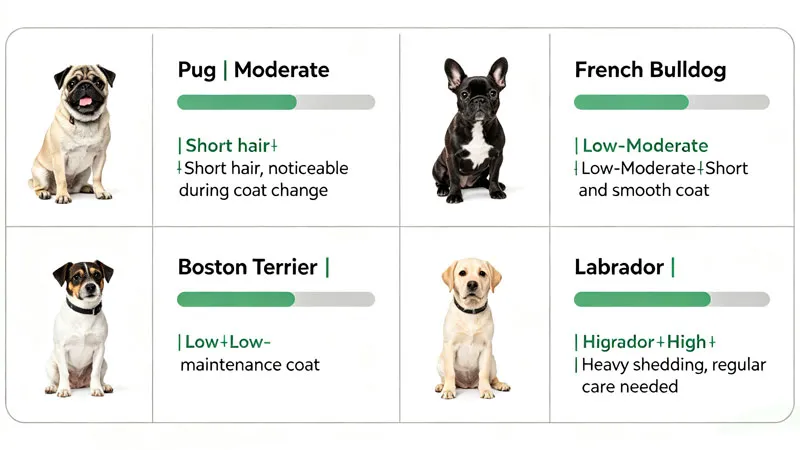
This is the question most guides skip. Here’s how pugs stack up against other popular short-haired breeds.
| Breed | Coat Type | Shedding Level | Peak Season | Hypoallergenic? |
|---|---|---|---|---|
| Pug | Double coat | High | Year-round, mild spring peak | No |
| French Bulldog | Single coat | Moderate | Mild seasonal | No |
| Boston Terrier | Single coat | Low-Moderate | Minimal | No |
| Labrador Retriever | Double coat | High | Strong spring/fall peaks | No |
Pugs land in the “high” category despite their short hair — density, not length, drives the volume.
Are Pugs Hypoallergenic? Clearing Up a Real Misconception
Shedding and Allergens Aren’t the Same Thing
Pet allergies usually trace back to a protein called Can f 1, found in saliva and skin dander — not the hair strand itself. A low-shedding dog can still trigger allergies if it produces high levels of that protein. Pugs aren’t considered hypoallergenic, and cutting their coat short won’t change that.
Can Someone With Mild Allergies Live With a Pug?
Some mildly allergic owners manage fine with frequent bathing, HEPA air filtration, and keeping the dog off bedding. Anyone with a diagnosed pet allergy should spend supervised time around a pug before committing — reactions vary too much to predict from breed alone.
Pet allergen research on Can f 1 protein
What Causes Excessive or Abnormal Shedding
Normal Triggers
- Seasonal light and temperature changes
- Stress from moving, new pets, or routine disruption
- Minor nutritional gaps that resolve with better food
Medical Causes That Need Attention
- Hypothyroidism — often paired with weight gain and low energy
- Allergies — food or environmental, usually with itching or redness
- Mange or parasites — visible irritation, patchy loss
- Cushing’s disease — less common, but linked to excessive thirst and a pot-bellied appearance
Red Flag Checklist: Normal vs. See a Vet
| Sign | Normal Shedding | Talk to Your Vet |
|---|---|---|
| Fur on furniture/clothes | Yes, daily | — |
| Bald patches | No | Yes |
| Redness or sores | No | Yes |
| Constant scratching | Occasional | Frequent or intense |
| Odor from skin | No | Yes |
| Energy/appetite change | No | Yes |
Disclaimer note within section: This checklist is for general awareness only and doesn’t replace a professional diagnosis. If in doubt, book a vet visit rather than wait it out.
How to Manage Pug Shedding: A Routine That Works
Brushing — Tools and Frequency
Brush three to four times a week minimum. Daily is better during peak shedding stretches.
| Tool | Best For | Price Range |
|---|---|---|
| Rubber curry brush | Daily quick sessions | $ |
| Slicker brush | Loosening deep undercoat | $$ |
| Furminator-style deshedding tool | Weekly deep sessions | $$$ |
| Grooming glove | Sensitive dogs, bonding time | $ |
Step-by-step pug grooming routine
Bathing — How Often Is Too Often
Every four to six weeks is typically enough. Overbathing strips natural oils and can trigger more shedding, not less. Use a shampoo formulated for sensitive canine skin, and dry thoroughly — trapped moisture in facial folds causes separate problems entirely.
Nutrition for Coat Health
Feed a diet with real animal protein as the first ingredient and added omega-3 and omega-6 fatty acids. Salmon oil, flaxseed, and quality commercial formulas built for skin health all support follicle strength from the inside.
Best dog food for skin and coat health
Supplements — What Has Evidence Behind It
Fish oil with documented EPA/DHA content has reasonable support for improving coat quality. Biotin shows mixed results and mainly helps dogs with an existing deficiency. Skip anything without a labeled dosage or third-party testing, and check with your vet before adding anything new.
Home Management
A vacuum built for pet hair and a dedicated lint roller handle daily upkeep. Washable furniture covers and a HEPA air purifier cut down on airborne dander, which matters more for allergy-sensitive households than fur volume alone.
Pug Shedding by Life Stage and Season
Puppy Coat vs. Adult Coat
Puppies shed their soft baby coat between four and six months old, giving way to the coarser adult double coat. This transition often looks heavier than typical adult shedding — that’s expected, not a red flag.
Do Senior Pugs Shed Differently?
Older pugs sometimes shed less evenly as metabolism slows and skin thins. Watch senior dogs more closely for the medical red flags above, since age raises the odds of thyroid and hormonal issues.
Seasonal Expectations
Spring brings the most noticeable increase for pugs with any outdoor exposure. Fall shifts are milder. Winter and summer settle into the steady daily baseline.
When to See a Vet: A Simple Framework
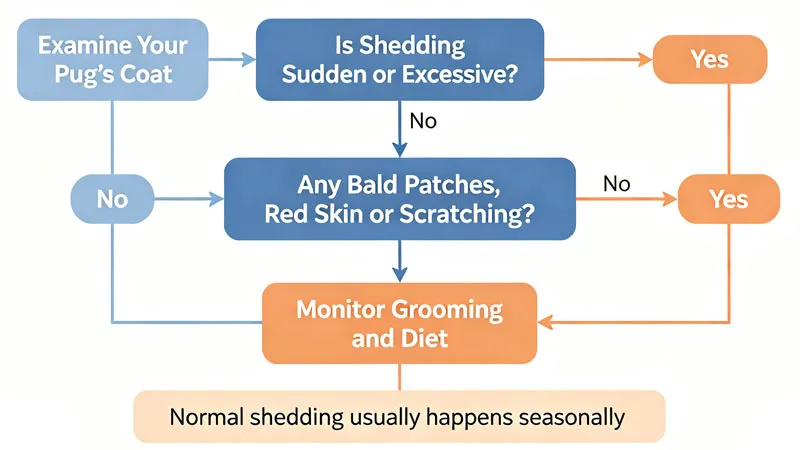
Ask three questions:
- Is the shedding pattern even across the body, or patchy?
- Is the skin underneath calm, or red and irritated?
- Has anything else changed — appetite, energy, thirst?
One “no” to the first two, or any change flagged in question three, means a vet visit is the right call. Waiting rarely helps and can let a treatable condition progress.
Frequently Asked Questions
Do pugs shed more than other short-haired breeds?
Yes. Their double coat sheds more heavily than single-coated short-haired breeds like Boston Terriers, despite the similar hair length.
Do pugs shed less if you shave them?
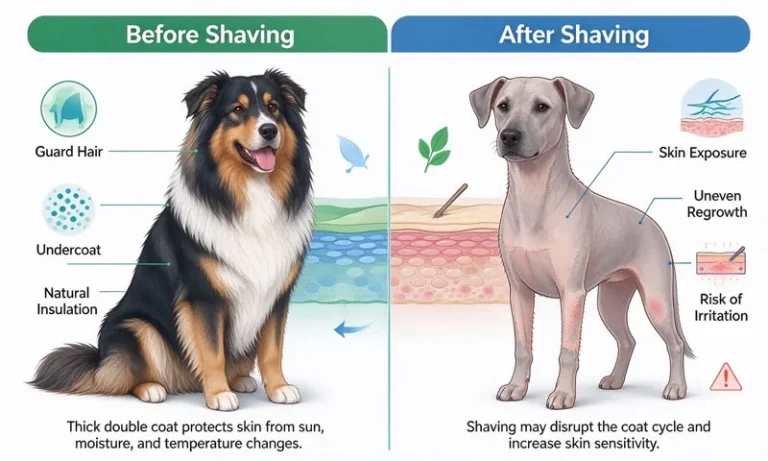
No. Shaving doesn’t reduce total shedding and can damage the coat’s ability to regulate temperature and protect skin.
Are black pugs or fawn pugs messier shedders?
Both shed equally. Color only affects how visible the hair is against your furniture and clothing.
Does spaying or neutering affect shedding?
It can, temporarily. Hormonal shifts after the procedure sometimes trigger a short-term increase in shedding that settles within a few months.
How often should I brush a pug to control shedding?
Three to four times weekly at minimum, daily during spring or during any period of heavier loss.
Final Thoughts
Pug shedding isn’t a flaw to fix — it’s a fact to manage. A steady brushing routine, the right diet, and attention to the red flags above keep it under control without turning grooming into a chore. The fur is part of the deal. The snoring, the wrinkles, and the personality make it worth it.
Disclaimer: This article is for general informational purposes only and does not replace professional veterinary advice. Always consult a licensed veterinarian regarding your pug’s specific health, diet, or grooming needs.