

Your dog just sprinted across the couch for the tenth time tonight, and you’re out of ideas. Learning how to tire a dog out isn’t about walking harder — it’s about walking smarter. Most “high-energy” dogs aren’t under-exercised. They’re overstimulated, under-rested, or bored in the wrong way. Here’s the system that actually fixes it.
Is Your Dog Actually Over-Exercised, Not Under-Exercised?
Before you add another walk, stop. Ask a harder question: is your dog tired, or just wired?
Think of a toddler at a birthday party. Give them more cake and more games, and they don’t calm down — they melt down. Dogs work the same way. A dog who never gets true downtime learns one thing: hyper behavior gets attention. Bark, spin, jump the coffee table — something fun happens next.
Five signs your dog is overstimulated, not under-exercised:
- Zoomies happen right after exercise, not before it
- He can’t settle even in a quiet room
- Play escalates into mouthing or barking
- He startles or reacts more than usual
- Naps are short and restless, not deep
The two-week rest test: Crate or pen your dog for one to three hours daily, same time each day, for two weeks. Log his behavior each evening — energy level, reactivity, sleep quality. Most owners see a measurable drop in “hyper” behavior by day 10. This isn’t guesswork. It reflects basic operant conditioning: behavior that gets rewarded — even with excitement or attention — repeats. A dog exercised mid-meltdown learns that meltdowns work.
how to crate train an anxious dog
How Much Exercise Does Your Dog Actually Need?
“30 minutes a day” is advice for no dog in particular. A 14-year-old pug and a 2-year-old Malinois are not the same animal.
Exercise Needs by Breed Group
| Breed Group | Daily Exercise | Best Activities | Watch For |
|---|---|---|---|
| Herding/Working (Border Collie, Aussie) | 60–90 min | Agility, structured fetch, nosework | Obsessive fetch behavior |
| Sporting (Lab, Golden) | 45–60 min | Swimming, retrieving, jogging | Joint strain if overdone young |
| Hound (Beagle, Dachshund) | 30–45 min | Scent games, sniff walks | Back injury (long-backed breeds) |
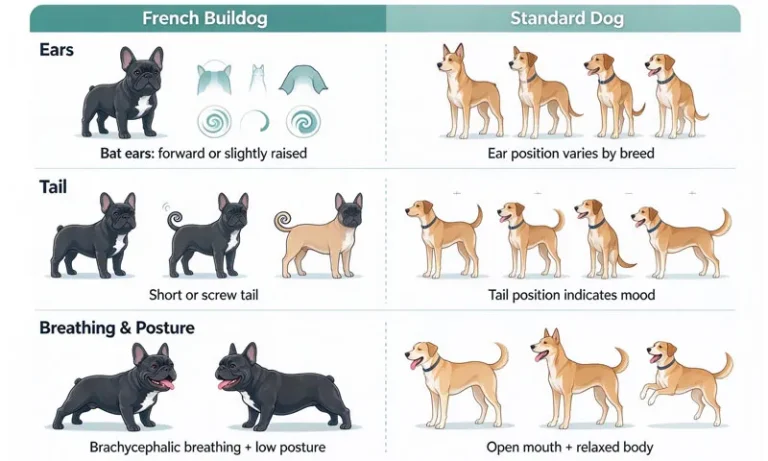
| Brachycephalic (French Bulldog, Pug) | 15–20 min, low intensity | Short walks, indoor games | Heatstroke, breathing distress |
| Toy breeds | 20–30 min | Indoor play, short walks | Overexertion in heat/cold |
| Senior/injured dogs | 15–30 min, low impact | Slow walks, swimming | Arthritis flare-ups |
Guidelines like these track closely with published breed-activity data from national kennel organizations, though individual health always overrides averages.
breed-specific exercise recommendations
Puppies Have Different Rules
A common vet-cited guideline: five minutes of structured exercise per month of age, twice daily, until growth plates close (roughly 12–18 months depending on breed size). Repetitive stair climbing, hard jumping, or long runs on pavement before then can damage developing joints. This isn’t caution for its own sake — it’s the difference between a healthy adult dog and one with early-onset arthritis.
Senior and Flat-Faced Dogs Need Extra Care
Brachycephalic breeds — Frenchies, pugs, English bulldogs — overheat fast because they can’t pant efficiently. Keep sessions short, avoid midday heat, and watch for excessive drooling or blue-tinged gums, which signal an emergency. Senior dogs benefit more from low-impact swimming than repeated stair drills.
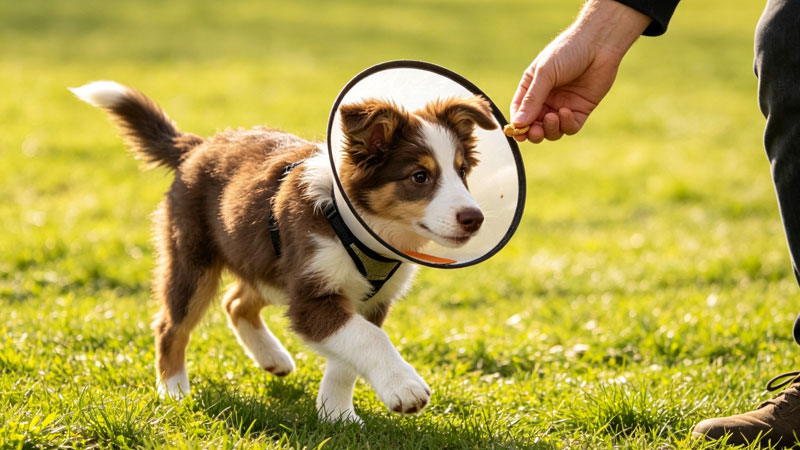
The 3 Pillars of Actually Tiring a Dog Out
A leashed walk at your pace is barely aerobic exercise for most dogs. Real fatigue comes from three directions.
Pillar 1: Aerobic exercise. Your dog should be panting rhythmically, not just moving. Trotting, swimming, and structured fetch count. A slow sniff-walk doesn’t.
Pillar 2: Mental enrichment. Twenty minutes of nose work can tire a dog out as much as an hour of walking. Scent work demands sustained focus, and focus burns energy fast. This is especially true for working breeds bred to problem-solve, not just move.
Pillar 3: Strength and body awareness. Teaching “sit pretty,” balance work on an unstable surface, or slow stair reps builds muscle control and mental discipline together.
best interactive dog toys for mental stimulation
Step-by-Step Routines That Actually Work
Morning Routine for High-Energy Dogs
- 10-minute down-stay while you get ready (tether, reward calm)
- 30-minute brisk walk or trot
- 5-minute training session
- Quiet settling time before breakfast
- Puzzle feeder for breakfast, not a bowl
Wait before feeding after hard exercise — especially for large, deep-chested breeds like Great Danes or German Shepherds. Vigorous activity right before or after a full meal is a known risk factor for bloat (GDV), a life-threatening emergency. Rest 30–60 minutes on either side of a meal.
Indoor Games for Bad Weather Days
- Stair recall: Toss a treat down the stairs, call your dog back up. Repeat.
- Snuffle mat or scatter feeding: Hide kibble in a mat or across a room.
- Frozen Kong: Stuff with broth and kibble, freeze. Slows eating, extends focus time.
- Box shaping: Click and reward any interaction with a cardboard box.
Keep floors non-slip during indoor games — hardwood plus fast turns is a common cause of soft-tissue injury.
Low-Effort Days (“Lazy Enrichment”)
Scatter kibble around the house instead of using a bowl. Freeze meals in a Kong. Rotate toys weekly instead of leaving them all out. None of this requires you to move much, but it still asks your dog’s brain to work — just watch total calories if you’re adding food-based games on top of regular meals, since frequent treat games can add up fast.
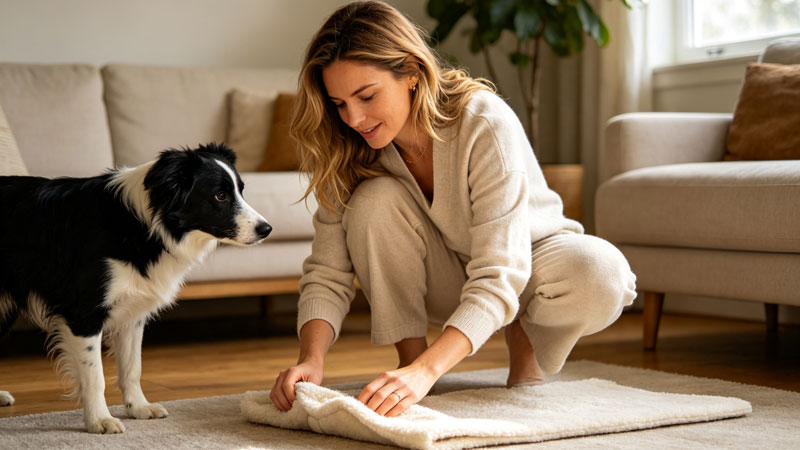
When Exercise Isn’t the Real Problem
Sometimes what looks like excess energy is actually anxiety, boredom from lack of training, or a medical issue. If your dog can’t settle even after two weeks of consistent rest and enrichment, or shows signs like destructive chewing only when alone, self-injury, or extreme reactivity, that’s not an exercise gap — it’s a behavior or medical issue.
Talk to a certified trainer or veterinary behaviorist if you notice:
- Panic-level distress when left alone
- Aggression that escalates rather than resolves with management
- Sudden behavior changes with no clear trigger
signs of separation anxiety in dogs
Safety Rules Most Guides Skip
- Heatstroke: Flat-faced and thick-coated breeds overheat fast. Exercise early morning or evening in summer.
- Growth plates: No hard jumping or repeated stairs for puppies under 12–18 months.
- Bloat risk: Space meals and vigorous exercise at least 30–60 minutes apart, especially in large breeds.
- Overexertion signs: Excessive drooling, wobbly gait, or refusal to keep moving means stop immediately and call your vet.
recognizing signs of canine bloat/GDV
Frequently Asked Questions
Can you over-exercise a dog?
Yes. Overexercised dogs often show more reactivity and restlessness, not less. Puppies and senior dogs are most at risk of joint damage from too much high-impact activity.
How long does it take to tire out a high-energy dog?
With the right mix of aerobic exercise and mental work, most dogs settle within 60–90 minutes of combined activity. Mental games often tire dogs faster than pure walking.
Is mental stimulation as effective as physical exercise?
Often more so. Scent work and puzzle feeding demand sustained focus, which burns mental energy quickly — frequently more effective than an extra lap around the block.
Can puppies do stairs or jumping exercises?
Avoid repetitive stairs or jumping until growth plates close, typically 12–18 months depending on breed size. Stick to flat-ground, low-impact play until then.
Should I feed my dog before or after exercise?
Leave at least 30–60 minutes between hard exercise and a full meal, especially for large or deep-chested breeds, to reduce bloat risk.
Disclaimer: This article is for general informational purposes only and does not replace professional veterinary or behavioral advice. Always consult your veterinarian or a certified dog trainer before starting a new exercise routine, especially for puppies, senior dogs, or dogs with existing health conditions.