

Learning how to measure dog paws correctly is the difference between boots your dog wears happily and boots that end up chewed off in the yard. Get the size wrong and you risk blisters, slipping, and a dog who refuses to walk in them. This guide walks you through the exact steps vets and pet orthopedic specialists recommend, plus a size chart, common mistakes, and answers to the questions most owners forget to ask.
Why Paw Measurement Accuracy Matters More Than a Size Guess
A boot that’s too tight cuts circulation and rubs the pad raw within one walk. Too loose, and it slides off mid-stride — often in traffic, on ice, or near water, exactly when your dog needs the protection most.
The Real Cost of the Wrong Fit
Vets who treat working and service dogs regularly see pressure sores from ill-fitting boots on dogs that wear them daily. [canine paw pad injury prevention guidelines (peer-reviewed)]
Paw Size Doesn’t Follow Breed Stereotypes
A 60-lb Whippet can have narrower paws than a 40-lb Bulldog. Body weight tells you almost nothing. The only reliable number comes from a ruler on your dog’s actual paw.
What You Need Before You Measure Dog Paws
- Plain paper and a pen
- A ruler or flexible tape measure
- Treats (a still dog is an accurate dog)
- Optional: a smartphone measuring app — useful for a rough estimate, but expect a margin of error of a few millimeters. Don’t rely on it alone for a final purchase.
Measure after a walk or play session, when your dog is calm. Skip right after grooming — trimmed paw fur can shrink your numbers.
Step-by-Step: How to Measure Dog Paws for Boots
Step 1: Position the Paw Correctly
Stand your dog on a flat, non-slip surface. A standing paw spreads naturally and gives you the true width — measuring a sitting or lying dog often shrinks the reading.
Step 2: Trace or Mark the Outline
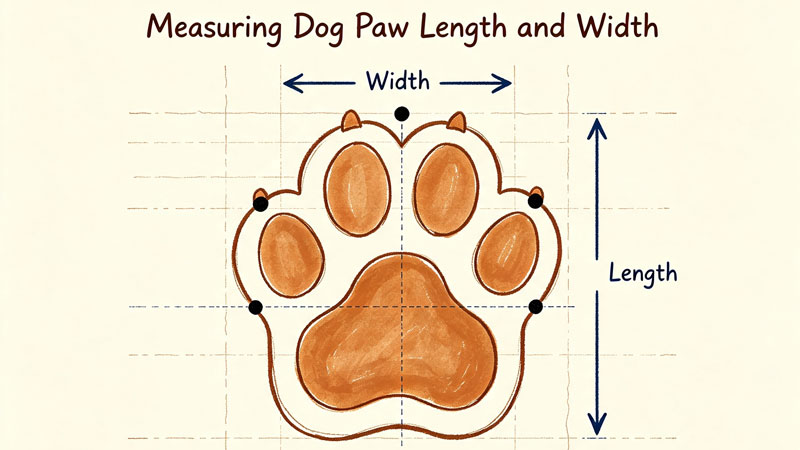
Lightly press the paw onto paper and trace around it, including the longest nail. For long-haired breeds, press the fur down gently instead of trimming it — trimming changes the paw’s natural shape.
Step 3: Measure Length and Width
- Length: longest toenail tip to the back of the pad
- Width: the widest point of the paw, side to side
Record both in inches and centimeters — sizing charts vary by measurement system.
Step 4: Measure All Four Paws Separately
Front paws are usually wider than back paws in most breeds — often by several millimeters. Write down all four numbers. Don’t assume they match.
Dog Paw Size Chart by Weight and Breed Type
| Breed Size | Typical Weight | Paw Length | Paw Width |
|---|---|---|---|
| Small (Chihuahua, Yorkie) | 5–15 lbs | 1.5–2 in | 1.2–1.6 in |
| Medium (Beagle, Cocker Spaniel) | 15–35 lbs | 2–2.8 in | 1.6–2.2 in |
| Large (Labrador, German Shepherd) | 35–70 lbs | 2.8–3.5 in | 2.2–2.8 in |
| Giant (Great Dane, Mastiff) | 70+ lbs | 3.5–4.5 in | 2.8–3.5 in |
Ranges are estimates based on general breed standards. Individual dogs vary — always measure your own dog before ordering.
Common Mistakes That Ruin the Fit
- Guessing from weight alone — two dogs at the same weight can need different sizes
- Measuring only one paw — front and back rarely match
- Ignoring nail length — long nails add false length to your measurement
- Measuring a sitting dog — the paw doesn’t fully spread
- Trimming fur before measuring — shrinks the reading artificially
- Assuming sizes are universal across brands — a “medium” from one brand can be a “small” from another; always check the specific brand’s chart, not a generic size label
Special Cases: Puppies, Senior Dogs, and Unique Paw Shapes
Growing Puppies
Re-measure every 4-6 weeks during the first year. Buy adjustable boots with room to spare rather than a snug fit that’s outgrown in a month.
Senior Dogs with Arthritis or Hip Dysplasia
Traction-focused indoor boots matter more than weatherproofing here. A slightly looser fit with strong grip soles helps more than a tight, protective one. [canine arthritis mobility support recommendations]
Dogs with Extra Dewclaws or Post-Surgery Feet
If your dog has an irregular paw shape or is recovering from surgery, talk to your vet before choosing footwear. A standard size chart may not apply.
Climate Factors That Change What You Should Buy
Hot Pavement
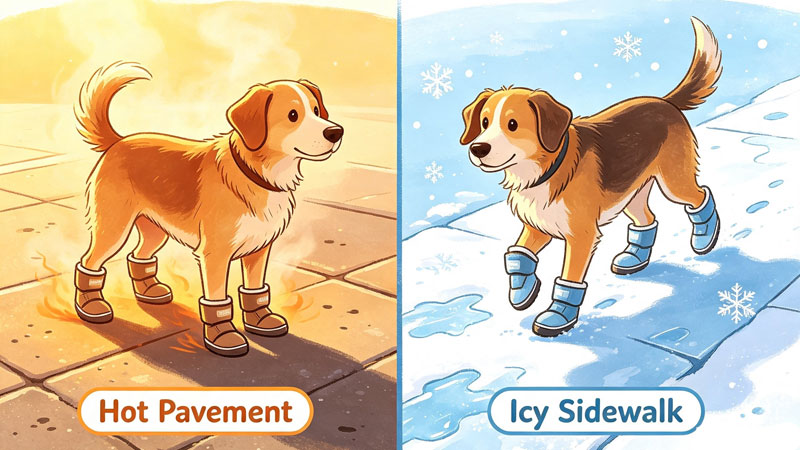
If you can’t hold your palm on the pavement for 7 seconds, it’s too hot for paws — boots don’t fully eliminate this risk, they reduce it.
Ice and Rock Salt
Winter boots need higher cuffs and salt-resistant soles. A summer boot sized correctly still won’t protect against chemical burns from de-icer.
Turning Your Measurements Into the Right Size
Once you have length and width for all four paws, check them against the specific brand’s own chart — not a generic size chart. If you land between two sizes, size up. A boot with room to adjust is safer than one that pinches.
Before buying, confirm the seller’s return policy for sizing issues. Even careful measuring sometimes needs a one-time exchange.
how to get your dog used to wearing boots(English anchor)
best materials for winter dog boots(English anchor)
Frequently Asked Questions
Do all four of my dog’s paws need the same boot size?
Not always. Front paws are often wider than back paws. Measure each one and size accordingly.
How often should I re-measure my dog’s paws?
Every 4-6 weeks for growing puppies. Once a year for adult dogs, or after any significant weight change.
Can I use my dog’s weight to pick a boot size?
No. Weight and paw size don’t correlate reliably. Always measure the actual paw.
How do I know if my dog’s boots are too tight?
Check for swelling above the boot line, excessive licking at the paw, or your dog refusing to walk after a few minutes.
Are boot sizes different for winter versus summer use?
The paw size itself doesn’t change, but winter boots often run with thicker cuffs — check the brand’s seasonal sizing notes before ordering.
Disclaimer: This article is for general informational purposes only and is not a substitute for professional veterinary advice. Always consult your veterinarian regarding your dog’s specific health, mobility, or footwear needs.