

Why do dogs walk in circles? Most of the time, it’s instinct — nothing more. But sometimes it’s the first sign your dog’s brain or inner ear isn’t working right. This guide breaks down exactly which is which, backed by veterinary sources, with a simple checklist you can run through in under a minute.
The Quick Answer: Is Circling Normal or a Red Flag?
Before anything else, run this check. If your dog circles once or twice before lying down, then settles calmly, that’s normal. If circling happens repeatedly, looks confused, or comes with stumbling, head tilting, or vomiting, that’s not.
The 10-Second Self-Check
Ask yourself three things:
- Does it stop once he lies down? Normal circling ends the moment the dog settles.
- Is he steady on his feet? Wobbling or leaning is never part of normal circling.
- Did this start suddenly in an older dog? New circling in a senior dog deserves a same-week vet call, not a wait-and-see approach.
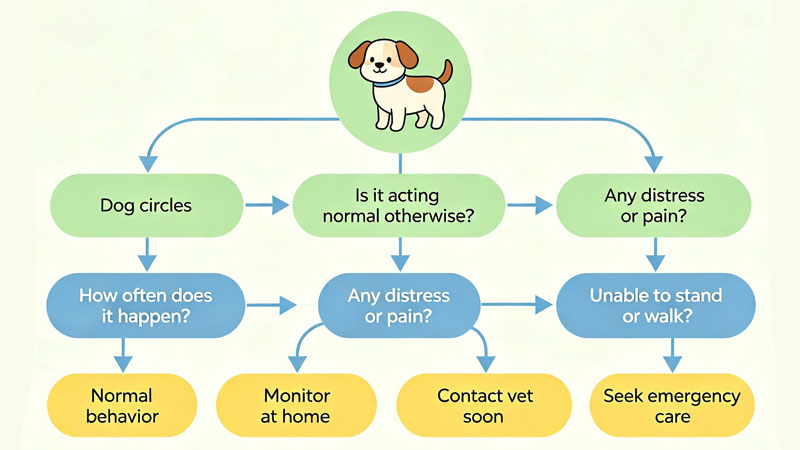
If any answer worries you, skip ahead to the diagnostic list below. If not, here’s why the habit exists in the first place.
Why Dogs Walk in Circles Before Lying Down
An Instinct Older Than the Couch
Wild canids didn’t have dog beds. They circled to flatten grass, check the ground for anything sharp or alive, and build a nest shape that trapped body heat. Domestic dogs still carry that wiring, even on a memory foam bed that needs none of it.
Temperature and Comfort, Not Just Habit
Circling also lets a dog test the angle before curling up. Tighter spins usually mean he’s cold and wants to conserve heat. A looser, single turn often just means he’s adjusting the blanket underneath him.
A Way to Wind Down
Repetitive motion has a calming effect on dogs the same way pacing does for people before bed. It’s a small ritual that signals the nervous system to slow down. None of this is cause for concern on its own.
When Circling Signals a Medical Problem
This is where the habit stops being cute. Persistent, disoriented, or one-directional circling almost always points to something physical going on — most often in the ear or brain.
Inner Ear Infections
An infection in the middle or inner ear throws off a dog’s balance. Watch for head shaking, scratching at one ear, or a faint head tilt alongside the circling. This is one of the more treatable causes and usually clears up with the right medication.
Canine Vestibular Disease
This affects the balance system directly. Dogs may circle, tilt their head, and show rapid eye movement (nystagmus). It’s most common in older dogs and, in its idiopathic form, often improves within one to two weeks with supportive care alone.
Canine Cognitive Dysfunction (Dog Dementia)
Veterinary behaviorists use the acronym DISHA to describe this condition: Disorientation, Interaction changes, Sleep cycle disruption, House soiling, and Activity changes. Circling without a clear reason — especially paired with getting “stuck” in corners — fits this pattern in senior dogs.
Brain and Brainstem Dysfunction
[veterinary neurology research on forebrain dysfunction] notes that the direction and tightness of circling can help pinpoint the problem: wide circling around a room often points to the forebrain, while tight, in-place circling points to the brainstem. Tumors, stroke, and inflammation (encephalitis) all fall into this category and need imaging to confirm.
Pain-Driven Circling
Arthritis and hip dysplasia can make a dog circle repeatedly just to find a position that doesn’t hurt. If he takes longer to lie down or seems stiff getting up, joint pain is worth ruling out before assuming it’s neurological.
| Cause | Key Accompanying Signs | Typical Age | Urgency |
|---|---|---|---|
| Ear infection | Head shaking, scratching | Any age | See vet within days |
| Vestibular disease | Head tilt, nystagmus | Senior | Same-week vet visit |
| Cognitive dysfunction | Disorientation, night waking | 8+ years | Vet visit, not emergency |
| Brain tumor/stroke | Seizures, blindness, personality change | Any, more common in seniors | Emergency |
| Pain/arthritis | Stiffness, slow to lie down | Middle-aged to senior | Vet visit, not emergency |
Does Breed or Age Change the Risk?
Breeds More Prone to Neurological Circling
Toy and brachycephalic breeds — Chihuahuas, Yorkies, Pugs — show up more often in hydrocephalus cases. [guide to health issues in small dog breeds] covers this in more depth if your dog fits that profile.
Why Age 8+ Changes Everything
Cognitive dysfunction and idiopathic vestibular disease both cluster in dogs past age eight. A sudden circling episode in a young, healthy dog and the same episode in a 12-year-old carry very different odds — the older dog needs faster attention.

What to Do Right Now
Before You Call the Vet
Film 15-20 seconds of the circling on your phone. Note which direction he turns, whether he’s eating normally, and whether his pupils look even. This single video often speeds up diagnosis more than a verbal description ever will.
Emergency Signs — Don’t Wait
Call an emergency vet immediately if circling comes with seizures, sudden blindness, collapse, or head pressing against furniture or walls.
Non-Emergency but Still Worth a Visit
Mild head tilt, occasional wobbling, or circling that’s new but the dog is otherwise eating and alert — book a regular appointment within the week.
What Happens at the Vet: Diagnosis and Cost
The Diagnostic Path
Expect a physical and neurological exam first. If that doesn’t explain things, bloodwork rules out metabolic causes, and MRI or CT imaging follows for anything suspected in the brain.
A Realistic Cost Range
Initial vet exams typically run $50-$150. MRI imaging with a specialist, when needed, often lands between $1,500 and $3,500 in the U.S., depending on the region and whether sedation and a neurology consult are bundled in. [pet health insurance industry cost data on advanced imaging] is worth checking for current regional averages before you budget.
| Step | Estimated Cost (USD) | What It Reveals |
|---|---|---|
| Physical/neuro exam | $50-$150 | Rules out obvious causes |
| Bloodwork | $100-$300 | Metabolic or organ issues |
| MRI/CT with specialist | $1,500-$3,500 | Tumors, stroke, structural issues |
Living With a Dog Who Circles
Make the Space Safer
Clear sharp furniture edges and block stairs for dogs recovering from vestibular episodes or living with cognitive decline. [best orthopedic beds for senior dogs] can help with the resting side of things.
Diet and Enrichment for Brain Health
Diets with added antioxidants and omega-3s are commonly recommended by veterinary nutritionists to support cognitive function in aging dogs, alongside consistent daily routines that reduce disorientation.
FAQ: What Dog Owners Actually Ask
Why does my dog walk in circles and then lie down?
It’s leftover nesting instinct from wild ancestors. Completely normal as long as it stops once he settles.
Why is my dog walking in circles all of a sudden?
Sudden onset — especially in an older dog — points to vestibular disease, an ear infection, or a neurological issue. Book a vet visit this week, sooner if he’s also wobbling.
Can stress or anxiety cause a dog to walk in circles?
Yes. Compulsive circling tied to anxiety usually shows up alongside other repetitive behaviors like excessive licking or tail-chasing, not on its own.
Is circling always a sign of a brain tumor?
No. Ear infections and vestibular disease are far more common causes and are far more treatable.
How long does idiopathic vestibular disease last in dogs?
Most dogs improve within one to two weeks with supportive care, though a slight head tilt can linger longer.
Disclaimer: This article is for informational purposes only and does not replace professional veterinary diagnosis or advice. If your dog shows any emergency signs, contact a veterinarian or animal emergency clinic immediately.