

Your dog won’t stop licking one paw. You check the nail and it looks off — cracked, discolored, maybe a little swollen. Dog nail issues range from a simple broken claw to a serious autoimmune disease, and telling them apart matters. This guide breaks down every symptom, cause, and fix, so you know exactly what you’re dealing with and when to skip the wait-and-see approach.
What Counts as a Dog Nail Issue? Start With the Anatomy
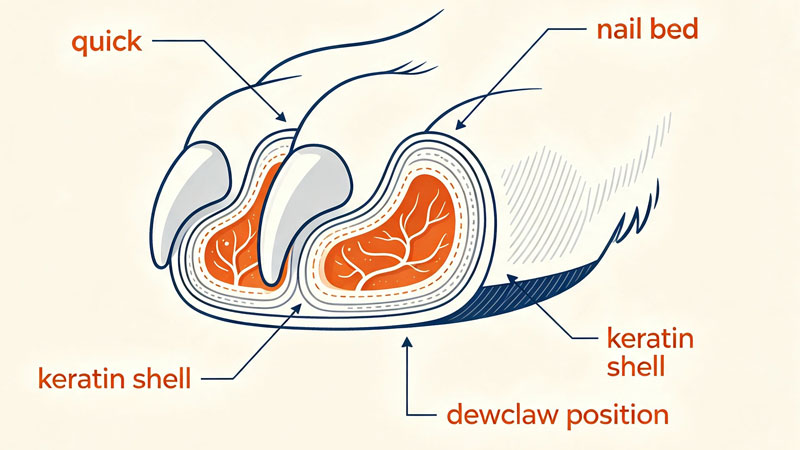
A dog’s nail isn’t just hard keratin. Inside sits the quick — a blood-and-nerve-rich core that bleeds fast if cut too short. Around it is the nail bed, the living tissue that actually grows the claw. When vets talk about nail disease, they’re almost always talking about damage to one of these two layers, not just the visible shell.
Healthy Nail vs. Unhealthy Nail: The Quick Comparison
| Feature | Healthy Nail | Unhealthy Nail |
|---|---|---|
| Surface | Smooth, slight shine | Rough, dull, flaking |
| Color | Even (pink-to-white or solid black) | Blotchy, yellowed, or darkened |
| Shape | Gentle downward curve | Curling into the pad, or splayed |
| Texture | Firm, snaps cleanly if trimmed too long | Brittle, crumbles or shatters |
| Growth | Even across all nails | One or two nails growing oddly |
Puppies’ nails are naturally thinner and more translucent. Senior dogs tend toward thicker, drier nails — that’s normal aging, not disease, unless it comes with pain or cracking.
Symptoms Checklist: Signs of Dog Nail Issues
Watch for:
- Limping or favoring one paw
- Licking, chewing, or biting at a nail
- Pus, blood, or oily discharge at the base
- Sudden brittleness or splitting
- A nail growing a noticeably different shape or color than the rest
- Swelling or redness around the nail bed
One Nail vs. Multiple Nails — Why This Detail Changes Everything
This is the detail most owners skip, and it’s the single fastest way to narrow down a cause. One damaged nail usually means trauma — a snag on carpet, a hard landing at the dog park. Multiple nails affected at once points somewhere else entirely: allergies, a fungal infection, or an autoimmune condition. Veterinary dermatologists lean on this pattern constantly during initial exams, because it shortcuts a long list of possible causes down to two or three.
What Causes Dog Nail Issues? A Breakdown by Type
Dog Nail Infection: Bacterial vs. Fungal Causes
Bacterial infections rarely start on their own — they follow an injury, an ingrown nail, or an allergy that’s already weakened the area. Expect oily or pus-like discharge.
Fungal infections, including dog toenail fungus from ringworm, tend to look crustier and drier. Yeast-related cases often carry a distinct musty smell. Neither type is something to diagnose by eye alone — a skin scrape under a microscope is the only reliable way to tell them apart.
Broken or Traumatic Nails
The most common issue by far. A snagged nail can tear partway or rip clean at the base. If a piece is still hanging on, it needs to come off — a flapping nail fragment just keeps catching on everything and re-injuring the toe.
Ingrown Nails in Senior or Low-Activity Dogs
Overlooked constantly. Dogs that walk mostly on soft surfaces, or older dogs with arthritis who move less, wear down their nails slower. Left untrimmed, the nail curls and digs straight into the pad. This is a preventable problem almost every time.
Lupoid Onychodystrophy (SLO): The Autoimmune Nail Disease
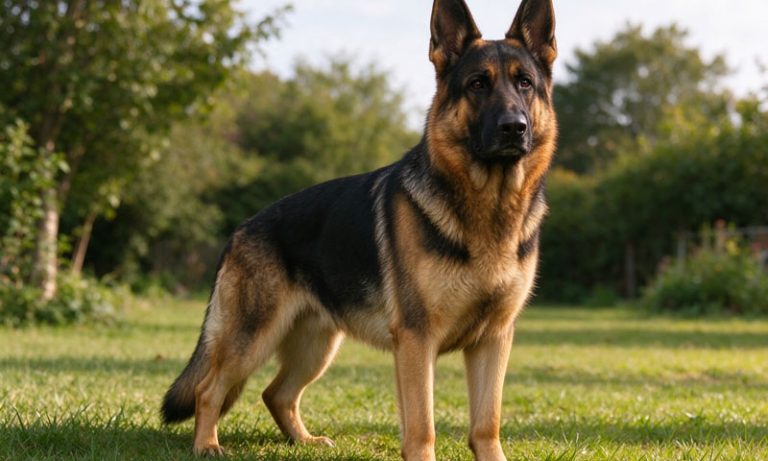
Rare, but serious. SLO causes the immune system to attack the nail bed itself, leading to brittle, misshapen nails that can fall off entirely — often across multiple paws at once. German Shepherds, Rottweilers, and Gordon Setters show up disproportionately in case studies. Diagnosis requires ruling out infection first, then confirming with a biopsy. It’s a lifelong condition to manage, not cure.
Nutritional Gaps: Zinc and Diet’s Role
Zinc-responsive dermatosis shows up most in Huskies and Malamutes, and it hits nail and coat quality hard. A complete, balanced commercial diet covers zinc needs for the vast majority of dogs — deficiency is far more common in home-cooked or poorly formulated diets than in dogs eating a certified complete food.
complete and balanced dog nutrition guide
Breed and Age Risk Factors
| Breed / Group | Higher Risk For |
|---|---|
| German Shepherd, Rottweiler, Gordon Setter | Lupoid onychodystrophy (SLO) |
| Husky, Malamute | Zinc-responsive nail disease |
| Senior, low-activity dogs | Ingrown nails |
| Highly active, outdoor dogs | Traumatic breaks |
How Vets Diagnose Dog Nail Issues
A full workup usually includes a clinical exam, a nail or skin scrape, cytology or culture of any discharge, and — if infection is ruled out but symptoms persist — a biopsy. Bloodwork gets added when an underlying condition like diabetes or hypothyroidism is suspected.
What a Vet Visit Typically Costs
Expect a baseline exam in the $50–$100 range in most of the U.S., with skin cytology adding another $50–$75. A biopsy for suspected SLO runs higher, often $200–$400 once sedation and lab fees are factored in. Costs vary by region and clinic, so ask for an estimate up front.
American Veterinary Medical Association pet care cost guidance
Treatment Options for Dog Nail Issues
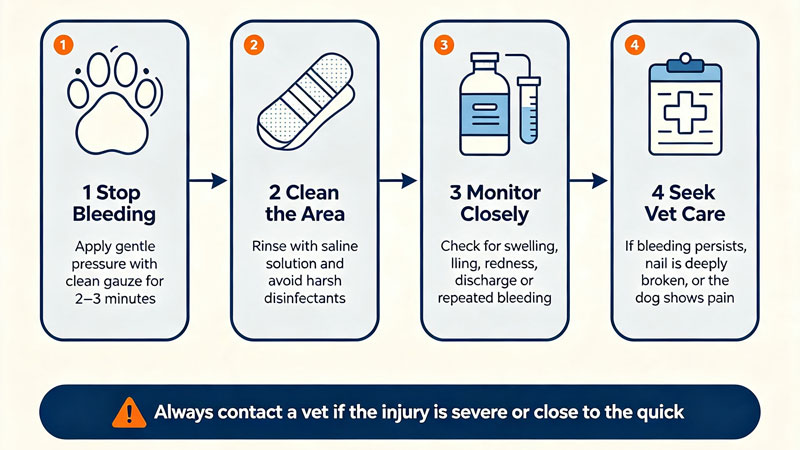
At-Home Care for Minor Breaks
- Apply gentle, steady pressure to stop bleeding.
- Clean the area with a vet-approved antiseptic.
- Keep your dog from licking it — a cone or boot helps.
- Watch for swelling or discharge over the next 48 hours.
Veterinary Treatments
Vets may prescribe antibiotics or antifungals depending on the culture result, add pain relief for trauma cases, or bandage the paw short-term. Any prescription dosing should come from your vet directly — this guide won’t substitute for that.
Managing SLO Long-Term
Treatment usually means immunosuppressive medication plus omega fatty acid supplementation, adjusted over months as nails regrow. Most dogs improve but need ongoing management rather than a one-time fix.
Is It Contagious? Ringworm and Your Household
Ringworm is the one nail-related issue that can jump from dog to human, especially to kids or anyone immunocompromised. If your dog tests positive, your vet and your own doctor should coordinate — this isn’t a wait-it-out situation for shared households.
CDC ringworm prevention guidance
Preventing Dog Nail Issues
- Trim every 2–4 weeks, more often for indoor dogs that don’t wear nails down naturally
- Go conservative on black nails where the quick isn’t visible
- Feed a certified complete diet rather than guessing at supplements
- Run a weekly paw check — lift each foot, look at each nail, note anything different from last week
When to See a Vet Immediately
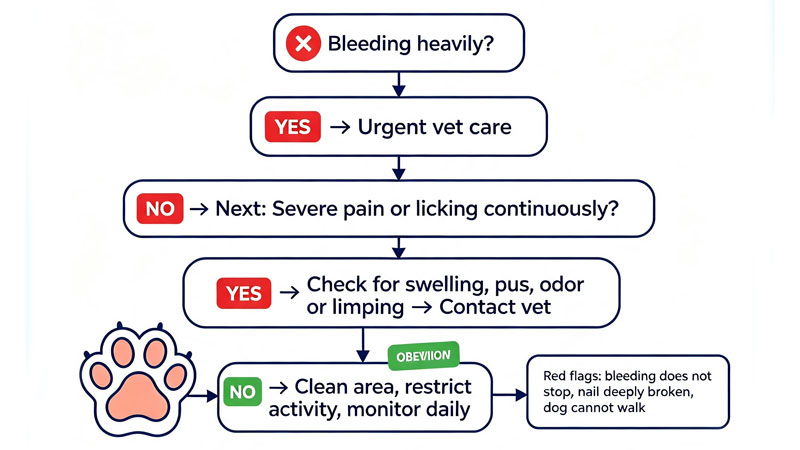
Book same-day care if you see: pus at the nail base, a lump on the toe, multiple nails falling out at once, or visible pain when the paw is touched. Everything else — a single clean break with no infection, mild brittleness in an otherwise healthy dog — can usually wait for a routine appointment.
FAQ: Dog Nail Issues
Can a dog’s broken nail heal on its own?
Minor breaks with no infection often do. Anything with discharge, swelling, or exposed nerve tissue needs a vet.
How much does it cost to treat a dog nail infection?
Typically $100–$250 for exam, testing, and a course of medication, though severe or recurring cases cost more.
Are some dog breeds more prone to nail disease?
Yes. German Shepherds, Rottweilers, and Gordon Setters have a documented higher rate of lupoid onychodystrophy.
Can diet alone fix brittle nails?
Only if the cause is a genuine nutritional gap. If your dog eats a complete diet already, brittleness usually points to infection or SLO instead.
How do I tell a broken nail from something more serious?
One nail, clean break, no other symptoms — likely trauma. Multiple nails, discharge, or recurring issues — get it checked.
Disclaimer: This article is for informational purposes only and does not replace professional veterinary diagnosis or treatment. Always consult a licensed veterinarian about your dog’s specific condition.