

Knowing how to clean a dog cage properly is harder than it looks. Most owners either under-clean and let bacteria build up, or over-clean with chemicals that irritate their dog’s skin and lungs. This guide gives you a safe, step-by-step system — plus the mistakes almost every crate-cleaning tutorial misses.
Why a Dirty Dog Cage Is a Bigger Problem Than You Think
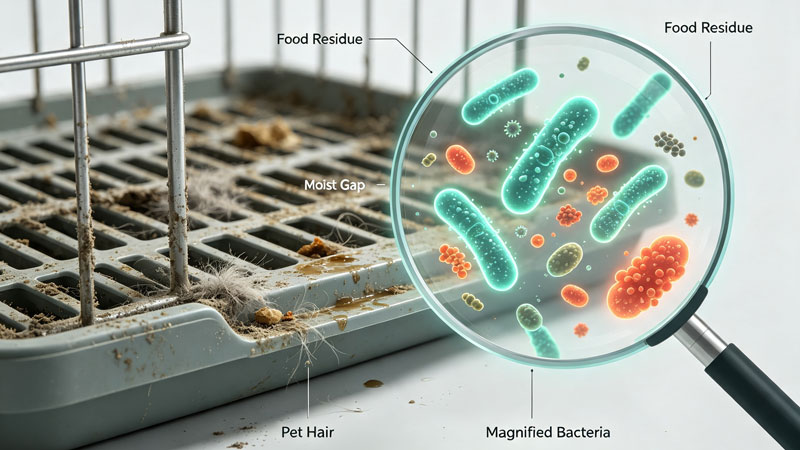
A crate looks clean long before it actually is. Urine residue, shed fur, and saliva create a film that regular wiping doesn’t remove. That film feeds bacteria and mold spores, especially in warm, enclosed spaces.
Some pathogens survive far longer than owners assume. Canine parvovirus, for example, can persist on surfaces for months without proper disinfection. [canine parvovirus environmental survival research]
If your dog scratches at the crate floor, avoids lying down fully, or the space smells even after wiping, that’s your signal. The crate needs more than a surface wipe.
How Often Should You Clean a Dog Cage?
There’s no single answer — it depends on your household.
| Situation | Deep Clean Frequency |
|---|---|
| Single, healthy adult dog | Every 1–2 weeks |
| Multi-dog household | Weekly |
| Puppy or senior dog | Every 3–5 days |
| Dog recovering from illness/surgery | Daily, until fully recovered |
| Outdoor kennel | Weekly, more in summer |
Spot-clean daily regardless — wipe visible mess, check water bowls, shake out bedding. Deep cleaning is where germs actually get eliminated, not just hidden.
Safety First: What Not to Mix
Most crate-cleaning guides mention this in passing. It deserves its own section, because the mistake is genuinely dangerous.
Never combine these products:
- Vinegar + hydrogen peroxide — creates peracetic acid, which irritates skin, eyes, and lungs
- Bleach + ammonia — produces toxic chloramine gas
- Bleach + vinegar — releases chlorine gas
[household chemical mixing hazards]
Before cleaning: remove your dog from the room, open windows, and wear gloves. Never let your dog back into the crate until it’s fully dry — damp surfaces trap fumes and moisture attracts bacteria right back.
Choosing a Pet-Safe Disinfectant (Read the Label Correctly)
“Pet safe” on a label means little without an EPA registration number. That number confirms the product has been tested and approved for its stated use. Skip anything listing phenols, high-concentration bleach, or ammonia as a primary ingredient — these are common triggers for respiratory irritation in dogs.
Homemade vs. commercial cleaners:
| Factor | Homemade (vinegar solution) | Commercial (enzymatic) |
|---|---|---|
| Cost | Very low | Moderate |
| Kills viruses/parvo | No | Yes (if labeled) |
| Odor removal | Partial | Strong |
| Safe for daily use | Yes | Yes, if diluted correctly |
For anything beyond routine wiping — illness, strong odor, multi-dog homes — an enzymatic cleaner does a job vinegar simply can’t.
best enzymatic cleaners for pet odor removal
Step-by-Step: Cleaning by Crate Material
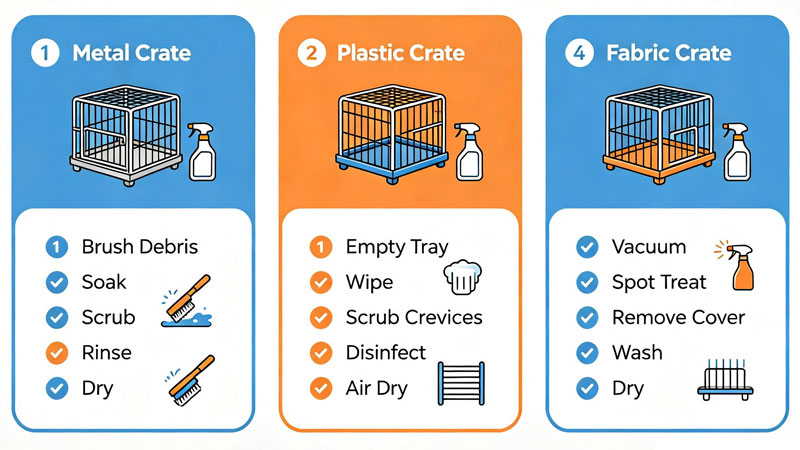
Metal wire crates
Pull out the tray. Hose down outdoors or scrub in a tub. Apply disinfectant, let it sit per label instructions, rinse twice, dry fully before reassembling. Rust forms fast if moisture is left behind.
Plastic travel crates
Disassemble top and bottom halves. Soak in warm, soapy water. Scrub seams and corners — grime hides there. Rinse and air dry in sunlight, which naturally reduces bacteria.
Fabric or soft-sided crates
Check the care label first. Machine wash on cold with pet-safe detergent when possible. Hand wash with a mild cleaner and baking soda paste for spot stains, then air dry completely — never machine dry, as it can warp the frame.
Outdoor kennels
Rinse waste away from food and bedding areas. Disinfect flooring and fencing weekly. In wet climates, check for mold weekly, not monthly — moisture builds faster outdoors than most owners expect.
Getting Rid of Urine Smell for Good
Regular cleaners mask urine odor. They don’t remove it. Uric acid crystals in dog urine bond to surfaces and reactivate with humidity — that’s why the smell returns on hot or rainy days.
Enzymatic cleaners work because they break down the uric acid itself, not just the surface residue. For stubborn stains, a baking soda and warm water paste, left for 15 minutes before scrubbing, lifts most residue that standard wiping leaves behind.
If odor persists after multiple deep cleans, the crate material has likely absorbed the residue permanently. At that point, replacement is cheaper than continued cleaning attempts.
Cleaning for Puppies, Senior Dogs, and Recovering Pets
This is where most guides stop short — and it’s often the most important part.
Puppies and immunocompromised dogs need diluted disinfectant, roughly half the standard concentration, with extended air-drying time before reuse. Senior dogs recovering from surgery benefit from fragrance-free cleaners, since sensitive skin and reduced mobility make chemical exposure riskier.
In multi-dog households, cross-contamination is the real threat — parvovirus, distemper, and kennel cough spread easily through shared crates. If one dog has been sick, disinfect thoroughly before another dog uses that space, and consult your vet on appropriate dilution ratios for contagious illness.
vet-recommended disinfecting protocols for sick dogs
Drying and Storage: The Step Everyone Skips
Wet crates breed exactly what you just cleaned away. Towel-dry first, then let the crate air dry fully in a ventilated area — direct sun works well for plastic and metal.
Metal crates left damp develop rust within days in humid climates. Outdoor wooden kennels need extra attention during rainy seasons, since trapped moisture in seams leads to mold growth that’s difficult to reverse.
Frequently Asked Questions
Can I use bleach to clean my dog’s crate?
Yes, heavily diluted (about 1 part bleach to 30 parts water), rinsed thoroughly, and only in a ventilated space. Never mix it with other cleaners.
How long should a crate air dry before my dog uses it again?
At least 2–4 hours, longer in humid conditions. The crate should be completely dry to the touch, with no lingering chemical smell.
Is vinegar safe for cleaning a dog crate?
Yes, for routine cleaning. It won’t kill viruses like parvo, so it’s not sufficient after illness.
How do I clean a crate after my dog had parvo or kennel cough?
Use a disinfectant proven effective against the specific virus, following label dilution exactly, and let the crate sit disinfected for the full contact time listed. Ask your vet for a product recommendation.
Disclaimer: This article is for general informational purposes only and does not replace advice from a licensed veterinarian. Always consult your vet regarding disinfecting protocols after illness or for pets with health conditions.