

Can dogs run in the rain? Most healthy dogs can — but “safe” depends on temperature, coat type, and how long you’re out there, not just whether it’s wet. Get those three factors wrong and a fun run turns into a vet visit. This guide breaks down exactly when rain running is fine, when it isn’t, and what your dog actually needs to handle it well.
Is It Safe for Dogs to Run in the Rain?
Yes, for most dogs, in most conditions. Rain itself isn’t the danger — heat loss is. A 20-minute jog in 55°F rain is a non-issue for a healthy adult dog. That same rain at 32°F, with wind, for an hour? Different story entirely.
What Actually Makes Rain Risky
Three things drive risk, and none of them is “getting wet”:
- Temperature — wet fur loses insulating power fast
- Wind — accelerates heat loss even in mild rain
- Duration — the longer the exposure, the faster core temperature drops
Slippery trails and reduced visibility add practical risk too, especially on roads shared with cars.
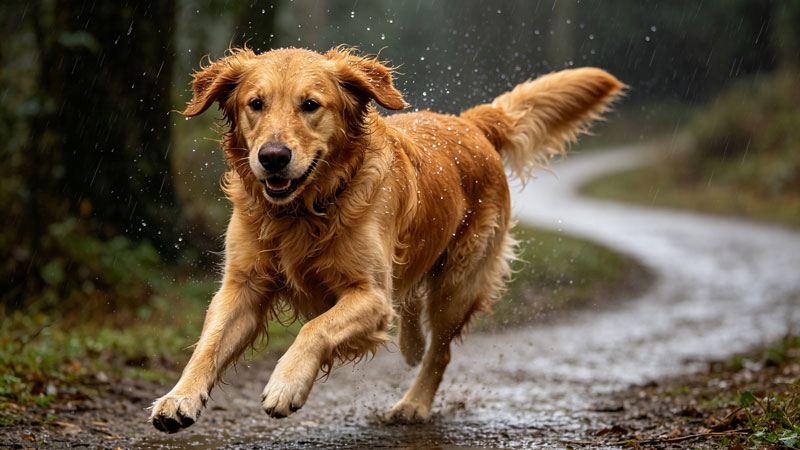
Why Some Dogs Actually Love Running in the Rain
If your dog picks up speed the second the sky opens up, there’s a reason.
Scent Gets Stronger When It’s Wet
Rain binds odor particles to moisture in the air and soil, which makes scent trails easier to follow. Scent-driven breeds — beagles, retrievers, hounds — often get visibly more engaged during and after rainfall.
Rain Helps Dogs Cool Down
Dogs regulate heat mainly through panting, not sweating. Cool rain on the skin gives them a second cooling channel, which is part of why water-loving breeds seem to enjoy it so much.
It’s Breed-Dependent
Labradors, Portuguese Water Dogs, and other water-bred breeds have coats built for wet conditions. A Chihuahua does not.
How Cold Is Too Cold to Run a Dog in the Rain?
This is the question that actually matters, and it’s the one most articles skip.
Temperature and Duration Guide
| Temp Range | Short-Coat Dogs | Thick/Double-Coat Dogs | Max Recommended Duration |
|---|---|---|---|
| Above 50°F | Safe | Safe | No strict limit |
| 40–50°F | Wear gear | Generally safe | 45–60 min |
| 32–40°F | Avoid without gear | Use caution | 20–30 min |
| Below 32°F | Avoid | Consult your vet first | Not recommended |
These are general guidelines, not hard rules — a fit, cold-tolerant husky handles 30°F very differently than a senior greyhound.
Wet Cold Feels Colder Than Dry Cold
Wind moving across wet fur pulls heat away faster than dry air at the same temperature. Rain at 40°F with wind can feel closer to 25°F in terms of actual heat loss. [NOAA’s wind chill research]
Puppies, Seniors, and Small Breeds Need Lower Thresholds
Puppies haven’t fully developed thermoregulation. Senior dogs lose muscle mass and body fat, both of which help retain heat. Toy and small breeds have a higher surface-area-to-body-mass ratio, so they cool faster than a 70-pound dog in the exact same rain.
Gear That Actually Makes a Difference
Not all rain gear is equal, and most owners buy the wrong thing first.
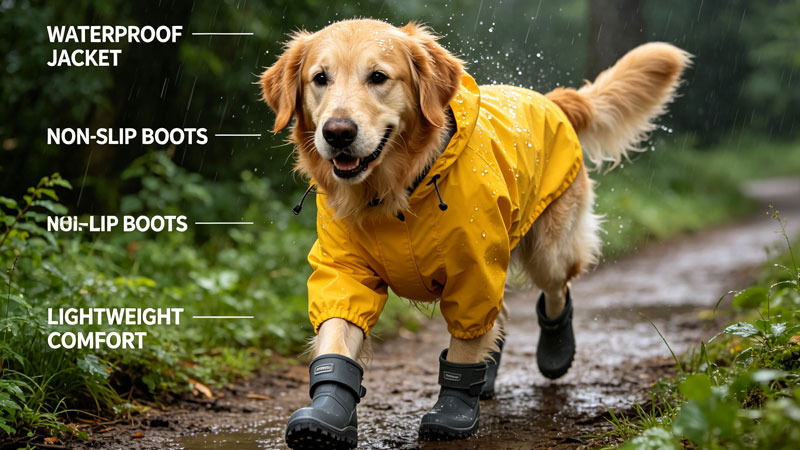
What to Look for in a Dog Rain Jacket
- Waterproof rating, not just water-resistant
- Full torso and chest coverage
- Reflective strips for low-visibility runs
- Room to layer underneath in colder temps
dog raincoat sizing and material guide
Do Dogs Need Boots for Wet Trails?
Boots aren’t essential for every dog, but they help on muddy, rocky, or salted terrain. Look for grippy soles and a snug — not tight — fit. Most dogs need a few short practice sessions indoors before boots feel natural outside.
Health Risks You Need to Watch For
Signs of Hypothermia in Dogs
A dog’s normal body temperature runs 100.5°F to 102.5°F. Watch for:
- Persistent shivering
- Lethargy or slow movement
- Pale or bluish gums
- Weak pulse or shallow breathing
Any of these means stop the run and get warm immediately. [hypothermia clinical signs in dogs]
Infections That Show Up After Wet Runs
Trapped moisture in ears and between paw pads creates ideal conditions for bacterial and fungal growth. Floppy-eared breeds are especially prone to ear infections after repeated wet exposure.
Prevention beats treatment:
- Dry ears thoroughly after every rainy run
- Check paw pads for cracks or debris
- Towel-dry the coat down to the skin, not just the surface
When to Stop the Run
Stop immediately if your dog starts limping, shivering hard, or seems disoriented. These aren’t “push through it” signals.
Post-Run Care Routine
A rainy run isn’t over when you get home.
- Towel-dry immediately — focus on the belly, chest, and paws where moisture sits longest
- Check and dry the ears — this step gets skipped constantly and causes most post-rain infections
- Offer water and food — cold-weather runs burn more calories for temperature regulation
cold weather running with dogs safety guide
What About Thunderstorms?
Rain and thunder aren’t the same risk category. Skip runs during active lightning — there’s no safe outdoor distance from a strike. Dogs sensitive to loud noise may also show anxiety before a storm even starts, which is worth planning around separately from wet-weather logistics.
FAQ: What People Actually Ask
Can puppies run in the rain?
Short, mild sessions are fine for healthy puppies past their vaccination window. Skip long runs — their temperature regulation isn’t fully developed yet.
Is it bad for dogs to get rained on for a long time?
Extended exposure, especially in cold or windy conditions, raises hypothermia risk. Short exposure in mild weather is generally harmless.
How do I know if my dog is too cold on a run?
Shivering, slowing down, tucking the tail, or lifting paws repeatedly are early signs. Head home before symptoms escalate.
Can dogs get sick from running in the rain?
Rain alone doesn’t cause illness, but prolonged wet exposure can lead to ear infections, skin irritation, or hypothermia if conditions are cold.
What temperature is too cold to run a dog in the rain?
Below 32°F, most dogs need extra gear or should skip the run entirely — especially short-coat and small breeds.
Key Takeaways
- Rain isn’t the real risk — cold, wind, and duration are
- Match gear and run length to your dog’s coat type and size
- Dry ears and paws every time, not just when it’s convenient
- Know the early signs of hypothermia before you need them
Disclaimer: This article is for informational purposes only and does not replace professional veterinary advice. If your dog shows signs of distress, hypothermia, or illness, contact a licensed veterinarian immediately.