

Your dog hasn’t stopped humping the couch in three weeks. He’s marking the hallway. He tried to bolt through the screen door twice this month. These are classic signs your dog needs to be neutered, and most owners miss them until the behavior gets expensive or dangerous. This guide breaks down the physical and behavioral red flags, the right age by breed, real cost numbers, and what happens after surgery — so you can make the call with confidence, not guesswork.
What Does It Mean When a Dog “Needs” to Be Neutered?
Neutering removes a male dog’s testicles, which cuts off most testosterone production. Testosterone drives roaming, marking, mounting, and a chunk of male-on-male aggression. Not every pushy behavior means your dog needs surgery tomorrow — some of it is just adolescence. But when several signs stack up together, that’s your signal to book a vet visit, not wait it out.
12 Physical & Behavioral Signs Your Dog Needs to Be Neutered
Behavioral Signs
- Mounting furniture, people, or other dogs — happens outside of play, repeatedly
- Urine marking indoors, even in a house-trained dog
- Roaming or escape attempts, especially when a female in heat is nearby (dogs can detect this scent from over a mile away)
- Sudden aggression toward other male dogs he used to ignore
- Reactivity around intact males at the dog park
- Pacing, whining, or restlessness with no obvious trigger
- Overconfidence that disrupts training — he stops listening the moment there’s a scent to chase
Physical Signs (Often Overlooked)
- Testicular swelling, asymmetry, or a lump you can feel
- Difficulty retracting the penis (paraphimosis) — this needs same-day vet care
- Recurring urinary tract or prostate infections
- Blood in the urine or straining to pee
- A visible mass on or near the testicles
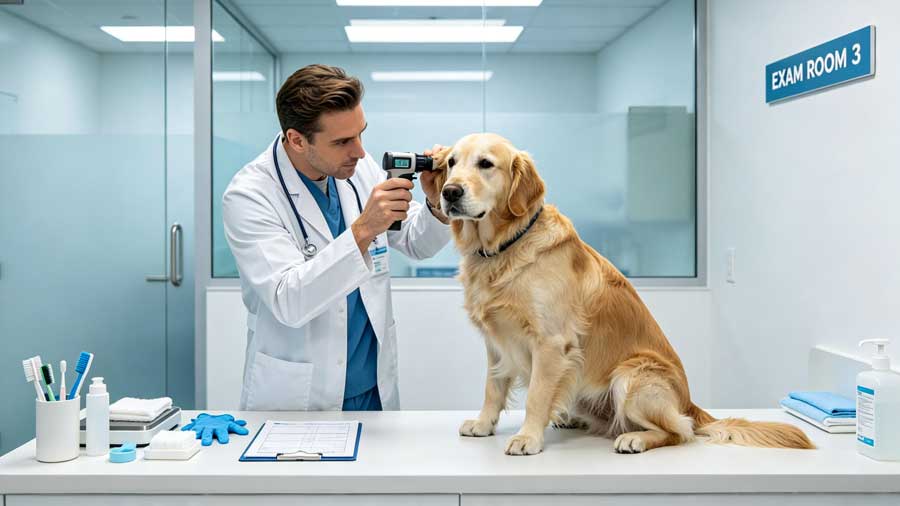
If you spot any physical sign, don’t wait for a routine appointment. Call your vet the same day.
how to recognize early signs of illness in dogs
How Old to Neuter a Dog? A Breed-by-Size Timing Guide
There’s no single right age. Size changes everything, because growth plates close at different rates.
| Size | Example Breeds | Recommended Age |
|---|---|---|
| Small (under 20kg) | Chihuahua, Dachshund | 6–9 months |
| Medium (20–25kg) | Labrador, Border Collie | 9–12 months |
| Large & Giant (25kg+) | Golden Retriever, German Shepherd, Great Dane | 12–18 months |
Large-breed dogs neutered too early face a higher risk of joint problems, including cruciate ligament tears and hip dysplasia. A widely cited UC Davis study on Golden Retrievers and Labradors found this risk drops significantly when neutering is delayed past the growth-plate closure window. [joint disorder risk in early-neutered large breeds] Talk to your vet about your dog’s specific growth timeline before locking in a date.
Neuter vs. Spay: What’s the Real Difference?
| Neuter (Male) | Spay (Female) | |
|---|---|---|
| Procedure | Removes testicles | Removes ovaries and uterus |
| Surgical complexity | Lower | Higher — internal organs involved |
| Recovery time | 7–10 days | 10–14 days |
| Hormonal effect | Testosterone drops | Estrogen and progesterone cycles stop |
| Behavior impact | Less marking, roaming, mounting | No more heat cycles, less irritability |
Female dogs show their own version of these signals — restlessness, spotting, and heightened attention from male dogs — right before or during heat. If you own a female, the timing conversation with your vet looks different but matters just as much.
How Much Does It Cost to Neuter a Dog?
Price depends on your dog’s size, your location, and the clinic. Expect:
- Small dogs: $150–$300
- Medium dogs: $200–$400
- Large dogs: $300–$500+
Costs climb with pre-surgical bloodwork, anesthesia type, and pain management. Low-cost clinics run by local humane societies often charge a fraction of private clinic rates. Some pet insurance plans cover neutering if you enroll before the procedure — check your policy’s wellness rider, not just the accident coverage.
is pet insurance worth it for dog owners
Is It Too Late to Neuter an Older Dog?
No, but the calculation changes. A 5- or 7-year-old dog can still be neutered safely. Your vet will likely run bloodwork to check liver and kidney function before anesthesia, and may recommend a cardiac screening for senior dogs. Age alone isn’t a dealbreaker — underlying health is what determines the green light.
What Happens If You Don’t Neuter? A Balanced View
Health Risks of Staying Intact
Intact males carry a lifetime risk of testicular cancer and a higher rate of prostate disease as they age. The American Veterinary Medical Association notes that neutering before health issues develop removes these risks almost entirely. [health risks of unneutered male dogs]
Legitimate Reasons to Delay or Skip It
- Working dogs whose job depends on drive and full hormonal function
- Dogs under an active breeding contract
- Large-breed puppies still in a critical growth window
- Dogs with anesthesia risk factors that need to be resolved first
None of these are permanent objections — they’re reasons to time it right, not avoid it altogether.
Neutering Safety: What to Ask Your Vet Before Surgery
Ask these five questions before you book:
- What pre-surgical bloodwork do you run, and is it included in the price?
- What anesthesia protocol will you use for my dog’s age and breed?
- Who monitors my dog during surgery?
- What pain management is included post-op?
- What’s your complication rate, and what happens if something goes wrong?
A clinic that answers these clearly, without hesitation, is one you can trust with the procedure.

Recovery Timeline: What to Expect
- Day 1–2: Grogginess, limited appetite, keep him crated or confined
- Day 3–5: Energy returns, but no running or jumping — this is when most stitches fail
- Day 7–10: Suture removal or dissolvable stitches finish healing
- Week 2: Full activity clearance, pending your vet’s check
Watch the incision daily for redness, swelling, or discharge. Keep the cone on until your vet says otherwise, even if he hates it.
Will Neutering Change My Dog’s Personality?
His core temperament stays the same. A confident dog stays confident, a shy dog stays shy. What changes is the testosterone-driven noise underneath — less roaming, less marking, fewer standoffs with other males. If your dog is naturally high-energy, neutering won’t turn him into a couch potato. That’s breed and personality, not hormones.
FAQ: What Dog Owners Ask Most
What age is too late to neuter a dog?
There isn’t one. Senior dogs can be neutered safely with proper pre-surgical screening.
Does neutering stop all aggressive behavior?
No. It reduces hormone-driven aggression but won’t fix fear-based or learned aggression. Training still matters.
Is neutering covered by pet insurance?
Sometimes, under wellness add-ons. Standard accident-and-illness plans usually exclude elective procedures.
How long after neutering does the behavior actually change?
Testosterone drops within days, but behavior changes take 4–6 weeks as learned habits fade.
Can a female dog show similar warning signs?
Yes — restlessness, spotting, and male attention are her equivalent signals before spaying.
Disclaimer: This article is for general informational purposes only and does not replace professional veterinary advice. Always consult a licensed veterinarian regarding your dog’s specific health needs and surgical timing.