

What does heel mean for a dog? It’s not just “walk beside me.” Most owners teach the command but never learn why it works, when to use it, or how to fix it when it falls apart on a busy sidewalk. This guide covers the definition, the position, the training steps, and the mistakes nobody talks about.
What Does Heel Mean for a Dog? (The Real Definition)
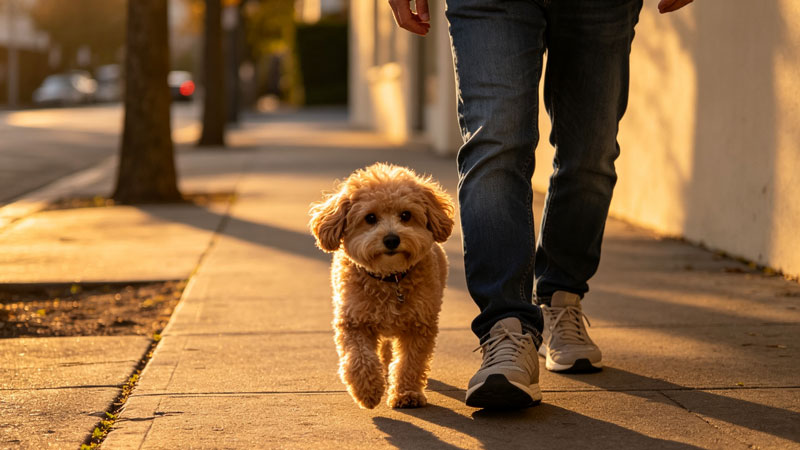
Heel means your dog stays at your side, matching your pace, without pulling or wandering. Moving, he walks beside you. Standing still, he sits beside you. That’s the whole command.
It sounds simple. It isn’t. Heel asks your dog to ignore smells, other dogs, squirrels, and every other distraction on the block — and stay locked onto you instead. That’s a high bar for any dog, especially a young or high-energy one.
Heel Position: Left Side or Right Side?
Competition obedience uses the left side. That tradition comes from hunting dogs, where handlers kept a rifle on their right shoulder and needed the dog clear of it. [official obedience regulations]
For a pet dog, side doesn’t matter much. Pick one and stick with it. Consistency matters more than which side you choose — dogs read patterns, not preferences.
Heel vs. Loose-Leash Walking: What’s the Difference?
These get confused constantly. They’re not the same thing.
| Factor | Heel | Loose-Leash Walking |
|---|---|---|
| Dog’s position | Fixed, at your side | Anywhere on a slack leash |
| Mental effort | High — constant focus | Low to moderate |
| Best used for | Crowds, traffic, vet visits | Regular sniff-and-explore walks |
| Training difficulty | Harder, needs practice | Easier for most dogs |
Neither one replaces the other. A well-rounded walk uses both.
Why Heel Training Actually Matters
A dog that never learns heel isn’t just harder to walk — he’s harder to live with. Heel builds impulse control. That control shows up everywhere: at the door, around guests, near other dogs.
signs your dog needs more mental stimulation
The Mental vs. Physical Exercise Myth
Walking at your pace burns almost no physical energy for most dogs. But structured heel work drains mental energy fast. A 15-minute heel session can tire a dog out more than a 45-minute free walk. If your dog seems restless despite daily walks, this is often why.
What Happens Without Heel Training
Dogs that never learn structured walking tend to drift out of your peripheral vision — and once they’re out of sight, they stop checking in. That’s when pulling, reactivity, and leash lunging tend to start. It’s not disobedience. It’s a dog making his own decisions because nobody taught him to check in with yours.
Why Is Your Dog Pulling on the Leash?
Pulling usually comes from one of three things: excess energy, lack of training, or the wrong equipment for his size and strength.
Breed and Age Differences Matter
A Border Collie and a Bulldog do not need the same heel training plan.
| Dog Type | Training Difficulty | Recommended Approach |
|---|---|---|
| High-energy (Husky, Border Collie) | Hard — strong drive to move | Shorter, more frequent sessions |
| Low-energy (Bulldog, Basset Hound) | Easier — naturally slower pace | Standard sessions work fine |
| Puppies (under 6 months) | Short attention span | 5-minute sessions, high rewards |
| Senior dogs | Physical limits, not focus | Slower pace, watch for fatigue |
Skipping this step is the number one reason heel training stalls. The method has to match the dog.
How to Teach a Dog to Heel: Step-by-Step
Grab treats, a well-fitted collar, and a clicker if you have one. A vocal marker like “yes” works fine too.
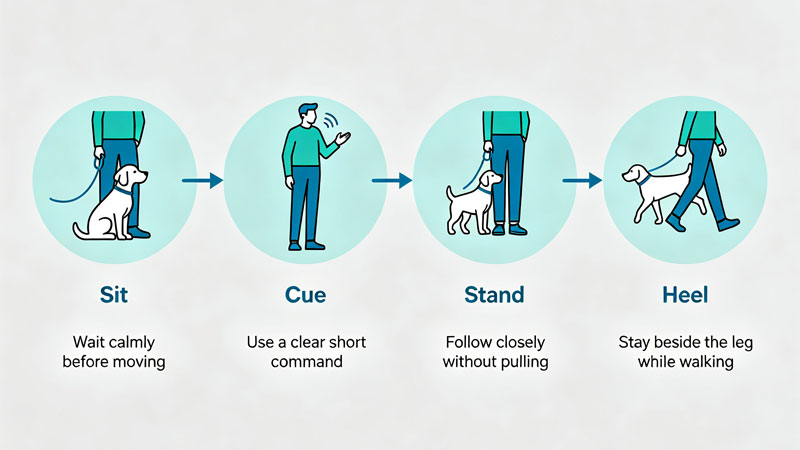
Step 1: Build Focus with Sit and Stay
Start indoors, away from distractions. Have your dog sit at your side. Reward calm attention before you move an inch.
Step 2: Introduce the Heel Cue
Say “heel” while holding a treat at your hip. Let your dog target the treat, not just follow it randomly.
Step 3: Add Movement
Take a few steps. Mark and reward every time your dog stays in position. Keep sessions short — two to three minutes at first.
Step 4: Practice With Real Distractions
Move outside once indoor heel is solid. Start in a quiet yard, then work up to sidewalks and parks.
Step 5: Fade the Treat Lure
Once your dog responds to the verbal cue alone, stop luring with food in hand. Keep rewarding — just less often and less predictably.
Step 6: Maintain It Long-Term
Heel fades without practice. Five minutes a day keeps it sharp for months.
Choosing the Right Equipment for Heel Training
Equipment changes outcomes more than most owners realize.
| Tool | Best For | Watch Out For |
|---|---|---|
| Flat collar | Dogs that already walk well | Little control on strong pullers |
| Martingale | Dogs prone to slipping collars | Not for aggressive pulling |
| Front-clip harness | Most heel training situations | Can tangle if fit is loose |
| Prong or e-collar | Severe pulling, expert-guided use only | Ethical debate; misuse causes harm |
Prong and e-collars remain controversial. Veterinary behavior organizations generally recommend reward-based methods first, reserving aversive tools for cases where a certified trainer is directly involved. [position statement on humane dog training equipment]
If you’re unsure which tool fits your dog, a session with a certified trainer costs less than an emergency vet visit after a leash injury.
How Much of the Walk Should Be Heel vs. Free Time?
There’s no universal rule, but a 50:50 split works as a baseline. Dogs with reactivity, anxiety, or serious pulling problems often need closer to 80:20 in favor of heel, especially in high-traffic areas.
Save free-sniff time for parks and open spaces. Use heel to move between them. You decide when it’s heel time — not your dog.
Common Heel Training Mistakes
My dog heels indoors but falls apart outside. Distractions reset the difficulty level. Go back a step and rebuild outside, starting in a quiet spot.
My dog keeps forging ahead. Stop walking the second he passes your hip. Resume only when he’s back in position. Momentum is the reward he’s chasing — remove it.
Training two dogs at once. Master heel with each dog separately first. Combining untrained dogs multiplies distractions instead of dividing them.
how to walk two dogs at once safely
Focused Heel vs. Functional Heel
Competition dogs learn “focused heel” — eyes locked on the handler the entire time. Most pet owners don’t need that. A functional heel, where your dog stays in position without constant eye contact, is enough for daily life. Save focused heel drills for short bursts around heavy distractions.
Frequently Asked Questions
What age should I start heel training my dog?
As early as 8-10 weeks for basic focus work, though full leash heel training usually starts closer to 4-6 months once a puppy can handle a collar and short sessions.
Is heel training necessary for every dog?
Not for the entire walk, but every dog benefits from knowing it — especially in crowds, near traffic, or at the vet.
Can older dogs learn to heel?
Yes. Age doesn’t block learning. Adjust pace and session length for physical limits, not attention span.
What’s the difference between “heel” and “let’s go”?
“Heel” means fixed position at your side. “Let’s go” typically just means move forward together, with more leash slack allowed.
How long does it take to train a dog to heel?
Basic heel: 2-4 weeks of daily short sessions. Reliable heel around distractions: often 2-3 months.
Disclaimer: This article is for informational purposes only and does not replace personalized guidance from a certified dog trainer or veterinary behaviorist. Every dog is different — consult a professional for training plans involving aggression, severe anxiety, or specialized equipment.